
Résultats de la recherche pour "talking OR pi OR voice OR control OR for OR raspberry OR pi"
-
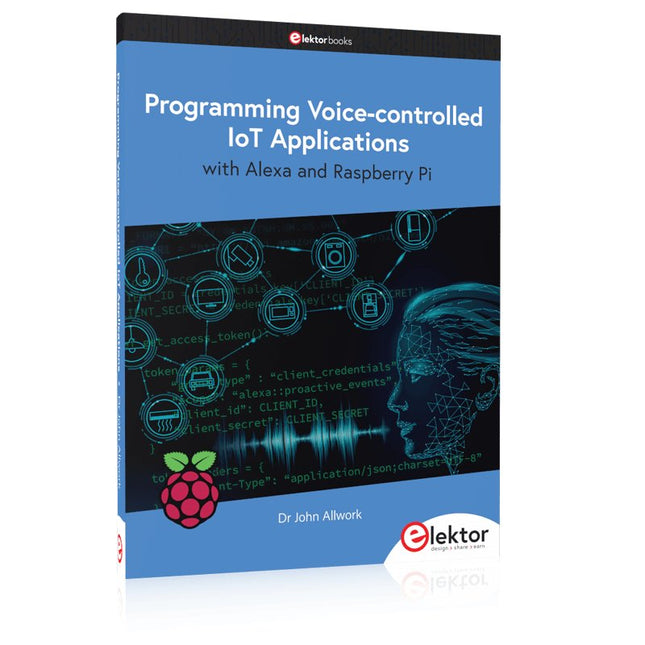
Elektor Publishing Programming Voice-controlled IoT Applications with Alexa and Raspberry Pi
Learn programming for Alexa devices, extend it to smart home devices and control the Raspberry Pi The book is split into two parts: the first part covers creating Alexa skills and the second part, designing Internet of Things and Smart Home devices using a Raspberry Pi. The first chapters describe the process of Alexa communication, opening an Amazon account and creating a skill for free. The operation of an Alexa skill and terminology such as utterances, intents, slots, and conversations are explained. Debugging your code, saving user data between sessions, S3 data storage and Dynamo DB database are discussed. In-skill purchasing, enabling users to buy items for your skill as well as certification and publication is outlined. Creating skills using AWS Lambda and ASK CLI is covered, along with the Visual Studio code editor and local debugging. Also covered is the process of designing skills for visual displays and interactive touch designs using Alexa Presentation Language. The second half of the book starts by creating a Raspberry Pi IoT 'thing' to control a robot from your Alexa device. This covers security issues and methods of sending and receiving MQTT messages between an Alexa device and the Raspberry Pi. Creating a smart home device is described including forming a security profile, linking with Amazon, and writing a Lambda function that gets triggered by an Alexa skill. Device discovery and on/off control is demonstrated. Next, readers discover how to control a smart home Raspberry Pi display from an Alexa skill using Simple Queue Service (SQS) messaging to switch the display on and off or change the color. A node-RED design is discussed from the basic user interface right up to configuring MQTT nodes. MQTT messages sent from a user are displayed on a Raspberry Pi. A chapter discusses sending a proactive notification such as a weather alert from a Raspberry Pi to an Alexa device. The book concludes by explaining how to create Raspberry Pi as a stand-alone Alexa device.
€ 39,95
Membres € 35,96
-
Elektor Digital Programming Voice-controlled IoT Applications with Alexa and Raspberry Pi (E-book)
Learn programming for Alexa devices, extend it to smart home devices and control the Raspberry Pi The book is split into two parts: the first part covers creating Alexa skills and the second part, designing Internet of Things and Smart Home devices using a Raspberry Pi. The first chapters describe the process of Alexa communication, opening an Amazon account and creating a skill for free. The operation of an Alexa skill and terminology such as utterances, intents, slots, and conversations are explained. Debugging your code, saving user data between sessions, S3 data storage and Dynamo DB database are discussed. In-skill purchasing, enabling users to buy items for your skill as well as certification and publication is outlined. Creating skills using AWS Lambda and ASK CLI is covered, along with the Visual Studio code editor and local debugging. Also covered is the process of designing skills for visual displays and interactive touch designs using Alexa Presentation Language. The second half of the book starts by creating a Raspberry Pi IoT 'thing' to control a robot from your Alexa device. This covers security issues and methods of sending and receiving MQTT messages between an Alexa device and the Raspberry Pi. Creating a smart home device is described including forming a security profile, linking with Amazon, and writing a Lambda function that gets triggered by an Alexa skill. Device discovery and on/off control is demonstrated. Next, readers discover how to control a smart home Raspberry Pi display from an Alexa skill using Simple Queue Service (SQS) messaging to switch the display on and off or change the color. A node-RED design is discussed from the basic user interface right up to configuring MQTT nodes. MQTT messages sent from a user are displayed on a Raspberry Pi. A chapter discusses sending a proactive notification such as a weather alert from a Raspberry Pi to an Alexa device. The book concludes by explaining how to create Raspberry Pi as a stand-alone Alexa device.
€ 32,95
Membres € 26,36
-
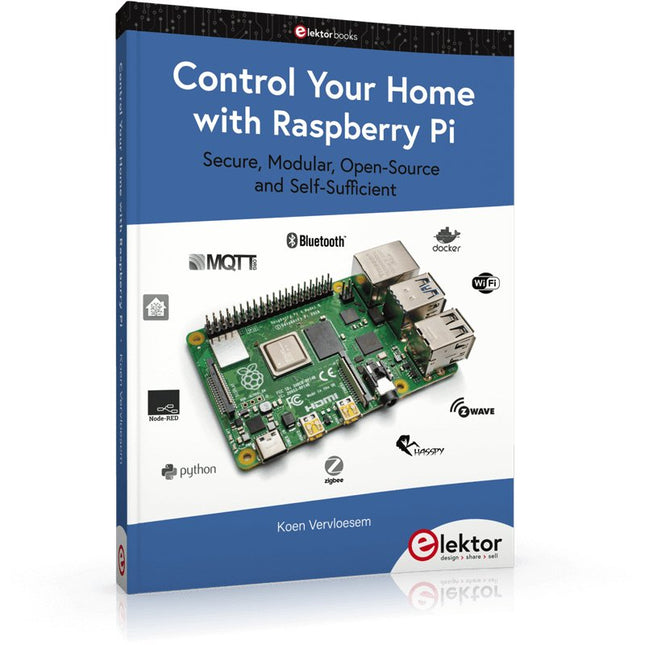
Elektor Publishing Control Your Home with Raspberry Pi
Secure, Modular, Open-Source and Self-Sufficient Ever since the Raspberry Pi was introduced, it has been used by enthusiasts to automate their homes. The Raspberry Pi is a powerful computer in a small package, with lots of interfacing options to control various devices. This book shows you how you can automate your home with a Raspberry Pi. You’ll learn how to use various wireless protocols for home automation, such as Bluetooth, 433.92 MHz radio waves, Z-Wave, and Zigbee. Soon you’ll automate your home with Python, Node-RED, and Home Assistant, and you’ll even be able to speak to your home automation system. All this is done securely, with a modular system, completely open-source, without relying on third-party services. You’re in control of your home, and no one else. At the end of this book, you can install and configure your Raspberry Pi as a highly flexible home automation gateway for protocols of your choice, and link various services with MQTT to make it your own system. This DIY (do it yourself) approach is a bit more laborious than just installing an off-the-shelf home automation system, but in the process, you can learn a lot, and in the end, you know exactly what’s running your house and how to tweak it. This is why you were interested in the Raspberry Pi in the first place, right? Turn your Raspberry Pi into a reliable gateway for various home automation protocols. Make your home automation setup reproducible with Docker Compose. Secure all your network communication with TLS. Create a video surveillance system for your home. Automate your home with Python, Node-RED, Home Assistant and AppDaemon. Securely access your home automation dashboard from remote locations. Use fully offline voice commands in your own language. Downloads Errata on GitHub
€ 44,95
Membres € 40,46
-
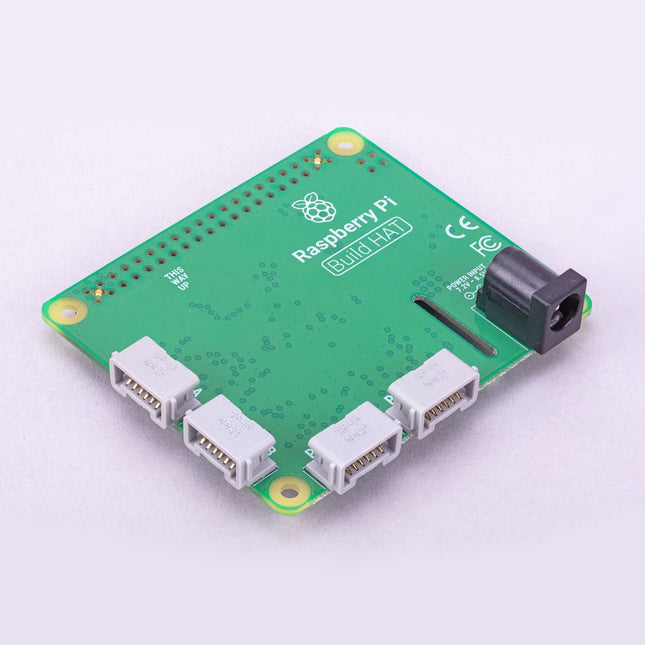
Raspberry Pi Foundation Raspberry Pi Build HAT
Construisez des machines robustes et intelligentes qui combinent la puissance de calcul du Raspberry Pi avec des composants LEGO. Le Raspberry Pi Build HAT fournit quatre connecteurs pour les moteurs et capteurs LEGO Technic du portefeuille SPIKE. Les capteurs disponibles comprennent un capteur de distance, un capteur de couleur et un capteur de force polyvalent. Les moteurs angulaires sont disponibles dans une gamme de tailles et comprennent des encodeurs intégrés qui peuvent être interrogés pour trouver leur position. Le Build HAT s'adapte à tous les ordinateurs Raspberry Pi dotés d'un connecteur GPIO à 40 broches, y compris – avec l'ajout d'un câble ruban ou d'un autre périphérique d'extension – le Raspberry Pi 400. Les appareils LEGO Technic connectés peuvent facilement être contrôlés en Python, aux côtés des accessoires Raspberry Pi standard. tel qu'un module de caméra. Caractéristiques Contrôle jusqu'à 4 moteurs et capteurs Alimente le Raspberry Pi (lorsqu'il est utilisé avec un bloc d'alimentation externe approprié) Facile à utiliser depuis Python sur le Raspberry Pi
€ 29,95€ 11,98
Membres identique
-
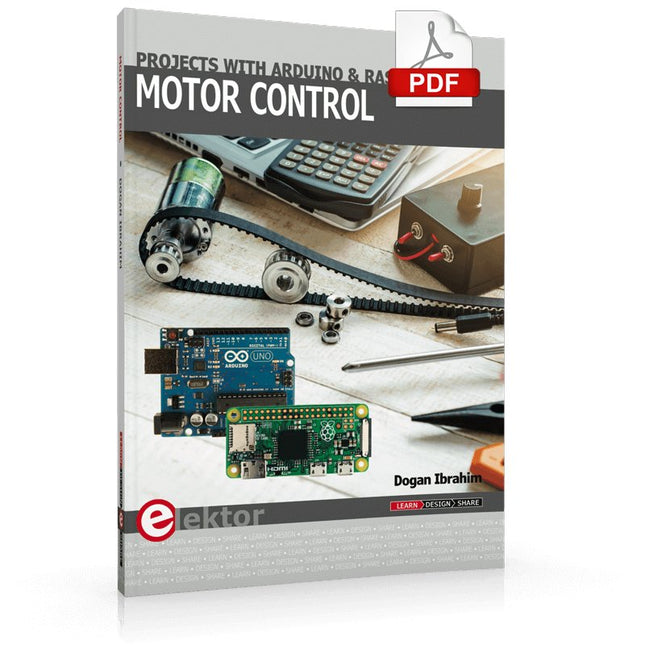
Elektor Digital Motor Control - Projects with Arduino & Raspberry Pi (E-book)
This book is about DC electric motors and their use in Arduino and Raspberry Pi Zero W based projects. The book includes many tested and working projects where each project has the following sub-headings: Title of the project Description of the project Block diagram Circuit diagram Project assembly Complete program listing of the project Full description of the program The projects in the book cover the standard DC motors, stepper motors, servo motors, and mobile robots. The book is aimed at students, hobbyists, and anyone else interested in developing microcontroller based projects using the Arduino Uno or the Raspberry Pi Zero W. One of the nice features of this book is that it gives complete projects for remote control of a mobile robot from a mobile phone, using the Arduino Uno as well as the Raspberry Pi Zero W development boards. These projects are developed using Wi-Fi as well as the Bluetooth connectivity with the mobile phone. Readers should be able to move a robot forward, reverse, turn left, or turn right by sending simple commands from a mobile phone. Full program listings of all the projects as well as the detailed program descriptions are given in the book. Users should be able to use the projects as they are presented, or modify them to suit to their own needs.
€ 29,95
Membres € 23,96
-
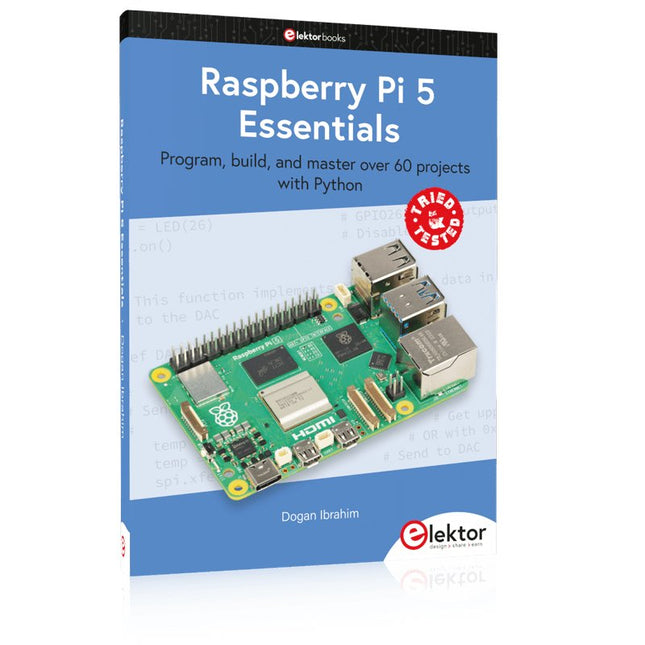
Elektor Publishing Raspberry Pi 5 Essentials
Program, build, and master over 60 projects with Python The Raspberry Pi 5 is the latest single-board computer from the Raspberry Pi Foundation. It can be used in many applications, such as in audio and video media centers, as a desktop computer, in industrial controllers, robotics, and in many domestic and commercial applications. In addition to the well-established features found in other Raspberry Pi computers, the Raspberry Pi 5 offers Wi-Fi and Bluetooth (classic and BLE), which makes it a perfect match for IoT as well as in remote and Internet-based control and monitoring applications. It is now possible to develop many real-time projects such as audio digital signal processing, real-time digital filtering, real-time digital control and monitoring, and many other real-time operations using this tiny powerhouse. The book starts with an introduction to the Raspberry Pi 5 computer and covers the important topics of accessing the computer locally and remotely. Use of the console language commands as well as accessing and using the desktop GUI are described with working examples. The remaining parts of the book cover many Raspberry Pi 5-based hardware projects using components and devices such as LEDs and buzzers LCDs Ultrasonic sensors Temperature and atmospheric pressure sensors The Sense HAT Camera modules Example projects are given using Wi-Fi and Bluetooth modules to send and receive data from smartphones and PCs, and sending real-time temperature and atmospheric pressure data to the cloud. All projects given in the book have been fully tested for correct operation. Only basic programming and electronics experience are required to follow the projects. Brief descriptions, block diagrams, detailed circuit diagrams, and full Python program listings are given for all projects described.
€ 39,95
Membres € 35,96
-
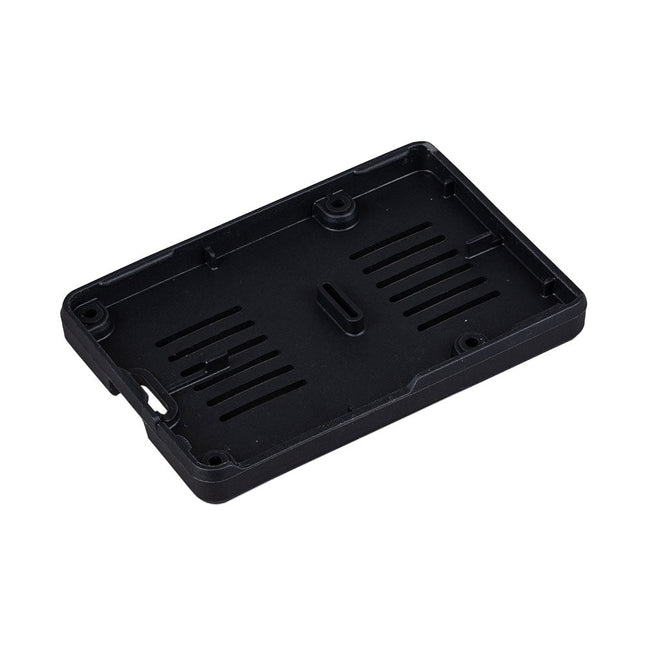
Raspberry Pi Foundation Bumper pour Raspberry Pi 5
Le Raspberry Pi Bumper est une coque en silicone à clipser qui protège le bas et les bords du Raspberry Pi 5. Caractéristiques Bumper en caoutchouc de silicone flexible d'une seule pièce Permet d'accéder facilement au bouton d'alimentation Les trous de montage restent accessibles sous le bumper Téléchargements Datasheet
€ 3,50€ 1,40
Membres identique
-
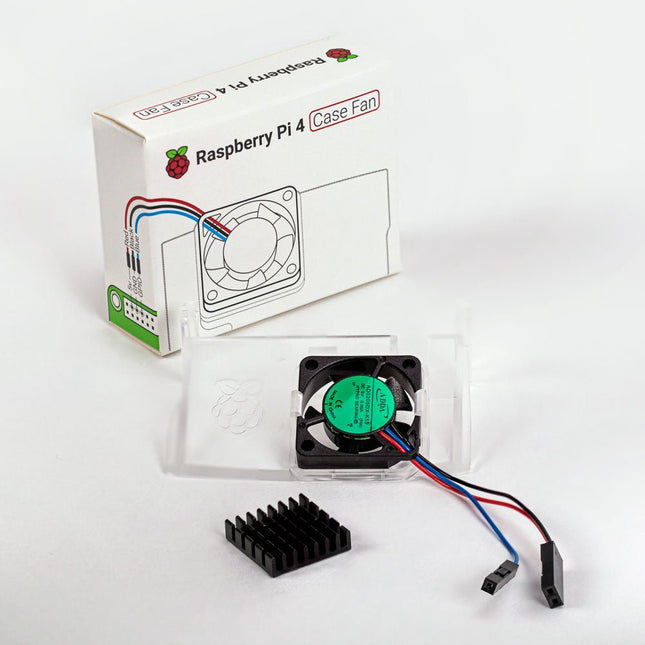
Raspberry Pi Foundation Ventilateur du boîtier Raspberry Pi 4
Conçu pour les overclockers et autres utilisateurs expérimentés, ce ventilateur maintient votre Raspberry Pi 4 à une température de fonctionnement confortable, même sous une charge importante. Le ventilateur à température contrôlée fournit jusqu'à 1,4 CFM de flux d'air sur le processeur, la mémoire et le circuit intégré de gestion de l'alimentation. Le dissipateur thermique fourni (18 x 8 x 10 mm) avec tampon autocollant améliore le transfert de chaleur du processeur. Le ventilateur du boîtier Raspberry Pi 4 fonctionne avec le Raspberry Pi 4 et le boîtier officiel Raspberry Pi 4.
€ 6,95€ 2,78
Membres identique
-
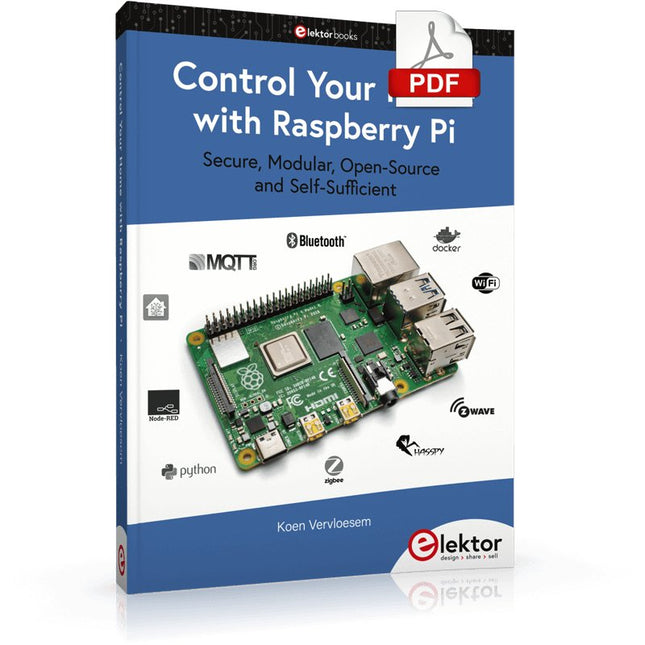
Elektor Digital Control Your Home with Raspberry Pi (E-book)
Secure, Modular, Open-Source and Self-Sufficient Ever since the Raspberry Pi was introduced, it has been used by enthusiasts to automate their homes. The Raspberry Pi is a powerful computer in a small package, with lots of interfacing options to control various devices. This book shows you how you can automate your home with a Raspberry Pi. You’ll learn how to use various wireless protocols for home automation, such as Bluetooth, 433.92 MHz radio waves, Z-Wave, and Zigbee. Soon you’ll automate your home with Python, Node-RED, and Home Assistant, and you’ll even be able to speak to your home automation system. All this is done securely, with a modular system, completely open-source, without relying on third-party services. You’re in control of your home, and no one else. At the end of this book, you can install and configure your Raspberry Pi as a highly flexible home automation gateway for protocols of your choice, and link various services with MQTT to make it your own system. This DIY (do it yourself) approach is a bit more laborious than just installing an off-the-shelf home automation system, but in the process, you can learn a lot, and in the end, you know exactly what’s running your house and how to tweak it. This is why you were interested in the Raspberry Pi in the first place, right? Turn your Raspberry Pi into a reliable gateway for various home automation protocols. Make your home automation setup reproducible with Docker Compose. Secure all your network communication with TLS. Create a video surveillance system for your home. Automate your home with Python, Node-RED, Home Assistant and AppDaemon. Securely access your home automation dashboard from remote locations. Use fully offline voice commands in your own language. Download the software and view the errata for the book on GitHub.
€ 34,95
Membres € 27,96
-
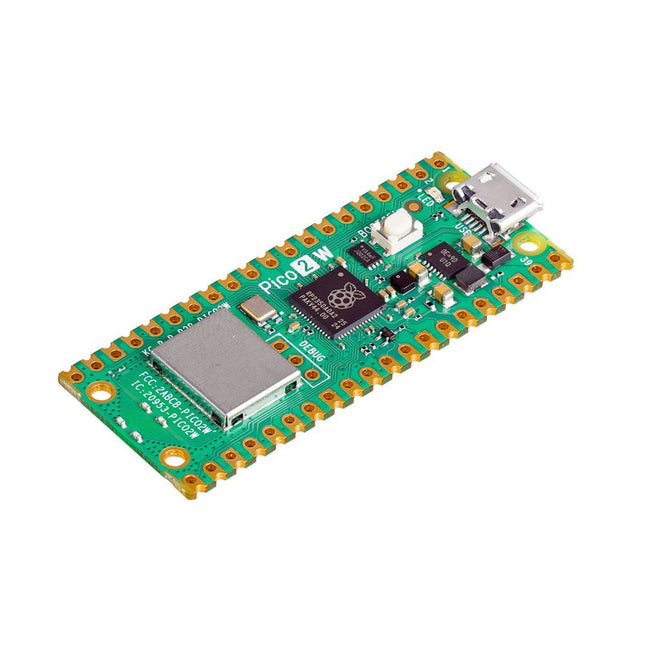
Raspberry Pi Foundation Raspberry Pi Pico 2 W
Le Raspberry Pi Pico 2 W est une carte microcontrôleur basée sur le RP2350 doté d'un réseau local sans fil 802.11n à 2,4 GHz et de Bluetooth 5.2. Il vous offre encore plus de flexibilité dans la conception de vos produits IoT ou intelligents et étend les possibilités de vos projets. Le RP2350 fournit une architecture de sécurité complète construite autour d'Arm TrustZone pour Cortex-M. Il intègre un démarrage signé, 8 Ko d'OTP antifusible pour le stockage des clés, une accélération SHA-256, un TRNG matériel et des détecteurs de problèmes rapides. La capacité unique à double cœur et à double architecture du RP2350 permet aux utilisateurs de choisir entre une paire de cœurs Arm Cortex-M33 standard et une paire de cœurs Hazard3 RISC-V à matériel ouvert. Programmable en C/C++ et Python, et pris en charge par une documentation détaillée, le Raspberry Pi Pico 2 W est la carte microcontrôleur idéale pour les passionnés et les développeurs professionnels. Spécifications Processeur Processeurs Dual Arm Cortex-M33 ou double RISC-V Hazard3 à 150 MHz Sand fil Infineon CYW43439 monobande 2,4 GHz sans fil 802.11n et Bluetooth 5.2 Mémoire 520 Ko de SRAM sur puce ; Flash QSPI intégré de 4 Mo Interfaces 26 broches GPIO polyvalentes, dont 4 pouvant être utilisées pour AD Périphériques 2x UART 2x Contrôleurs SPI 2x Contrôleurs I²C 24x Canaux PWM 1x Contrôleur USB 1.1 et PHY, avec prise en charge des hôtes et des périphériques 12x Machines à états PIO Puissance d'entrée 1,8-5,5 V CC Dimensions 21 x 51 mm Téléchargements Datasheet Pinout Schematic
€ 7,95
Membres identique
-
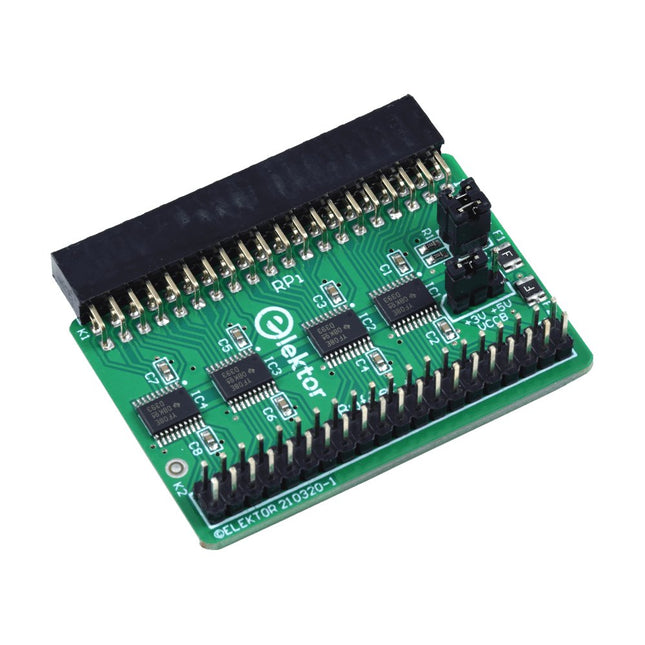
Elektor Labs Carte tampon pour Raspberry Pi d'Elektor
Lorsque vous expérimentez régulièrement avec le Raspberry Pi et que vous connectez une variété de matériel externe au port GPIO via le connecteur, il se peut que vous ayez causé des dommages par le passé. La carte tampon Raspberry Pi d'Elektor est là pour éviter cela ! La carte est compatible avec les Raspberry Pi Zero, Zero 2 (W), 3, 4, 5, 400 et 500. Les 26 GPIO sont protégées par des convertisseurs de tension bidirectionnels afin de protéger le Raspberry Pi lors de l'expérimentation de nouveaux circuits. Le circuit imprimé est destiné à être inséré à l'arrière du Raspberry Pi 400/500. Le connecteur à connecter au Raspberry Pi est un réceptacle 40 voies à angle droit (2x20). La platine est seulement un peu plus large. Un câble plat à 40 voies avec des connecteurs 2x20 appropriés peut être connecté au connecteur de sortie du tampon pour expérimenter avec par exemple un circuit sur une plaque d’expérimentation ou sur une platine. Le circuit utilise 4x circuits intégrés TXS0108E de Texas Instruments. Le circuit imprimé peut également être monté sur un Raspberry Pi. Téléchargements Schematics Layout
€ 34,95€ 29,95
Membres identique
-
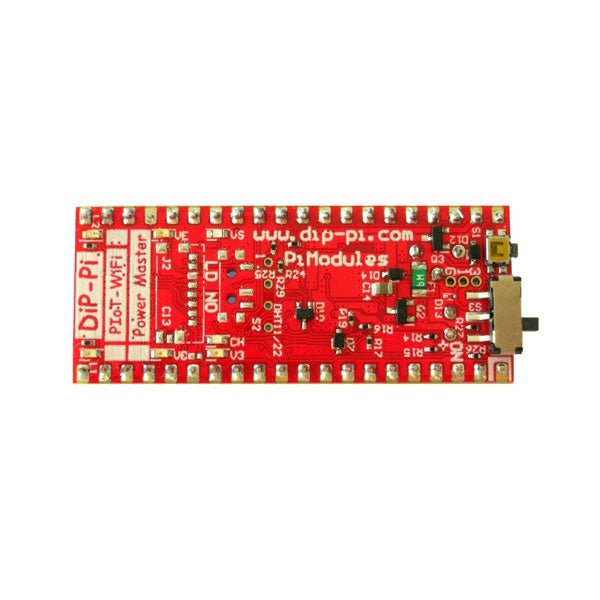
Pi Modules DiP-Pi Pico Power Master pour Raspberry Pi Pico
Le DiP-Pi Power Master est un système d'alimentation avancé avec des interfaces de capteurs intégrées qui couvrent la plupart des besoins possibles pour les applications basées sur Raspberry Pi Pico. Il peut fournir au système jusqu'à 1,5 A à 4,8 V délivrés de 6 à 18 V CC sur divers schémas d'alimentation comme les voitures, les installations industrielles, etc., en plus du micro-USB d'origine du Raspberry Pi Pico. Il prend en charge la batterie LiPo ou Li-Ion avec chargeur automatique ainsi que la commutation automatique de l'alimentation par câble à l'alimentation par batterie ou inversement (fonctionnalité UPS) en cas de perte d'alimentation par câble. La source d'alimentation étendue (EPR) est protégée par un fusible réinitialisable PPTC, à polarité inversée, ainsi que par ESD. Le DiP-Pi Power Master contient un bouton RESET intégré au Raspberry Pi Pico ainsi qu'un interrupteur coulissant ON/OFF qui agit sur toutes les sources d'alimentation (USB, EPR ou batterie). L'utilisateur peut surveiller (via les broches A/D du Raspberry Pi Pico) le niveau de la batterie et le niveau EPR avec les convertisseurs A/D de PICO. Les deux entrées A/D sont pontées avec des résistances 0402 (0 OHM), donc si pour une raison quelconque l'utilisateur a besoin d'utiliser ces broches Pico pour sa propre application, elles peuvent être facilement retirées. Le chargeur charge automatiquement la batterie connectée (si utilisée), mais l'utilisateur peut en outre allumer/éteindre le chargeur si son application en a besoin. DiP-Pi Power Master peut être utilisé pour les systèmes alimentés par câble, mais également pour les systèmes purement alimentés par batterie avec ON/OFF. L'état de chaque source d'alimentation est indiqué par des LED informatives distinctes (VBUS, VSYS, VEPR, CHGR, V3V3). L'utilisateur peut utiliser n'importe quelle capacité de type LiPo ou Li-Ion ; Cependant, il faut veiller à utiliser des batteries protégées par PCB avec un courant de décharge maximum autorisé de 2 A. Le chargeur de batterie intégré est configuré pour charger la batterie avec un courant de 240 mA. Ce courant est réglé par une résistance, donc si l'utilisateur a besoin de plus/moins, il peut le changer lui-même. En plus de toutes les fonctionnalités ci-dessus, le DiP-Pi Power Master est équipé d'interfaces de capteurs 1 fil et DHT11/22 intégrées. La combinaison des interfaces étendues d'alimentation, de batterie et de capteurs rend le DiP-Pi Power Master idéal pour les applications telles que l'enregistreur de données, la surveillance des usines, la surveillance des réfrigérateurs, etc. DiP-Pi Power Master est pris en charge avec de nombreux exemples prêts à l'emploi écrits en Micro Python ou C/C++. Caractéristiques Général Dimensions 21 x 51 mm Compatible avec le brochage Raspberry Pi Pico LED informatives indépendantes (VBUS, VSYS, VEPR, CHGR, V3V3) Bouton RESET du Raspberry Pi Pico Interrupteur à glissière ON/OFF agissant sur toutes les sources d'alimentation (USB, EPR, Batterie) Alimentation externe 6-18 V DC (voitures, applications industrielles, etc.) Surveillance du niveau d'alimentation externe (6-18 VCC) Surveillance du niveau de batterie Protection contre l'inversion de polarité Protection par fusible PPTC Protection ESD Chargeur de batterie automatique (pour LiPo, Li-Ion protégé par PCB – 2 A Max) Automatique/Contrôle utilisateur Passage automatique de l'alimentation par câble à l'alimentation par batterie et inversement (fonctionnalité UPS) Différents schémas d'alimentation peuvent être utilisés simultanément avec l'alimentation USB, l'alimentation externe et l'alimentation par batterie. Convertisseur Buck 1,5 A à 4,8 V sur EPR LDO intégré de 3,3 V à 600 mA Interface 1 fil intégrée Interface DHT-11/22 intégrée Options d'alimentation Raspberry Pi Pico micro USB (via VBUS) Alimentation externe 6-18 V (via prise dédiée – 3,4/1,3 mm) Batterie externe Types de batteries pris en charge LiPo avec PCB de protection courant max 2A Li-Ion avec PCB de protection courant max 2A Périphériques et interfaces intégrés Interface 1 fil intégrée Interface DHT-11/22 intégrée Interface de programmation Raspberry Pi standard Pico C/C++ Raspberry Pi standard Pico Micro Python Compatibilité des cas Boîtier DiP-Pi Plexi-Cut Surveillance du système Niveau de batterie via Raspberry Pi Pico ADC0 (GP26) Niveau EPR via Raspberry Pi Pico ADC1 (GP27) LED informatives VB (VUSB) États-Unis (VSYS) VE (VEPR) CH (VCHR) V3 (V3V3) Protection du système Bouton de réinitialisation matérielle instantanée Raspberry Pi Pico Protection ESD sur EPR Protection contre l'inversion de polarité sur l'EPR Fusible PPTC 500 mA @ 18 V sur EPR Protection contre la surchauffe EPR/LDO EPR/LDO À propos de la protection actuelle Conception du système Conçu et simulé avec PDA Analyzer avec l'un des outils CAO/FAO les plus avancés – Altium Designer Origine industrielle Construction de circuits imprimés PCB de 2 oz en cuivre fabriqué pour une alimentation et un refroidissement appropriés en courant élevé Technologie de piste de 6 mils/écart de 6 mils PCB à 2 couches Finition de surface de PCB – Immersion Gold Tuyaux thermiques en cuivre multicouche pour une réponse thermique accrue du système et un meilleur refroidissement passif Téléchargements Fiche de données Fiche de données
€ 17,95€ 7,18
Membres identique











