
Résultats de la recherche pour "breadboard OR 830 OR tie OR points"
-

BusBoard BreadBoard BB830T (830 Tie Points) Transparent
The BB830T is a solderless (plug-in) transparent breadboard with 830 connection tie-points (i.e. 830 wire insertion holes). It has 4 power rails. Solderless breadboards are great for building and testing new circuits because parts can be easily inserted and removed. They are completely re-usable. The BB830T has a 630 tie-point IC-circuit area plus four 50 tie-point power rails. Specifications 830 tie points total: 630 tie-point IC-circuit area plus two 100 tie-point distribution strips providing 4 power rails. ABS plastic/transparent body with black printed legend. Color legend on distribution strips. Contacts are Phosphor Bronze with Plated Nickel Finish, rated for 50,000 insertions. Rated at 36 Volts, 2 Amps. Insertion Wire Size is 21 to 26 AWG, 0.016 to 0.028 inches diameter (0.4 to 0.7mm diameter). Peelable adhesive tape backing provided for attaching to a surface. Metal back plate provided.
€ 10,20
-

FNIRSI FNIRSI SWM-20 Poste de soudage par points à double impulsion
La soudeuse par points portative FNIRSI SWM-20 est un outil de soudage performant, convivial et facile à transporter. Elle intègre la technologie de soudage par points à double impulsion, garantissant des soudures plus stables et fiables, et dispose également d'une fonction de batterie externe pratique. Dotée d'un écran haute définition de 2,4 pouces, la SWM-20 offre une utilisation claire et intuitive. Sa molette de réglage rotative permet un ajustement rapide et précis des paramètres, facilitant ainsi la configuration des réglages de soudage et améliorant l'expérience utilisateur. Caractéristiques 2-en-1 : poste de soudage par points et batterie externe de 5000 mAh Puissance de sortie élevée de 1200 A pour des soudures robustes et fiables Technologie à double impulsion pour une soudure plus propre et plus stable Deux batteries de qualité A avec 8 protections de sécurité Capacité de soudage multi-matériaux de 0,1 à 0,5 mm Plus de 10000 niveaux de réglage de précision pour un contrôle professionnel Écran TFT de 2,4 pouces avec surveillance des données en temps réel Spécifications Courant de soudage max. 1200 A Capacité de la batterie 5000 mAh Charge 5 V/2,1 A Décharge 5 V/2,1 A Matériaux de soudage Nickel, fer, acier inoxydable Épaisseur de soudure 0,1 à 0,5 mm Niveau 4 combinaisons prédéfinies Niveaux Inclus 1x FNIRSI SWM-20 Poste de soudage par points 2x Stylos à souder 2x Conseils de remplacement 1x Bande de nickel 1x Câble USB-C 1x Manuel Téléchargements Manual
€ 79,95€ 67,95
Meilleur prix
-
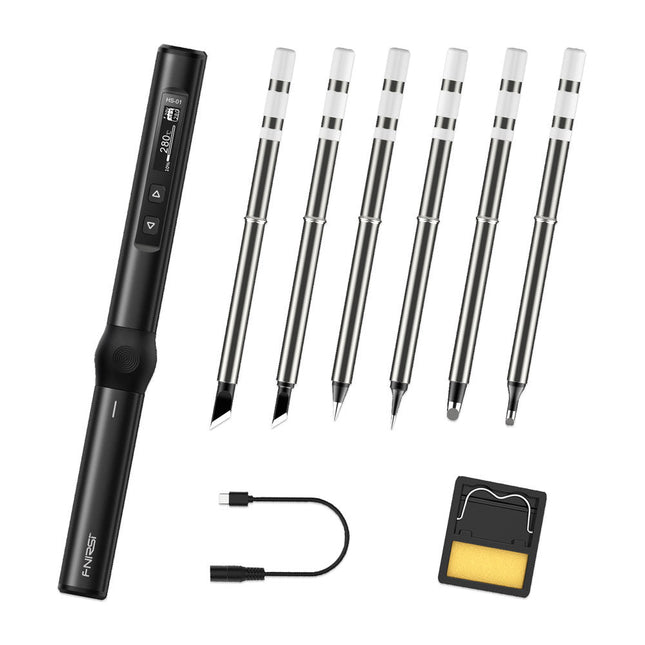
FNIRSI FNIRSI HS-01 Fer à souder intelligent (avec 6 pointes de soudure)
L'outil parfait pour des réparations rapides Le HS-01 est un puissant fer à souder intelligent réglable équipé d'un écran OLED intégré de 0,87 pouces qui atteint rapidement des températures comprises entre 80 et 420°C. L'écran affiche toutes les informations essentielles, notamment l'état du niveau de température, la température réglée, la tension d'alimentation et le pourcentage de puissance. Vous pouvez régler la tension d'entrée de 9 à 20 V directement dans le menu selon vos besoins. Le mode veille intégré éteint automatiquement le fer après 30 minutes. Caractéristiques Entrée de 96 W (CC) Puissance PD de 65 W Écran OLED Température constante et chauffage rapide Moulage intégral en métal CNC Sécurité intelligente anti-brûlure Format de poche mini Design ergonomique Matériau en aluminium Interrupteur pour main gauche/droite Évacuation de chaleur efficace Veille inductive Couleur : Noir Spécifications Puissance 65 W Écran OLED de 0,87 pouce Tension de fonctionnement 9-20 VCC Alimentation électrique USB-C Plage de température 80-420°C Protocole de charge rapide Déclenchement PD Dimensions 184 x 20 x 20 mm (7,24 x 0,79 x 0,79 pouces) Poids 56 g Sélection de la puissance Tension de fonctionnement 20 V 15 V 12 V 9 V Courant de fonctionnement ≥3,25 A ≥2,5 A ≥2 A ≥1,5 A Puissance 65 W 37,5 W 24 W 13,5 W Temps de fusion de l'étain 8 s 12 s 17 s 30 s Inclus 1x Fer à souder intelligent FNRISI HS-01 6x Embouts de fer à souder (HS01-BC2, HS01-KR, HS01-K65, HS01-B2, HS01-ILS, HS01-BC3) 1x Câble d'alimentation CC vers USB-C 1x Support de fer à souder mini 1x Manuel Requis Adaptateur secteur Câble USB-C Téléchargements Manual Firmware V0.3.s19
€ 81,32
-
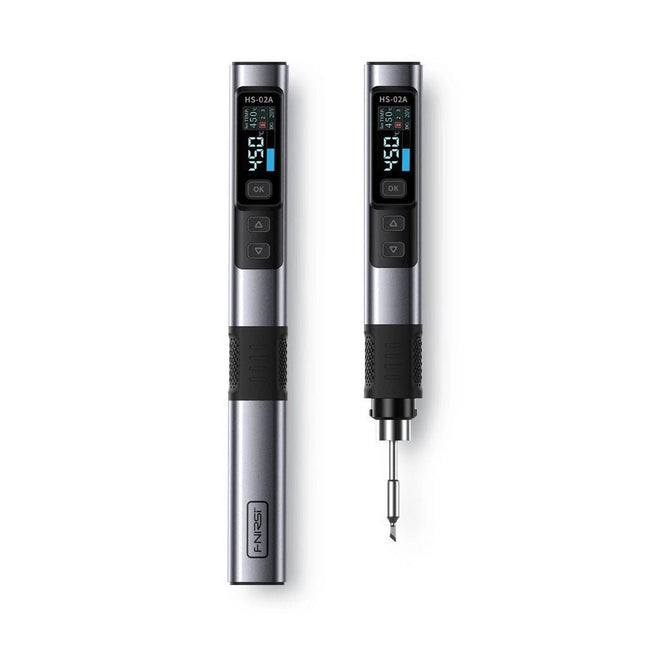
FNIRSI FNIRSI HS-02A Fer à souder intelligent (avec 6 pointes de soudure)
Le FNIRSI HS-02A est une version améliorée du fer à souder HS-01 avec une meilleure prise en main et une pointe plus courte pour plus de confort et de précision lors de l'utilisation. Il dispose d'un écran couleur IPS HD plus grand de 0,96 pouces qui permet une meilleure visibilité des paramètres et de l'état. Avec une puissance de sortie de 100 W, le HS-02A chauffe rapidement et atteint sa température de fonctionnement en 2 secondes environ. La température est réglable dans une plage de 100 à 450°C pour répondre aux différentes exigences de soudure. Caractéristiques Température : 100 à 450°C Réglage et contrôle précis de la température Chauffage rapide Coque métallique CNC Puissance adaptative 100 W haute puissance Protocoles: PD, QC Spécifications Plage de température 100-450°C Tension de fonctionnement 9-20 V Écran Écran couleur IPS HD de 0,96 pouces Alimentation USB-C Protocoles de charge rapide PD/CQ Puissance 100 W (maximum) Dimensions 180 x 20 mm Poids 61 g Inclus 1x FNRISI HS-02A fer à souder intelligent 6x Pannes de fer à souder (HS02A-KU, HS02A-K, HS02A-JS, HS02A-I, HS02A-C2, HS02A-B) 1x Mini support pour fer à souder 1x Manuel Téléchargements Manual Firmware V1.7
€ 61,44
-
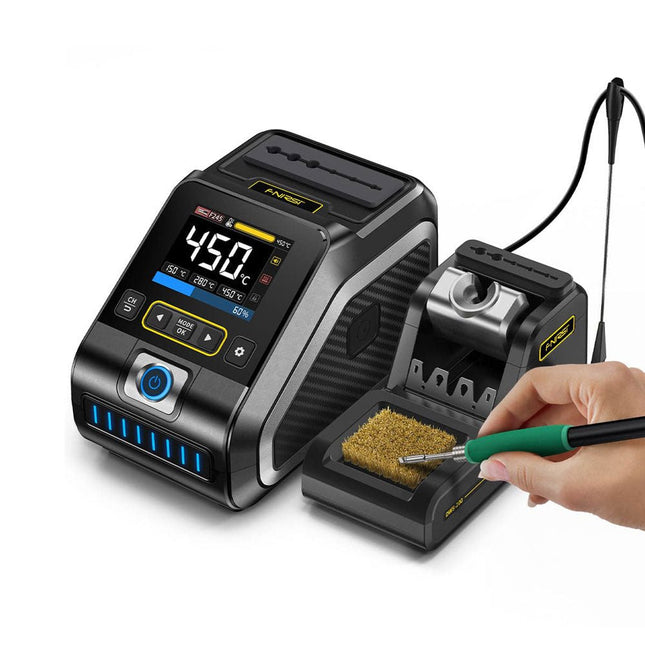
FNIRSI FNIRSI DWS-200 Station de soudure intelligente (avec poignée F245 + 6 pointes de soudure)
La FNIRSI DWS-200 est une puissante station de soudage intelligente de 200 W, idéale pour les applications de soudage électronique. Alimenté par une alimentation à découpage, il fonctionne sans problème avec une large plage de tension d'entrée de 100 à 240 V. La station offre une plage de température réglable de 100°C à 450°C et permet de basculer facilement entre °C et °F. Pour améliorer l'efficacité, il prend en charge jusqu'à trois valeurs de température prédéfinies et peut se connecter à un support de fer à souder pour l'activation du mode veille. La station dispose également d'un mode de courbe de température dynamique pour la surveillance des données en temps réel, garantissant des performances précises et cohérentes dans les tâches de soudage exigeantes. Features Puissance de sortie maximale de 200 W, permettant un chauffage rapide Large entrée de tension adaptative de 100 à 240 V Écran TFT couleur HD de 2,8 pouces avec contrôle intelligent Plusieurs groupes prédéfinis pour basculer rapidement entre différents paramètres Prend en charge les types de poignées à souder F245 et F210, offrant ainsi une flexibilité pour différentes applications de soudage Mode veille en temps réel pour prolonger la durée de vie de la panne à souder Surveillance multimode en temps réel de l'état de l'alimentation et de la température, améliorant ainsi la sécurité et la précision Spécifications Puissance maximale 200 W (maximum) Plage de température 100°C~450°C Écran Écran couleur TFT HD de 2,8 pouces Temps de chauffage 1 seconde Temps de fusion 3 secondes Tension d'entrée 100-240 V (CA) Fusible d'entrée 3A Type de poignée à souder F245 Dimensions (station) 156 x 96 x 103 mm Poids (station) 475 g Inclus 1x FNIRSI DWS-200 station de soudage 1x Poignée à souder F245 6x Pannes à souder (B, KU, K, C2, I, JS) 1x Câble de connexion 2x Coups de main 1x Câble d'alimentation (UE) Téléchargements Manual Firmware V1.3
€ 177,52
-

Elektor Digital The Book of 555 Timer Projects (E-book)
Over 45 Builds for the Legendary 555 Chip (and the 556, 558) The 555 timer IC, originally introduced by the Signetics Corporation around 1971, is sure to rank high among the most popular analog integrated circuits ever produced. Originally called the IC Time Machine, this chip has been used in many timer-related projects by countless people over decades. This book is all about designing projects based on the 555 timer IC. Over 45 fully tested and documented projects are presented. All projects have been fully tested by the author by constructing them individually on a breadboard. You are not expected to have any programming experiences for constructing or using the projects given in the book. However, it’s definitely useful to have some knowledge of basic electronics and the use of a breadboard for constructing and testing electronic circuits. Some of the projects in the book are: Alternately Flashing Two LEDs Changing LED Flashing Rate Touch Sensor On/Off Switch Switch On/Off Delay Light-Dependent Sound Dark/Light Switch Tone Burst Generator Long Duration Timer Chasing LEDs LED Roulette Game Traffic Lights Continuity Tester Electronic Lock Switch Contact Debouncing Toy Electronic Organ Multiple Sensor Alarm System Metronome Voltage Multipliers Electronic Dice 7-Segment Display Counter Motor Control 7-Segment Display Dice Electronic Siren Various Other Projects The projects given in the book can be modified or expanded by you for your very own applications. Electronic engineering students, people engaged in designing small electronic circuits, and electronic hobbyists should find the projects in the book instructive, fun, interesting, and useful.
€ 29,95
Membres : € 23,96
-

Pinecone Carte d'évaluation Pinecone BL602
Caractéristiques Interface USB vers série intégrée Antenne PCB intégrée Alimenté par Pineseed BL602 SoC utilisant le modèle Pinenut : tampon 12S 2 Mo de mémoire Flash Connexion USB-C Convient au projet BIY de maquette Sortie LED à trois couleurs à bord Dimensions : 25,4 x 44,0 mm Remarque : le câble USB n'est pas inclus.
€ 8,95€ 3,50
Meilleur prix
-
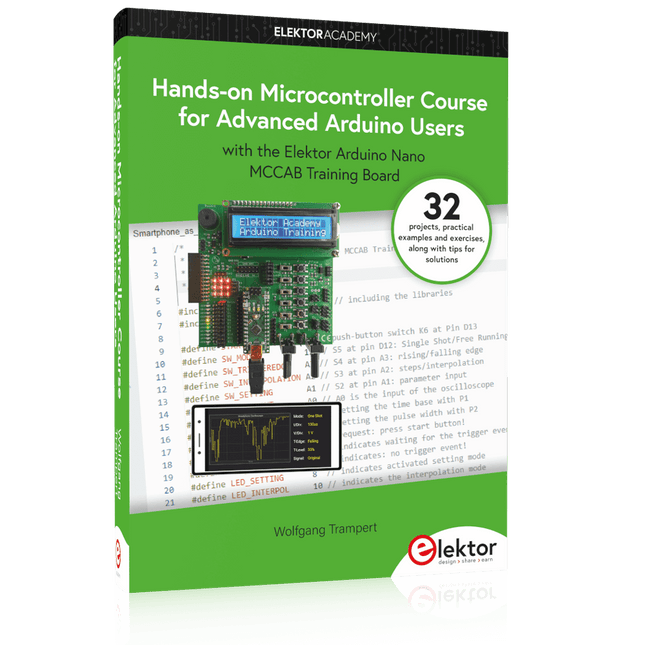
Elektor Publishing Hands-on Microcontroller Course for Advanced Arduino Users
32 new Projects, Practical Examples and Exercises with the Elektor Arduino Nano MCCAB Training Board Electronics and microcontroller technology offer the opportunity to be creative. This practical microcontroller course provides you with the chance to bring your own Arduino projects and experience such moments of success. Ideally, everything works as you imagined when you switch it on for the first time. In practice, however, things rarely work as expected. At that point, you need knowledge to efficiently search for and find the reason for the malfunction. In this book for advanced users, we delve deep into the world of microcontrollers and the Arduino IDE to learn new procedures and details, enabling you to successfully tackle and solve even more challenging situations. With this book, the author gives the reader the necessary tools to create projects independently and also to be able to find errors quickly. Instead of just offering ready-made solutions, he explains the background, the hardware used, and any tools required. He sets tasks in which the reader contributes their own creativity and writes the Arduino sketch themselves. If you don’t have a good idea and get stuck, there is, of course, a suggested solution for every project and every task, along with the corresponding software, which is commented on and explained in detail in the book. This practical course will teach you more about the inner workings of the Arduino Nano and its microcontroller. You will get to know hardware modules that you can use to realize new and interesting projects. You will familiarize yourself with software methods such as ‘state machines,’ which can often be used to solve problems more easily and clearly. The numerous practical projects and exercise sketches are once again realized on the Arduino Nano MCCAB Training Board, which you may already be familiar with from the course book ‘Microcontrollers Hands-on Course for Arduino Starters’, and which contains all the hardware peripherals and operating elements we need for the input/output operations of our sketches. Readers who do not yet own the Arduino Nano MCCAB Training Board can purchase the required hardware separately, or alternatively, build it on a breadboard.
€ 49,95
Membres : € 44,96
-

Elektor Digital Introduction to Electronic Filters (E-book)
Learn RC and RL Filters with Hands-On Circuits and Simulation Introduction to Electronic Filters is your comprehensive guide to understanding, designing, and applying first-order electronic filters using resistors, capacitors, and inductors. Whether you are a student, maker, or educator, this book demystifies the theory behind RC and RL filters and bridges the gap between concepts and real-world applications through simulation and experimentation. From the basics of frequency response and phase shift to hands-on breadboard builds and Python-based simulations, this book offers a deeply practical learning experience. You will learn to analyse filters using Bode plots and phasors, and explore applications in audio tone shaping, sensor signal conditioning, noise reduction, and power supply filtering. As you progress, you’ll build, measure, simulate, and tune filters using modern tools like CircuitLab, Python, and the Analog Discovery 3. Each chapter includes thoughtfully crafted activities that reinforce learning by doing – designing filters for specific tasks, simulating dynamic behaviour, and observing how theory translates into performance. Inside you’ll find: A clear introduction to the fundamentals of electronic filters Detailed explanations of RC and RL filters, cutoff frequency, and phase Guided activities using both simulation and hardware tools Real-life applications in audio, sensors, power supplies, and more A beginner-friendly primer on Python and algebra for electronics Whether you’re working through simulations or experimenting with real components on your workbench, this book will help you develop a solid understanding of electronic filters and their role in practical circuits.
€ 32,95
Membres : € 26,36
-

Elektor Publishing Introduction to Electronic Filters
Learn RC and RL Filters with Hands-On Circuits and Simulation Introduction to Electronic Filters is your comprehensive guide to understanding, designing, and applying first-order electronic filters using resistors, capacitors, and inductors. Whether you are a student, maker, or educator, this book demystifies the theory behind RC and RL filters and bridges the gap between concepts and real-world applications through simulation and experimentation. From the basics of frequency response and phase shift to hands-on breadboard builds and Python-based simulations, this book offers a deeply practical learning experience. You will learn to analyse filters using Bode plots and phasors, and explore applications in audio tone shaping, sensor signal conditioning, noise reduction, and power supply filtering. As you progress, you’ll build, measure, simulate, and tune filters using modern tools like CircuitLab, Python, and the Analog Discovery 3. Each chapter includes thoughtfully crafted activities that reinforce learning by doing – designing filters for specific tasks, simulating dynamic behaviour, and observing how theory translates into performance. Inside you’ll find: A clear introduction to the fundamentals of electronic filters Detailed explanations of RC and RL filters, cutoff frequency, and phase Guided activities using both simulation and hardware tools Real-life applications in audio, sensors, power supplies, and more A beginner-friendly primer on Python and algebra for electronics Whether you’re working through simulations or experimenting with real components on your workbench, this book will help you develop a solid understanding of electronic filters and their role in practical circuits.
€ 39,95
Membres : € 35,96


-
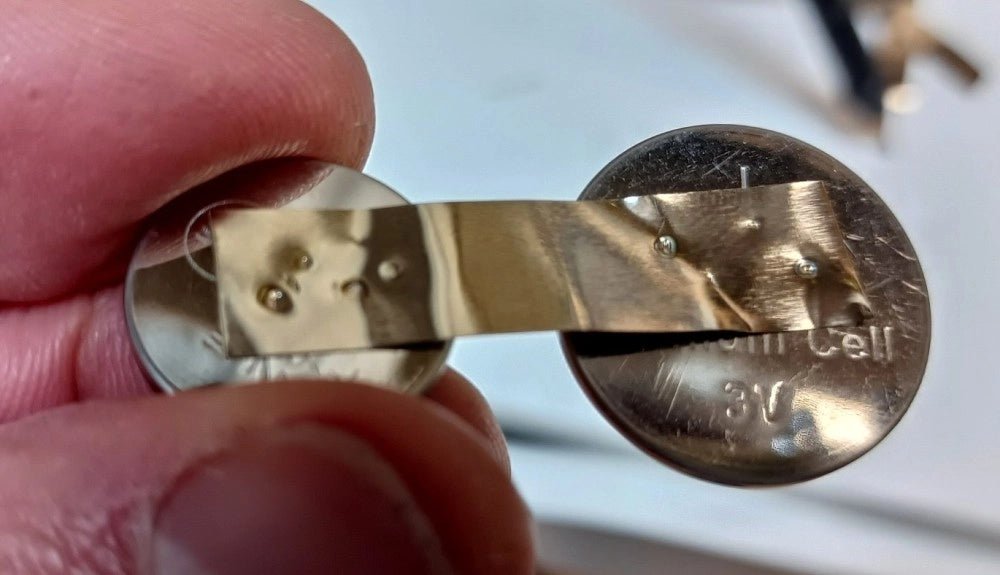
, par Clemens Valens Fnirsi SWM-10 Appareil portable de soudage par point intelligent pour réparer vos packs d’accumulateurs (Revue détaillée)
Les packs d’accumulateurs ont envahi notre environnement du fait de l’augmentation des appareils sans fils, outils de jardinage électriques vélos électrique, scooters, automobiles et autres. Les...
-
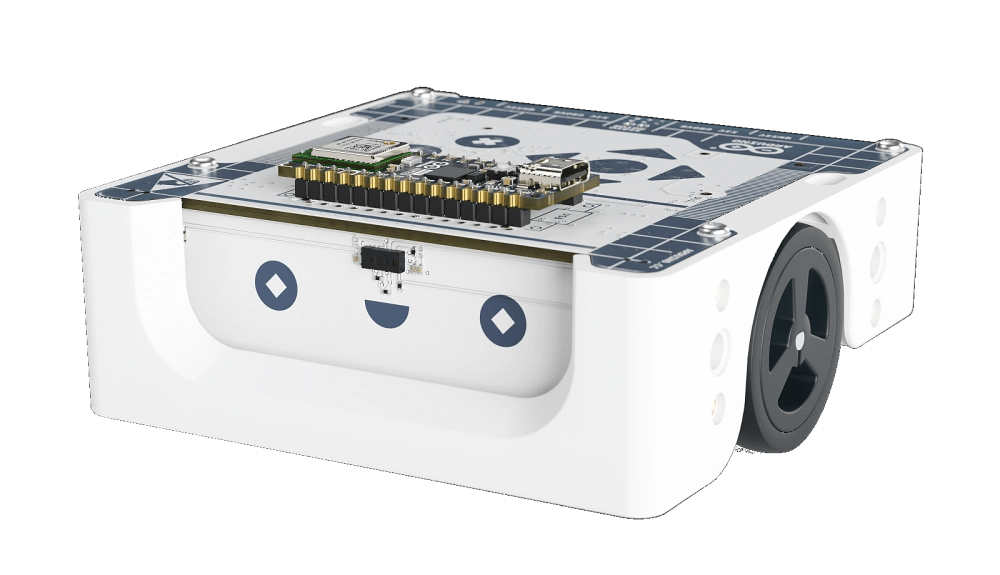
, par Clemens Valens Arduino Alvik, un robot qui change la donne en matière d'éducation STE(A)M ? (avis)
L'une des façons de trouver et de créer les ingénieurs de demain est de s'adresser à nos enfants. L'idée est de leur fournir des outils...
