Raspberry Pi

45 produits

  • PID - based Practical Digital Control with Raspberry Pi and Arduino Uno - Elektor

    Elektor Publishing PID-based Practical Digital Control with Raspberry Pi and Arduino Uno

    The Arduino Uno is an open-source microcontroller development system encompassing hardware, an Integrated Development Environment (IDE), and a vast number of libraries. It is supported by an enormous community of programmers, electronic engineers, enthusiasts, and academics. The libraries in particular really smooth Arduino programming and reduce programming time. What’s more, the libraries greatly facilitate testing your programs since most come fully tested and working. The Raspberry Pi 4 can be used in many applications such as audio and video media devices. It also works in industrial controllers, robotics, games, and in many domestic and commercial applications. The Raspberry Pi 4 also offers Wi-Fi and Bluetooth capability which makes it great for remote and Internet-based control and monitoring applications. This book is about using both the Raspberry Pi 4 and the Arduino Uno in PID-based automatic control applications. The book starts with basic theory of the control systems and feedback control. Working and tested projects are given for controlling real-life systems using PID controllers. The open-loop step time response, tuning the PID parameters, and the closed-loop time response of the developed systems are discussed together with the block diagrams, circuit diagrams, PID controller algorithms, and the full program listings for both the Raspberry Pi and the Arduino Uno. The projects given in the book aim to teach the theory and applications of PID controllers and can be modified easily as desired for other applications. The projects given for the Raspberry Pi 4 should work with all other models of Raspberry Pi family. The book covers the following topics: Open-loop and closed-loop control systems Analog and digital sensors Transfer functions and continuous-time systems First-order and second-order system time responses Discrete-time digital systems Continuous-time PID controllers Discrete-time PID controllers ON-OFF temperature control with Raspberry Pi and Arduino Uno PID-based temperature control with Raspberry Pi and Arduino Uno PID-based DC motor control with Raspberry Pi and Arduino Uno PID-based water level control with Raspberry Pi and Arduino Uno PID-based LED-LDR brightness control with Raspberry Pi and Arduino Uno

    € 39,95

    Membres € 35,96

  • The CAN Bus Companion - Elektor

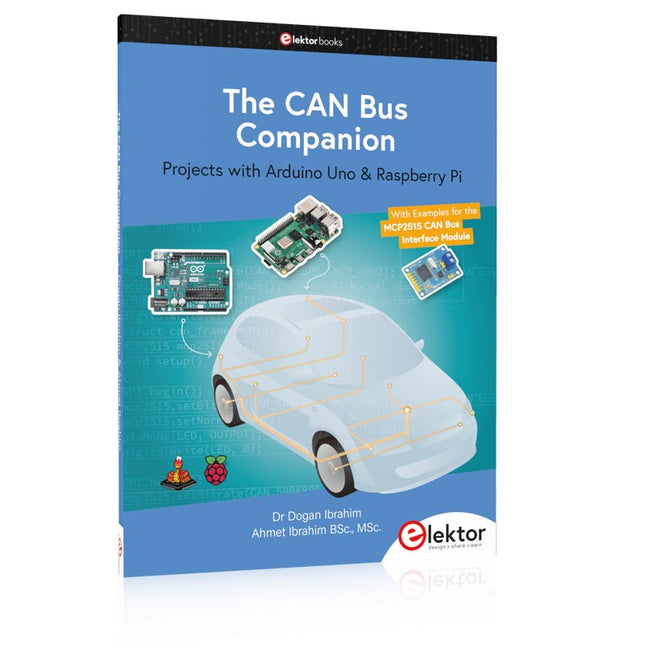
    Elektor Publishing The CAN Bus Companion

    This book details the use of the Arduino Uno and the Raspberry Pi 4 in practical CAN bus based projects. Using either the Arduino Uno or the Raspberry Pi with off-the-shelf CAN bus interface modules considerably ease developing, debugging, and testing CAN bus based projects. This book is written for students, practicing engineers, enthusiasts, and for everyone else wanting to learn more about the CAN bus and its applications. The book assumes that the reader has some knowledge of basic electronics. Knowledge of the C and Python programming languages and programming the Arduino Uno using its IDE and Raspberry Pi will be useful, especially if the reader intends to develop microcontroller-based projects using the CAN bus. The book should be a useful source of reference material for anyone interested in finding answers to questions such as: What bus systems are available for the automotive industry? What are the principles of the CAN bus? How can I create a physical CAN bus? What types of frames (or data packets) are available in a CAN bus system? How can errors be detected in a CAN bus system and how dependable is a CAN bus system? What types of CAN bus controllers exist? How do I use the MCP2515 CAN bus controller? How do I create 2-node Arduino Uno-based CAN bus projects? How do I create 3-node Arduino Uno-based CAN bus projects? How do I set the acceptance masks and acceptance filters? How do I analyze data on the CAN bus? How do I create 2-node Raspberry Pi-based CAN bus projects? How do I create 3-node Raspberry Pi-based CAN bus projects?

    € 34,95

    Membres € 31,46

  • Raspberry Pi Pico Essentials - Elektor

    Elektor Publishing Raspberry Pi Pico Essentials

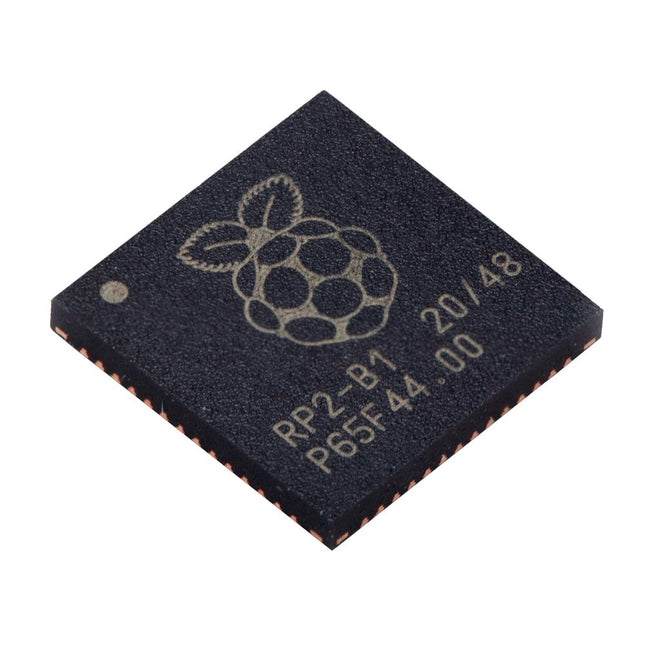
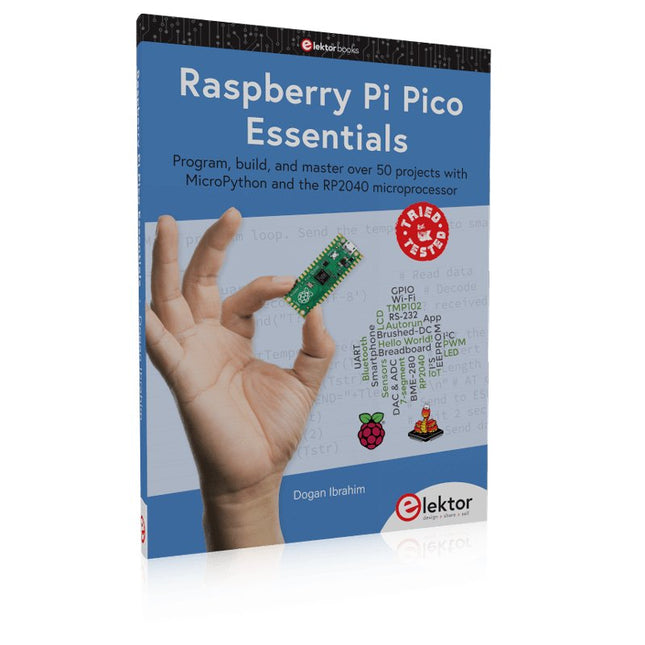
    Program, build, and master over 50 projects with MicroPython and the RP2040 microprocessor The Raspberry Pi Pico is a high-performance microcontroller module designed especially for physical computing. Microcontrollers differ from single-board computers, like the Raspberry Pi 4, in not having an operating system. The Raspberry Pi Pico can be programmed to run a single task very efficiently within real-time control and monitoring applications requiring speed. The ‘Pico’ as we call it, is based on the fast, efficient, and low-cost dual-core ARM Cortex-M0+ RP2040 microcontroller chip running at up to 133 MHz and sporting 264 KB of SRAM, and 2 MB of Flash memory. Besides its large memory, the Pico has even more attractive features including a vast number of GPIO pins, and popular interface modules like ADC, SPI, I²C, UART, and PWM. To cap it all, the chip offers fast and accurate timing modules, a hardware debug interface, and an internal temperature sensor. The Raspberry Pi Pico is easily programmed using popular high-level languages such as MicroPython and or C/C++. This book is an introduction to using the Raspberry Pi Pico microcontroller in conjunction with the MicroPython programming language. The Thonny development environment (IDE) is used in all the projects described. There are over 50 working and tested projects in the book, covering the following topics: Installing the MicroPython on Raspberry Pi Pico using a Raspberry Pi or a PC Timer interrupts and external interrupts Analogue-to-digital converter (ADC) projects Using the internal temperature sensor and external temperature sensor chips Datalogging projects PWM, UART, I²C, and SPI projects Using Wi-Fi and apps to communicate with smartphones Using Bluetooth and apps to communicate with smartphones Digital-to-analogue converter (DAC) projects All projects given in the book have been fully tested and are working. Only basic programming and electronics experience is required to follow the projects. Brief descriptions, block diagrams, detailed circuit diagrams, and full MicroPython program listings are given for all projects described. Readers can find the program listings on the Elektor web page created to support the book.

    € 39,95

    Membres € 35,96

  •  -14% Elektor Raspberry Pi Buffer Board - Elektor

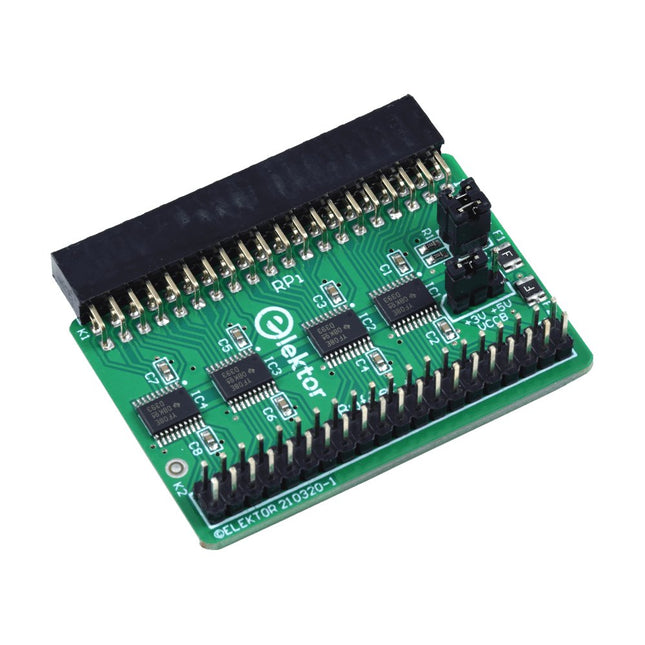
    Elektor Labs Carte tampon pour Raspberry Pi d'Elektor

    Lorsque vous expérimentez régulièrement avec le Raspberry Pi et que vous connectez une variété de matériel externe au port GPIO via le connecteur, il se peut que vous ayez causé des dommages par le passé. La carte tampon Raspberry Pi d'Elektor est là pour éviter cela ! La carte est compatible avec les Raspberry Pi Zero, Zero 2 (W), 3, 4, 5, 400 et 500. Les 26 GPIO sont protégées par des convertisseurs de tension bidirectionnels afin de protéger le Raspberry Pi lors de l'expérimentation de nouveaux circuits. Le circuit imprimé est destiné à être inséré à l'arrière du Raspberry Pi 400/500. Le connecteur à connecter au Raspberry Pi est un réceptacle 40 voies à angle droit (2x20). La platine est seulement un peu plus large. Un câble plat à 40 voies avec des connecteurs 2x20 appropriés peut être connecté au connecteur de sortie du tampon pour expérimenter avec par exemple un circuit sur une plaque d’expérimentation ou sur une platine. Le circuit utilise 4x circuits intégrés TXS0108E de Texas Instruments. Le circuit imprimé peut également être monté sur un Raspberry Pi. Téléchargements Schematics Layout

    € 34,95€ 29,95

    Membres identique

  •  -60% Official HDMI Cable for Raspberry Pi (black, 1 m) - Elektor

    Raspberry Pi Foundation Câble HDMI officiel pour Raspberry Pi (noir, 1 m)

    Le câble officiel Raspberry Pi micro HDMI vers HDMI (A/M) (noir, 1 m) conçu pour le Raspberry Pi 4 et 5. HDMI 19 broches types D(M) vers HDMI 19 broches types A(M) Câble de 1 m (noir) Fiches nickelées Conforme à la norme 4Kp60 Conforme à la directive RoHS Isolation de 3 Mohm à 300 VDC, résiste à 300 VDC pendant 0,1 s

    € 6,95€ 2,78

    Membres identique

  •  -60% Raspberry Pi 4 Case Fan - Elektor

    Raspberry Pi Foundation Ventilateur du boîtier Raspberry Pi 4

    Conçu pour les overclockers et autres utilisateurs expérimentés, ce ventilateur maintient votre Raspberry Pi 4 à une température de fonctionnement confortable, même sous une charge importante. Le ventilateur à température contrôlée fournit jusqu'à 1,4 CFM de flux d'air sur le processeur, la mémoire et le circuit intégré de gestion de l'alimentation. Le dissipateur thermique fourni (18 x 8 x 10 mm) avec tampon autocollant améliore le transfert de chaleur du processeur. Le ventilateur du boîtier Raspberry Pi 4 fonctionne avec le Raspberry Pi 4 et le boîtier officiel Raspberry Pi 4.

    € 6,95€ 2,78

    Membres identique

  • Control Your Home with Raspberry Pi - Elektor

    Elektor Publishing Control Your Home with Raspberry Pi

    Secure, Modular, Open-Source and Self-Sufficient Ever since the Raspberry Pi was introduced, it has been used by enthusiasts to automate their homes. The Raspberry Pi is a powerful computer in a small package, with lots of interfacing options to control various devices. This book shows you how you can automate your home with a Raspberry Pi. You’ll learn how to use various wireless protocols for home automation, such as Bluetooth, 433.92 MHz radio waves, Z-Wave, and Zigbee. Soon you’ll automate your home with Python, Node-RED, and Home Assistant, and you’ll even be able to speak to your home automation system. All this is done securely, with a modular system, completely open-source, without relying on third-party services. You’re in control of your home, and no one else. At the end of this book, you can install and configure your Raspberry Pi as a highly flexible home automation gateway for protocols of your choice, and link various services with MQTT to make it your own system. This DIY (do it yourself) approach is a bit more laborious than just installing an off-the-shelf home automation system, but in the process, you can learn a lot, and in the end, you know exactly what’s running your house and how to tweak it. This is why you were interested in the Raspberry Pi in the first place, right? Turn your Raspberry Pi into a reliable gateway for various home automation protocols. Make your home automation setup reproducible with Docker Compose. Secure all your network communication with TLS. Create a video surveillance system for your home. Automate your home with Python, Node-RED, Home Assistant and AppDaemon. Securely access your home automation dashboard from remote locations. Use fully offline voice commands in your own language. Downloads Errata on GitHub

    € 44,95

    Membres € 40,46

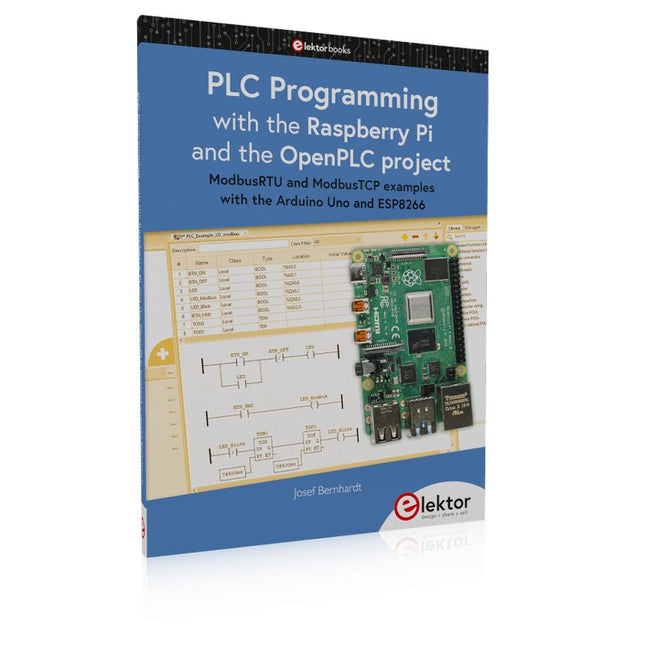
  • PLC Programming with the Raspberry Pi and the OpenPLC Project - Elektor

    Elektor Publishing PLC Programming with the Raspberry Pi and the OpenPLC Project

    ModbusRTU and ModbusTCP examples with the Arduino Uno and ESP8266 Introduction to PLC programming with OpenPLC, the first fully open source Programmable Logic Controller on the Raspberry Pi, and Modbus examples with Arduino Uno and ESP8266 PLC programming is very common in industry and home automation. This book describes how the Raspberry Pi 4 can be used as a Programmable Logic Controller. Before taking you into the programming, the author starts with the software installation on the Raspberry Pi and the PLC editor on the PC, followed by a description of the hardware. You'll then find interesting examples in the different programming languages complying with the IEC 61131-3 standard. This manual also explains in detail how to use the PLC editor and how to load and execute the programs on the Raspberry Pi. All IEC languages are explained with examples, starting with LD (Ladder Diagram) over ST (Structured Control Language) to SFC (Special Function Chart). All examples can be downloaded from the author's website. Networking gets thorough attention too. The Arduino Uno and the ESP8266 are programmed as ModbusRTU or ModbusTCP modules to get access to external peripherals, reading sensors and switching electrical loads. I/O circuits complying with the 24 V industry standard may also be of interest for the reader. The book ends with an overview of commands for ST and LD. After reading the book, the reader will be able to create his own controllers with the Raspberry Pi.

    € 39,95

    Membres € 35,96

  •  -60% Heatsink Set for Raspberry Pi (black) - Elektor

    Kuongshun Kit de dissipateurs thermiques pour Raspberry Pi (noir)

    Jeu de 3 dissipateurs thermiques en aluminium pour Raspberry Pi 4 en 5 Contenu 1x 14x14x6 mm 1x 15x10x5 mm 1x 8,8x8,8x5 mm

    € 3,95€ 1,58

    Membres identique

  • Raspberry Pi Pico 2 W - Elektor

    Raspberry Pi Foundation Raspberry Pi Pico 2 W

    Le Raspberry Pi Pico 2 W est une carte microcontrôleur basée sur le RP2350 doté d'un réseau local sans fil 802.11n à 2,4 GHz et de Bluetooth 5.2. Il vous offre encore plus de flexibilité dans la conception de vos produits IoT ou intelligents et étend les possibilités de vos projets. Le RP2350 fournit une architecture de sécurité complète construite autour d'Arm TrustZone pour Cortex-M. Il intègre un démarrage signé, 8 Ko d'OTP antifusible pour le stockage des clés, une accélération SHA-256, un TRNG matériel et des détecteurs de problèmes rapides. La capacité unique à double cœur et à double architecture du RP2350 permet aux utilisateurs de choisir entre une paire de cœurs Arm Cortex-M33 standard et une paire de cœurs Hazard3 RISC-V à matériel ouvert. Programmable en C/C++ et Python, et pris en charge par une documentation détaillée, le Raspberry Pi Pico 2 W est la carte microcontrôleur idéale pour les passionnés et les développeurs professionnels. Spécifications Processeur Processeurs Dual Arm Cortex-M33 ou double RISC-V Hazard3 à 150 MHz Sand fil Infineon CYW43439 monobande 2,4 GHz sans fil 802.11n et Bluetooth 5.2 Mémoire 520 Ko de SRAM sur puce ; Flash QSPI intégré de 4 Mo Interfaces 26 broches GPIO polyvalentes, dont 4 pouvant être utilisées pour AD Périphériques 2x UART 2x Contrôleurs SPI 2x Contrôleurs I²C 24x Canaux PWM 1x Contrôleur USB 1.1 et PHY, avec prise en charge des hôtes et des périphériques 12x Machines à états PIO Puissance d'entrée 1,8-5,5 V CC Dimensions 21 x 51 mm Téléchargements Datasheet Pinout Schematic

    € 7,95

    Membres identique

  •  -60% Official Raspberry Pi Mini - HDMI to HDMI Adapter Cable - Elektor

    Raspberry Pi Foundation Câble adaptateur officiel Raspberry Pi Mini-HDMI vers HDMI

    Ce câble court (10 cm) relie un câble HDMI standard au port Mini-HDMI d'un Raspberry Pi Zero.

    € 3,95€ 1,58

    Membres identique

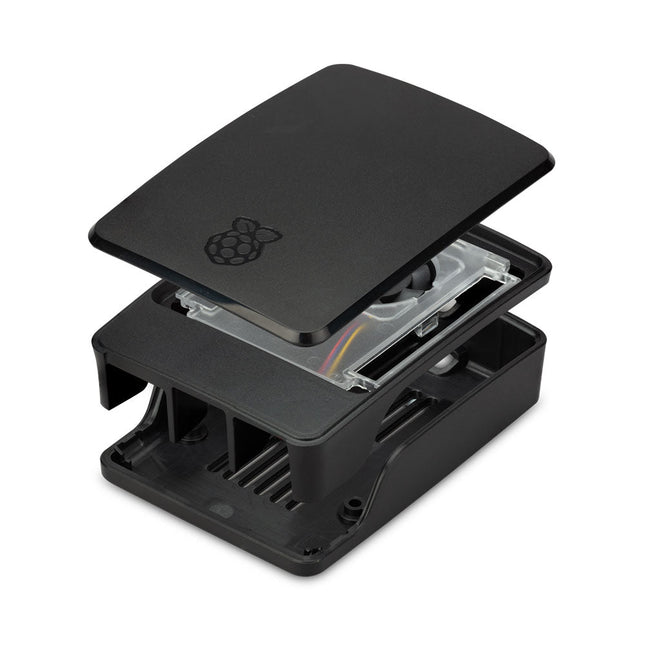
  •  -60% Official Case for Raspberry Pi 4 (black/grey) - Elektor

    Raspberry Pi Foundation Boitier officiel pour Raspberry Pi 4 (noir/gris)

    Boîtier officiel pour Raspberry Pi 4 (noir/gris)

    € 7,95€ 3,18

    Membres identique

  •  -60% Official Case for Raspberry Pi 4 (white/red) - Elektor

    Raspberry Pi Foundation Boitier officiel pour Raspberry Pi 4 (blanc/rouge)

    Boitier officiel pour Raspberry Pi 4 (blanc/rouge)

    € 7,95€ 3,18

    Membres identique

  •  -20% Sand Clock Kit (based on Raspberry Pi Pico) - Elektor

    Elektor Labs Horloge de sable Elektor pour Raspberry Pi Pico

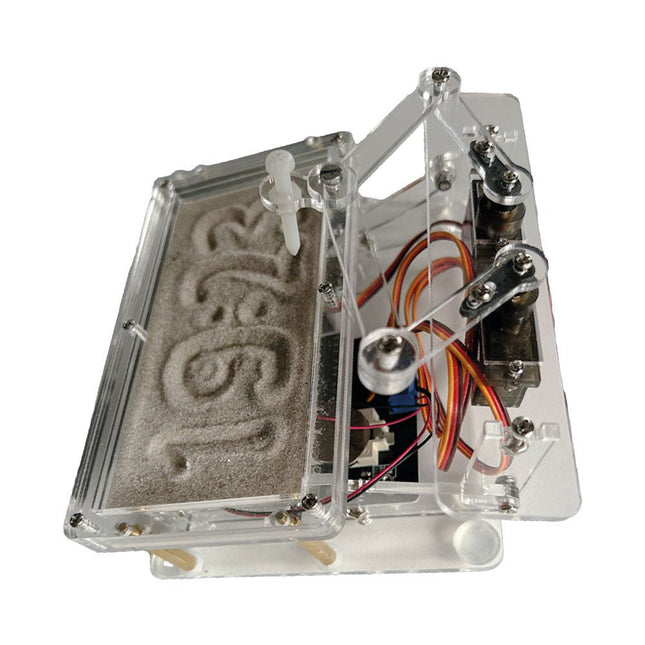
    Accroche-regard basé sur Raspberry Pi Une horloge à sable standard ne fait qu'indiquer le temps qui passe. En revanche, cette horloge à sable contrôlée par le Raspberry Pi Pico indique l'heure exacte en 'gravant' les quatre chiffres de l'heure et des minutes dans la couche de sable. Après un temps réglable, le sable est aplati par deux moteurs vibrants et tout recommence. Au cœur de l'horloge de sable se trouvent deux servomoteurs qui entraînent un stylo dans un mécanisme de pantographe. Un troisième servomoteur soulève le stylo de haut en bas. Le bac à sable est équipé de deux moteurs vibrants qui aplatissent le sable. La partie électronique de l'horloge des sables se compose d'un Raspberry Pi Pico et d'une carte RTC/driver avec une horloge en temps réel, ainsi que des circuits de commande pour les servomoteurs. Un manuel de construction détaillé peut être téléchargé. Caractéristiques Dimensions: 135 x 110 x 80 mm Temps de construction : environ. 1,5 à 2 heures Inclus 3x Feuilles acryliques prédécoupées avec toutes les pièces mécaniques 3x Mini servomoteurs 2x moteurs de vibration 1x Raspberry Pi Pico 1x Carte RTC/pilote avec les pièces assemblées Ecrous, boulons, entretoises et fils pour l'assemblage Sable blanc à grains fins

    € 49,95€ 39,95

    Membres identique

  • Raspberry Pi Pico W en un tournemain - Elektor

    Elektor Publishing Raspberry Pi Pico W en un tournemain

    Maîtrise de la puce RP2040 avec plus de 60 projets à réaliser et à programmer Les cartes Raspberry Pi Pico et Pico W sont animées par un microcontrôleur ARM Cortex M0+ RP2040 à double coeur, rapide, efficace et peu coûteux, qui fonctionne jusqu'à 133 MHz et dispose de 264 Ko de SRAM et de 2 Mo de mémoire Flash. Outre une vaste mémoire, le Pico et le Pico W disposent de nombreuses broches GPIO et d'interfaces telles que CA/N, SPI, I²C, UART, MLI, de fonctions de temporisation, d'une interface de débogage matériel et d'un capteur de température interne. La carte Raspberry Pi Pico W comporte en plus une puce CYW43439 Bluetooth et Wi-Fi d'Infineon. Au moment de la rédaction de ce livre, le micrologiciel Bluetooth pour le Pico W n'était pas encore disponible. Le Wi-Fi à 2,4 GHz est toutefois entièrement pris en charge avec les protocoles 802.11b/g/n. Ce livre est une introduction à l'utilisation du Raspberry Pi Pico W avec le langage de programmation MicroPython. Les quelque soixante projets testés et opérationnels sont présentés à l'aide de l'environnement de développement intégré (EDI) Thonny. Les sujets abordés sont nombreux : Installation de MicroPython sur le Raspberry Pi Pico depuis un PC Interruptions de l'horloge et interruptions externes Convertisseur analogique-numérique (CA/N) Capteurs de température interne et externe Capteurs externes (pression, humidité, pouls, à ultrasons) Enregistrement de données MLI, UART, I²C et SPI Bluetooth, Wi-Fi et applis sur smarphone Convertisseur numérique-analogique (CN/A) Tous les projets ont été testés et éprouvés. Ils peuvent être mis en oeuvre sur le Raspberry Pi Pico ainsi que sur le Raspberry Pi Pico W. Toutefois les projets avec une liaison Wi-Fi ne fonctionnent que sur le Pico W. Une petite expérience en programmation et en électronique est nécessaire pour suivre les projets. De brèves descriptions, des schémas fonctionnels, des schémas détaillés du câblage des montages et des listings MicroPython complets sont fournis pour tous les projets.

    € 44,95

    Membres € 40,46

  •  -60% Official Mini - HDMI Cable for Raspberry Pi Zero - Elektor

    Raspberry Pi Foundation Câble mini-HDMI officiel pour Raspberry Pi Zero

    Le câble officiel Raspberry Pi mini-HDMI vers HDMI (A/M) conçu pour tous les modèles Raspberry Pi Zero. HDMI Type D(M) 19 broches vers HDMI Type A(M) 19 broches Câble de 1 m (blanc) Bouchons nickelés Conforme 4Kp60 Conforme RoHS Isolation 3 Mohm 300 V DC , résiste à 300 V DC pendant 0,1 s

    € 3,95€ 1,58

    Membres identique

  •  -60% Official Case for Raspberry Pi 5 (white/red) - Elektor

    Raspberry Pi Foundation Boîtier officiel pour Raspberry Pi 5 (blanc/rouge)

    Le boîtier Raspberry Pi 5 est une amélioration du boîtier Raspberry Pi 4 avec des caractéristiques thermiques améliorées pour prendre en charge la consommation d'énergie maximale plus élevée du Raspberry Pi 5. Il intègre un ventilateur à vitesse variable qui est alimenté et contrôlé via un connecteur dédié sur le Raspberry Pi 5.

    € 11,95€ 4,78

    Membres identique

  •  -60% Official Case for Raspberry Pi 5 (black/gray) - Elektor

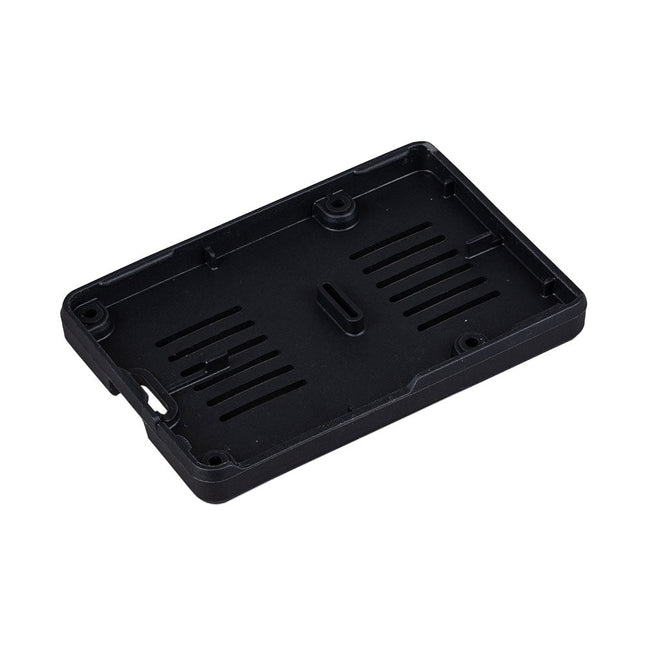
    Raspberry Pi Foundation Boîtier officiel pour Raspberry Pi 5 (noir/gris)

    Le boîtier Raspberry Pi 5 est une amélioration du boîtier Raspberry Pi 4 avec des caractéristiques thermiques améliorées pour prendre en charge la consommation d'énergie maximale plus élevée du Raspberry Pi 5. Il intègre un ventilateur à vitesse variable qui est alimenté et contrôlé via un connecteur dédié sur le Raspberry Pi 5.

    € 11,95€ 4,78

    Membres identique

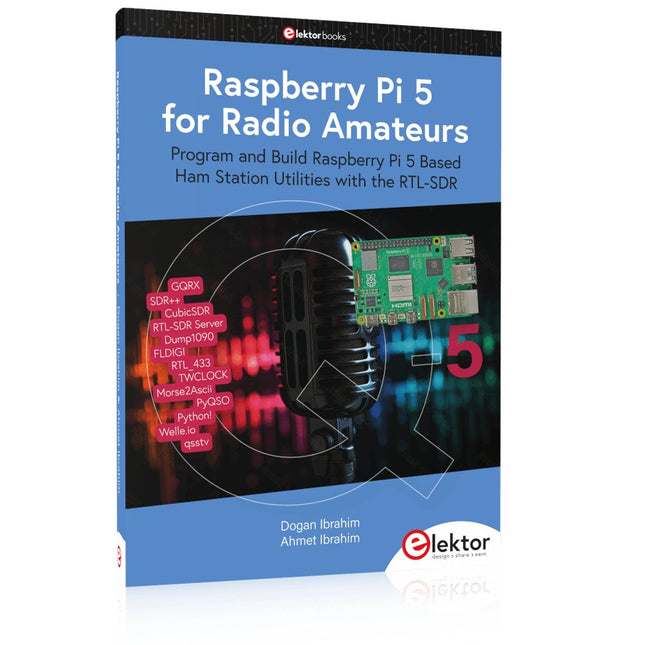
  • Raspberry Pi 5 for Radio Amateurs - Elektor

    Elektor Publishing Raspberry Pi 5 for Radio Amateurs

    Program and Build Raspberry Pi 5 Based Ham Station Utilities with the RTL-SDR The RTL-SDR devices (V3 and V4) have gained popularity among radio amateurs because of their very low cost and rich features. A basic system may consist of a USB based RTL-SDR device (dongle) with a suitable antenna, a Raspberry Pi 5 computer, a USB based external audio input-output adapter, and software installed on the Raspberry Pi 5 computer. With such a modest setup, it is possible to receive signals from around 24 MHz to over 1.7 GHz. This book is aimed at amateur radio enthusiasts and electronic engineering students, as well as at anyone interested in learning to use the Raspberry Pi 5 to build electronic projects. The book is suitable for both beginners through experienced readers. Some knowledge of the Python programming language is required to understand and eventually modify the projects given in the book. A block diagram, a circuit diagram, and a complete Python program listing is given for each project, alongside a comprehensive description. The following popular RTL-SDR programs are discussed in detail, aided by step-by-step installation guides for practical use on a Raspberry Pi 5: SimpleFM GQRX SDR++ CubicSDR RTL-SDR Server Dump1090 FLDIGI Quick RTL_433 aldo xcwcp GPredict TWCLOCK CQRLOG klog Morse2Ascii PyQSO Welle.io Ham Clock CHIRP xastir qsstv flrig XyGrib FreeDV Qtel (EchoLink) XDX (DX-Cluster) WSJT-X The application of the Python programming language on the latest Raspberry Pi 5 platform precludes the use of the programs in the book from working on older versions of Raspberry Pi computers.

    € 39,95

    Membres € 35,96

  • Programming Voice - controlled IoT Applications with Alexa and Raspberry Pi - Elektor

    Elektor Publishing Programming Voice-controlled IoT Applications with Alexa and Raspberry Pi

    Learn programming for Alexa devices, extend it to smart home devices and control the Raspberry Pi The book is split into two parts: the first part covers creating Alexa skills and the second part, designing Internet of Things and Smart Home devices using a Raspberry Pi. The first chapters describe the process of Alexa communication, opening an Amazon account and creating a skill for free. The operation of an Alexa skill and terminology such as utterances, intents, slots, and conversations are explained. Debugging your code, saving user data between sessions, S3 data storage and Dynamo DB database are discussed. In-skill purchasing, enabling users to buy items for your skill as well as certification and publication is outlined. Creating skills using AWS Lambda and ASK CLI is covered, along with the Visual Studio code editor and local debugging. Also covered is the process of designing skills for visual displays and interactive touch designs using Alexa Presentation Language. The second half of the book starts by creating a Raspberry Pi IoT 'thing' to control a robot from your Alexa device. This covers security issues and methods of sending and receiving MQTT messages between an Alexa device and the Raspberry Pi. Creating a smart home device is described including forming a security profile, linking with Amazon, and writing a Lambda function that gets triggered by an Alexa skill. Device discovery and on/off control is demonstrated. Next, readers discover how to control a smart home Raspberry Pi display from an Alexa skill using Simple Queue Service (SQS) messaging to switch the display on and off or change the color. A node-RED design is discussed from the basic user interface right up to configuring MQTT nodes. MQTT messages sent from a user are displayed on a Raspberry Pi. A chapter discusses sending a proactive notification such as a weather alert from a Raspberry Pi to an Alexa device. The book concludes by explaining how to create Raspberry Pi as a stand-alone Alexa device.

    € 39,95

    Membres € 35,96

  •  -60% Official Raspberry Pi 4 Desktop Kit (EU) - Elektor

    Raspberry Pi Foundation Kit de bureau officiel Raspberry Pi 4 (UE)

    Ce kit de démarrage de bureau Raspberry Pi 4 « Tout-en-un » contient toutes les pièces officielles et permet un démarrage facile et rapide ! Le kit de bureau Raspberry Pi 4 contient : Clavier et souris américains Raspberry Pi 2x câble micro HDMI vers HDMI standard (A/M) 1 m Alimentation USB-C Raspberry Pi 15,3 W (version UE) Boîtier Raspberry Pi 4 Guide officiel du Raspberry Pi pour débutants (langue anglaise) NOOBS 16 Go avec carte microSD Raspbian Le Raspberry Pi 4 B n'est PAS inclus.

    € 64,95€ 25,98

    Membres identique

  • Innovate with Sense HAT for Raspberry Pi - Elektor

    Elektor Publishing Innovate with Sense HAT for Raspberry Pi

    Ready to explore the world around you? By attaching the Sense HAT to your Raspberry Pi, you can quickly and easily develop a variety of creative applications, useful experiments, and exciting games. The Sense HAT contains several helpful environmental sensors: temperature, humidity, pressure, accelerometer, magnetometer, and gyroscope. Additionally, an 8x8 LED matrix is provided with RGB LEDs, which can be used to display multi-color scrolling or fixed information, such as the sensor data. Use the small onboard joystick for games or applications that require user input. In Innovate with Sense HAT for Raspberry Pi, Dr. Dogan Ibrahim explains how to use the Sense HAT in Raspberry Pi Zero W-based projects. Using simple terms, he details how to incorporate the Sense HAT board in interesting visual and sensor-based projects. You can complete all the projects with other Raspberry Pi models without any modifications. Exploring with Sense HAT for Raspberry Pi includes projects featuring external hardware components in addition to the Sense HAT board. You will learn to connect the Sense HAT board to the Raspberry Pi using jumper wires so that some of the GPIO ports are free to be interfaced to external components, such as to buzzers, relays, LEDs, LCDs, motors, and other sensors. The book includes full program listings and detailed project descriptions. Complete circuit diagrams of the projects using external components are given where necessary. All the projects were developed using the latest version of the Python 3 programming language. You can easily download projects from the book’s web page. Let’s start exploring with Sense HAT.

    € 34,95

    Membres € 31,46

  •  -60% Passive Cooling for Raspberry Pi (Heatsink) - Elektor

    JOY-iT Refroidissement passif pour Raspberry Pi (dissipateur thermique)

    Ensemble de dissipateurs thermiques en aluminium pour Raspberry Pi avec ruban adhésif pré-appliqué pour une installation facile 1 pièce : 14 x 15 x 5 mm 2 pièces : 8 x 8 x 5 mm

    € 3,95€ 1,58

    Membres identique

  • Learning Python with Raspberry Pi (E - book) - Elektor

    Elektor Digital Learning Python with Raspberry Pi (E-book)

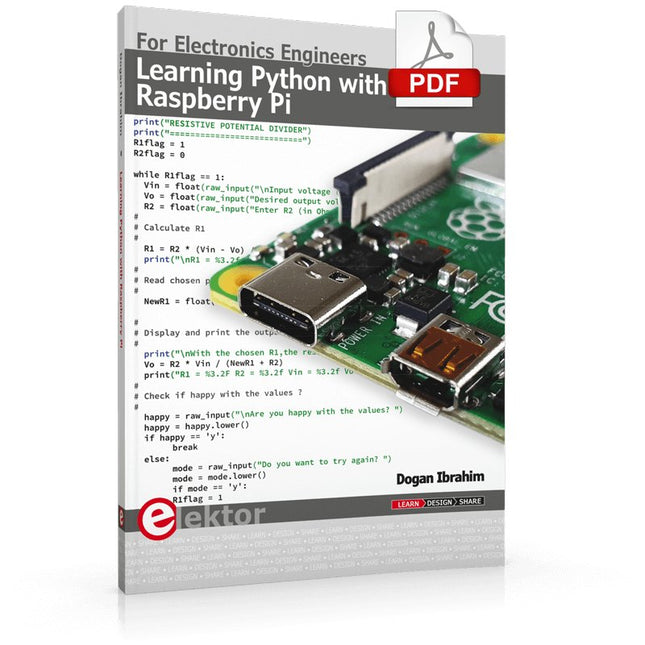
    This book is about teaching the Python programming language using the Raspberry Pi 4 computer. The book makes an introduction to Raspberry Pi 4 and then teaches Python with the topics: variables, strings, arrays, matrices, tuples, lists, dictionaries, user functions, flow of control, printing, keyboard input, graphics, GUI, object oriented programming and many more topics. The book is aimed for beginners, students, practising engineers, hobbyists, and for anyone else who may want to learn to program in Python. The book includes many example programs and case studies. All the example programs and case studies have been tested fully by the author and are all working. The example programs aim to teach the various programming concepts of Python. The case studies cover the use of Python in the analysis and design of electronic circuits. Some of the case study topics are: Resistor colour code identification Resistive potential divider circuits Resistive attenuator design Zener diode voltage regulator design RC and RLC transient circuits Circuit frequency response Saving data on external memory stick Mesh and node circuit analysis using matrices Resonance in RLC circuits Transistor Biasing analysis Transistor amplifier design Design of active filters Interfacing hardware with GPIO, I²C and SPI Using Wi-Fi with Python and TCP/IP and UDP programs Using Bluetooth from Python Full program listings of all the programs used in the book are available at the Elektor website of the book. Readers should be able just to copy and use these programs in their Raspberry Pi projects without any modifications.

    € 32,95

    Membres € 26,36

Achetez un Raspberry Pi

Qu’est-ce que le Raspberry Pi ? Pourquoi avez-vous besoin d’une carte Raspberry Pi ? Quels sont les avantages?

Raspberry Pi est un mini-ordinateur ou ce qu'on appelle un ordinateur à carte unique (ou SBC en abrégé) de la Raspberry Pi Foundation de Cambridge (GB). Dans un ordinateur monocarte, tous les principaux composants tels que le processeur, la RAM et le GPU sont montés sur une seule carte.

La fondation a publié la première version du Raspberry Pi en 2012 avec l'idée de promouvoir l'informatique comme matière scolaire et d'étude. L’objectif principal pour y parvenir était un prix de détail de 35 $ qui devrait être abordable pour tout le monde.

Elektor souhaitait également éveiller très tôt l'intérêt des élèves et des étudiants pour l'informatique et l'électronique. En tant que revendeur officiel du Raspberry Pi et en même temps éditeur de l'édition néerlandaise du magazine officiel du Raspberry Pi "MagPi", Elektor a un contact personnel direct avec les développeurs du Raspberry Pi à Cambridge et avec le véritable père intellectuel du Raspberry Pi, Eben. Upton. Elektor propose non seulement du matériel Raspberry Pi officiel, mais propose également à ses clients des projets intéressants, des critiques, des tutoriels et des livres spécialisés. Elektor occupe ainsi une place particulière parmi tous les revendeurs Raspberry Pi.

Notre gamme Raspberry Pi

En plus de ceux actuellement disponibles Cartes Raspberry Pi Elektor vous propose des accessoires officiels Raspberry Pi et une sélection de produits tiers soigneusement testés ( kits de construction , Chapeaux , alimentations , les enclos , affiche , appareils photo , livres et divers . Nous disposons également d'une vaste gamme de produits RP2040 basés sur la puce de microcontrôleur RP2040 développée par la Fondation Raspberry Pi.

Acheter une carte Raspberry Pi : que pouvez-vous en faire ?

Qu'est-ce qui rend le Raspberry Pi si spécial ? Ce petit ordinateur à part entière, de la taille d'une carte de crédit, a conquis le cœur des développeurs de logiciels et de matériel du monde entier et continue de se réinventer à chaque nouvelle version matérielle. Avec plus de 20 millions de cartes vendues, Raspberry Pi a bouleversé le monde de l’électronique. Peu importe que vous soyez débutant ou développeur professionnel, Raspberry Pi est l'outil universel pour tout technicien en électronique ! Utilisez le Raspberry Pi pour vos propres développements, contrôlez vos produits pour la maison intelligente ou utilisez-le comme lecteur multimédia dans le salon pour le streaming. Raspberry Pi fait bonne figure dans tous les domaines. Les possibilités d'application sont presque infinies. La communauté en constante croissance développe des projets ludiques, mais surtout utiles et faciles à réaliser soi-même.

Accessoires Raspberry Pi

L'achat d'un Raspberry Pi n'est que la première étape. En tant que revendeur officiel Raspberry Pi, Elektor propose non seulement le Raspberry Pi, mais également les accessoires et extensions nécessaires pour profiter au maximum du Raspberry Pi compact. Chez Elektor, vous trouverez des alimentations, des boîtiers (avec ou sans ventilateurs), des kits, des capteurs, des robots, des caméras, des écrans, des livres, des HAT et autres cartes d'extension pour vous aider à réaliser vos projets.

Projets de maison intelligente avec Raspberry Pi

Aujourd’hui, une Smart Home est l’une des applications les plus utilisées pour le Raspberry Pi. La raison en est logique, car une Smart Home offre plus de confort dans la maison et permet de réaliser facilement des économies sur les coûts énergétiques. Vous trouverez ci-dessous trois des applications les plus couramment utilisées du Raspberry Pi dans un environnement Smart Home.

Système domotique

Le Raspberry Pi peut être utilisé pour construire un système domotique qui vous permet d'effectuer des tâches automatiquement. Cela comprend le contrôle de l’éclairage, du chauffage, des divertissements et de la climatisation.

Surveillance à domicile

La surveillance domestique est un système qui utilise des capteurs pour prendre des mesures de votre environnement domestique et transmettre ces informations à un appareil central. Le système peut prendre des mesures de : températures, humidité, intensité lumineuse et mouvement. En utilisant la surveillance domestique pour surveiller votre environnement domestique, vous pouvez utiliser des systèmes d'alarme, des caméras de sécurité et d'autres appareils pour protéger votre maison.

Un bon exemple en est la fermeture automatique de vos volets roulants dès qu'il menace de faire trop chaud. De cette façon, vous pourrez facilement restituer la chaleur dans votre maison.

Commutateurs intelligents

Un interrupteur intelligent est un appareil utilisé pour allumer et éteindre des appareils électriques à distance. Il s'agit d'un appareil sans fil connecté à votre réseau domestique et pouvant être contrôlé avec une application mobile, une télécommande ou un assistant vocal.

Un bon exemple de commutateurs intelligents combinés avec Raspberry Pi consiste à éteindre les lumières lorsque vous regardez un film via Kodi. Vous pouvez même aller jusqu'à ce que lorsque vous mettez le film en pause, les lumières se rallument.

Achetez votre Raspberry Pi chez Elektor

Elektor est un revendeur officiel agréé par la Fondation Raspberry Pi. Nous obtenons le Raspberry Pi uniquement directement auprès du fabricant/développeur et non auprès d'un distributeur. Les nouveaux produits sont immédiatement disponibles en stock le jour de leur publication. En éliminant les intermédiaires, nous pouvons proposer le Raspberry Pi et d'autres accessoires officiels au prix le plus bas possible.

Connexion

Mot de passe oublié ?

Vous n'avez pas encore de compte ?
Créer un compte