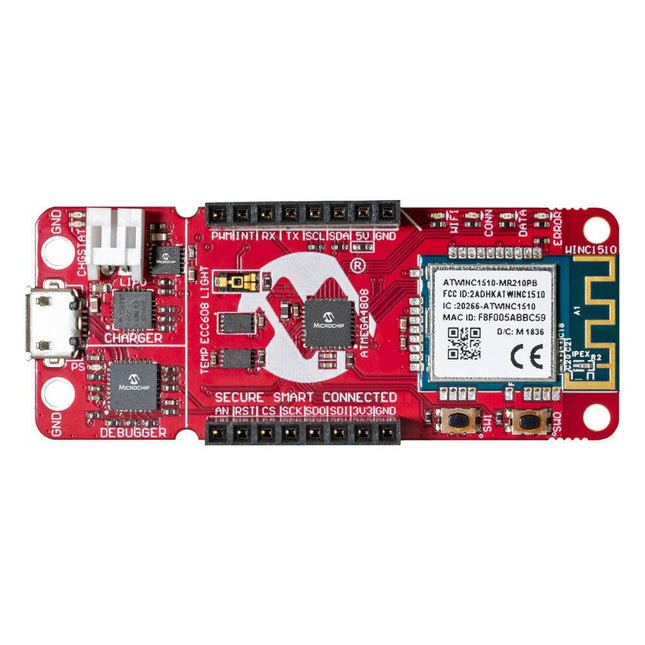
La carte de développement AVR-IoT WA combine un puissant microcontrôleur AVR ATmega4808, un circuit intégré d'élément sécurisé CryptoAuthentication™ ATECC608A et le contrôleur réseau Wi-Fi ATWINC1510 entièrement certifié, qui fournit le moyen le plus simple et le plus efficace de connecter votre application intégrée à Amazon Web Services ( AWS). La carte comprend également un débogueur intégré et ne nécessite aucun matériel externe pour programmer et déboguer le MCU.
Prêt à l'emploi, le MCU est préchargé avec une image de micrologiciel qui vous permet de vous connecter et d'envoyer rapidement des données à la plateforme AWS à l'aide des capteurs de température et de lumière intégrés. Une fois que vous êtes prêt à créer votre propre conception personnalisée, vous pouvez facilement générer du code à l'aide des bibliothèques de logiciels gratuits d'Atmel START ou de MPLAB Code Configurator (MCC).
La carte AVR-IoT WA est prise en charge par deux environnements de développement intégrés (IDE) primés – Atmel Studio et Microchip MPLAB X IDE – vous donnant la liberté d'innover avec l'environnement de votre choix.
Caractéristiques
Microcontrôleur ATmega4808
Quatre LED utilisateur
Deux boutons mécaniques
Empreinte de l'en-tête mikroBUS
Capteur de lumière TEMT6000
Capteur de température MCP9808
Dispositif CryptoAuthentication™ ATECC608A
Module Wi-Fi WINC1510
Débogueur intégré
Auto-ID pour l'identification de la carte dans Atmel Studio et Microchip MPLAB
Une LED verte d'alimentation et d'état de la carte
Programmation et débogage
Port COM virtuel (CDC)
Deux lignes DGI GPIO
Alimenté par USB et par batterie
Chargeur de batterie Li-Ion/LiPo intégré
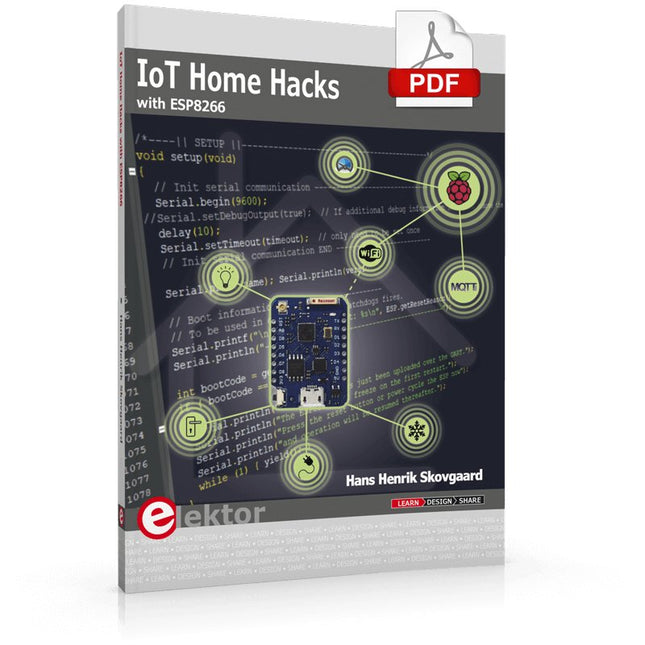
There are many so-called 'Arduino compatible' platforms on the market. The ESP8266 – in the form of the WeMos D1 Mini Pro – is one that really stands out. This device includes WiFi Internet access and the option of a flash file system using up to 16 MB of external flash memory. Furthermore, there are ample in/output pins (though only one analogue input), PWM, I²C, and one-wire. Needless to say, you are easily able to construct many small IoT devices!
This book contains the following builds:
A colourful smart home accessory
refrigerator controller
230 V power monitor
door lock monitor
and some further spin-off devices.
All builds are documented together with relevant background information for further study. For your convenience, there is a small PCB for most of the designs; you can also use a perf board. You don’t need to be an expert but the minimum recommended essentials include basic experience with a PC, software, and hardware, including the ability to surf the Internet and assemble PCBs.
And of course: A handle was kept on development costs. All custom software for the IoT devices and PCB layouts are available for free download from at Elektor.com.
Affordable solutions with the ESP8266 and 3D printing
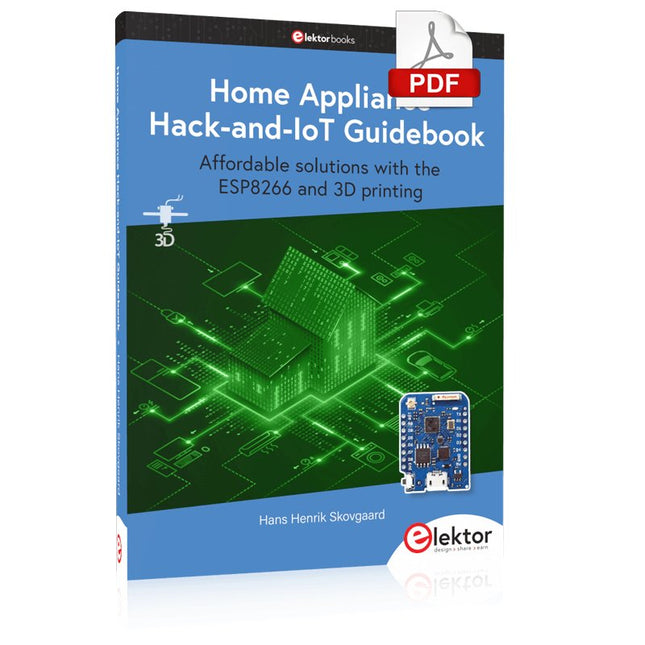
If you are looking for a small yet powerful IoT device, you are likely to come across the ESP8266 and compatible products on the market today. One of these, the Wemos/Lolin D1 Mini Pro board strikes a remarkable balance between cost and performance. A small and very affordable prototype board, the D1 Mini Pro stands out with its WiFi functionality and a 16-Mbytes flash memory for easy creation of a flash file system. In addition, there are sufficient input and output pins (only one analog input though) to support PWM, I²C, and One-Wire systems to mention but a few. The book describes the operation, modding, construction, and programming of home appliances including a colorful smart home accessory, a refrigerator/greenhouse controller, an AC powerline monitor, a door lock monitor, and an IKEA Trådfri controller.
As a benefit, all firmware developed for these DIY, "IoT-ized" devices can be updated over-the-air (OTA).
For most of the designs in the book, a small printed circuit board (PCB) and an enclosure are presented so readers can have a finished and attractive-looking product. Readers having – or with access to! – a 3D printer can "print" the suggested enclosures at home or in a shop.
Some of the constructions benefit from a Raspberry Pi configured as a gateway or cms server. This is also described in detail with all the necessary configuring.
You don’t need to be an expert but the prerequisites to successful replication of the projects include basic skills with PC software including the ability to surf the Internet. In terms of hardware, you should be comfortable with soldering and generally assembling the PCBs presented in the book.
All custom software written for the IoT devices, the PCB layouts, and 3D print files described in the book are available for free downloading.
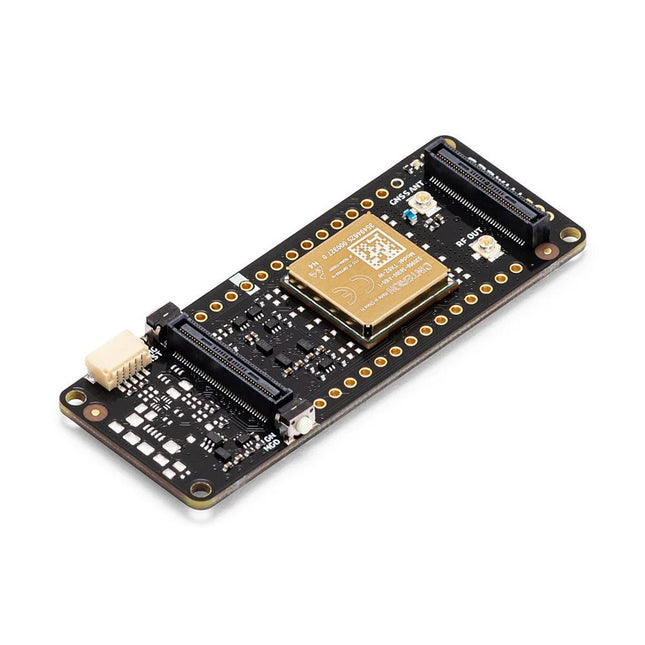
La carte Portenta Cat. M1/NB IoT GNSS Shield vous permet d'améliorer les fonctionnalités de connexions de vos applications Portenta H7. Elle utilise un module sans fil Cinterion TX62 de Thales, conçu pour les applications IoT très efficaces et à faible consommation, afin d'offrir une bande passante et des performances optimisées. La Portenta Cat. M1/NB IoT GNSS Shield s'associe à la forte puissance de calcul de la Portenta H7 pour permettre le développement d'applications de localisation de biens et de surveillance à distance dans les environnements industriels, ainsi que dans l'agriculture, les services publics et les villes intelligentes. La carte offre une connectivité cellulaire aux réseaux Cat. M1 et NB-IoT, avec la possibilité d'utiliser la technologie eSIM. Suivez facilement vos objets de valeur dans toute la ville ou dans le monde entier en choisissant votre GPS, GLONASS, Galileo ou BeiDou. Caractéristiques Changez les capacités de connexion sans changer la carte. Ajoutez NB-IoT, CAT. M1 et le positionnement pour n’importe quel produit Portenta. Possibilité de créer un petit routeur multiprotocole (WiFi - BT + NB-IoT/CAT. M1). Réduisez considérablement les besoins en bande passante de communication dans les applications IoT. Module basse consommation. Compatible également avec les cartes MKR. Surveillance à distance Les entreprises industrielles et agricoles peuvent tirer parti du Portenta Cat. M1/NB IoT GNSS Shield pour surveiller à distance des détecteurs de gaz, des capteurs optiques, des systèmes d'alarme pour machines, des pièges à insectes biologiques, etc. Les fournisseurs de technologies, qui proposent des solutions pour les villes intelligentes, peuvent combiner la puissance et la fiabilité de la Portenta H7 avec la carte Portenta Cat. M1/NB IoT GNSS, afin de connecter les données et d'automatiser les actions pour une utilisation réellement optimisée des ressources et une meilleure expérience utilisateur. Surveillance des biens Ajoutez des capacités de surveillance à n'importe quel bien en combinant les performances et les fonctions d'informatique périphérique des cartes de la famille Portenta. La carte Portenta Cat. M1/NB IoT GNSS Shield est idéale pour surveiller les biens de valeur ainsi que les machines et les équipements industriels. Caractéristiques Connectivité Module sans-fil Cinterion TX62; NB-IoT - LTE CAT.M1; 3GPP Rel.14 Protocole compatible LTE Cat. M1/NB1/NB2; Bandes UMTS: 1 / 2 / 3 / 4 / 5 / 8 / 12(17) / 13 / 18 / 19 / 20 / 25 / 26 / 27 / 28 / 66 / 71 / 85; LTE Cat.M1 DL: max. 300 kbps, UL: max. 1.1 Mbps; LTE Cat.NB1 DL: max. 27 kbps, UL: max. 63 kbps; LTE Cat.NB2 DL: max. 124 kbps, UL: max. 158 kbps Service de messagerie(SMS) Mode texte point à point avec terminaison mobile (MT) et origine mobile (MO) ; mode PDU (Protocol Data Unit). Aide à la localisation Compatible GNSS (GPS/BeiDou/Galileo/GLONASS) Autres Accès intégré aux piles TCP/IP IPv4 et IPv6 ; services Internet : Serveur/client TCP, client UDP, DNS, Ping, client HTTP, client FTP, client MQTT Connexion sécurisée avec TLS/DTLS Démarrage sécurisé. Dimensions 66 x 25,4 mm Température de fonctionnement De -40° C à +85° C (de -104° F à 185°F) Téléchargements · Fiche technique · Schémas
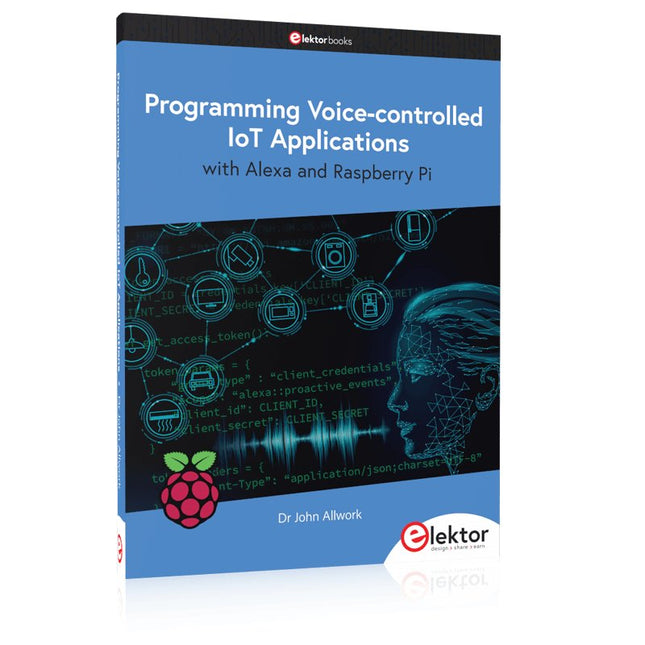
Learn programming for Alexa devices, extend it to smart home devices and control the Raspberry Pi
The book is split into two parts: the first part covers creating Alexa skills and the second part, designing Internet of Things and Smart Home devices using a Raspberry Pi.
The first chapters describe the process of Alexa communication, opening an Amazon account and creating a skill for free. The operation of an Alexa skill and terminology such as utterances, intents, slots, and conversations are explained. Debugging your code, saving user data between sessions, S3 data storage and Dynamo DB database are discussed.
In-skill purchasing, enabling users to buy items for your skill as well as certification and publication is outlined. Creating skills using AWS Lambda and ASK CLI is covered, along with the Visual Studio code editor and local debugging. Also covered is the process of designing skills for visual displays and interactive touch designs using Alexa Presentation Language.
The second half of the book starts by creating a Raspberry Pi IoT 'thing' to control a robot from your Alexa device. This covers security issues and methods of sending and receiving MQTT messages between an Alexa device and the Raspberry Pi.
Creating a smart home device is described including forming a security profile, linking with Amazon, and writing a Lambda function that gets triggered by an Alexa skill. Device discovery and on/off control is demonstrated.
Next, readers discover how to control a smart home Raspberry Pi display from an Alexa skill using Simple Queue Service (SQS) messaging to switch the display on and off or change the color.
A node-RED design is discussed from the basic user interface right up to configuring MQTT nodes. MQTT messages sent from a user are displayed on a Raspberry Pi.
A chapter discusses sending a proactive notification such as a weather alert from a Raspberry Pi to an Alexa device. The book concludes by explaining how to create Raspberry Pi as a stand-alone Alexa device.
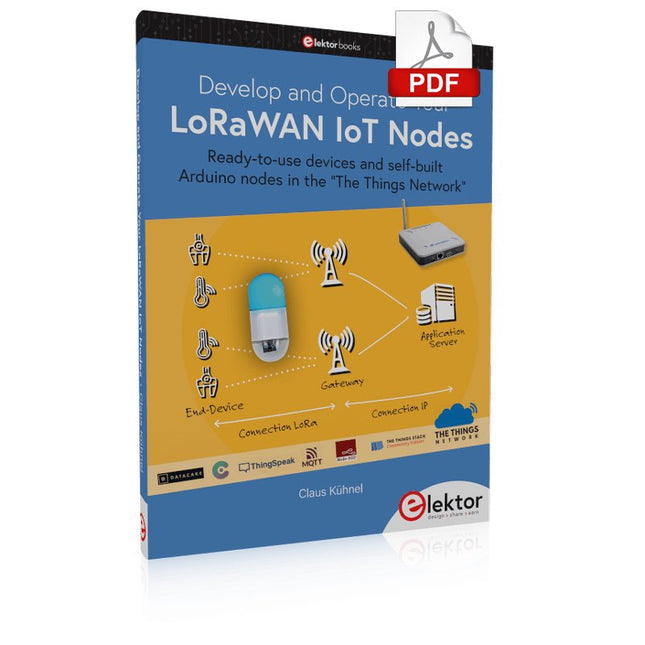
Ready-to-use devices and self-built Arduino nodes in the 'The Things Network'
LoRaWAN has developed excellently as a communication solution in the IoT. The Things Network (TTN) has contributed to this. The Things Network was upgraded to The Things Stack Community Edition (TTS (CE)). The TTN V2 clusters were closed towards the end of 2021.
This book shows you the necessary steps to operate LoRaWAN nodes using TTS (CE) and maybe extend the network of gateways with an own gateway. Meanwhile, there are even LoRaWAN gateways suitable for mobile use with which you can connect to the TTN server via your cell phone.
The author presents several commercial LoRaWAN nodes and new, low-cost and battery-powered hardware for building autonomous LoRaWAN nodes. Registering LoRaWAN nodes and gateways in the TTS (CE), providing the collected data via MQTT and visualization via Node-RED, Cayenne, Thingspeak, and Datacake enable complex IoT projects and completely new applications at very low cost.
This book will enable you to provide and visualize data collected with battery-powered sensors (LoRaWAN nodes) wirelessly on the Internet. You will learn the basics for smart city and IoT applications that enable, for example, the measurement of air quality, water levels, snow depths, the determination of free parking spaces (smart parking), and the intelligent control of street lighting (smart lighting), among others.
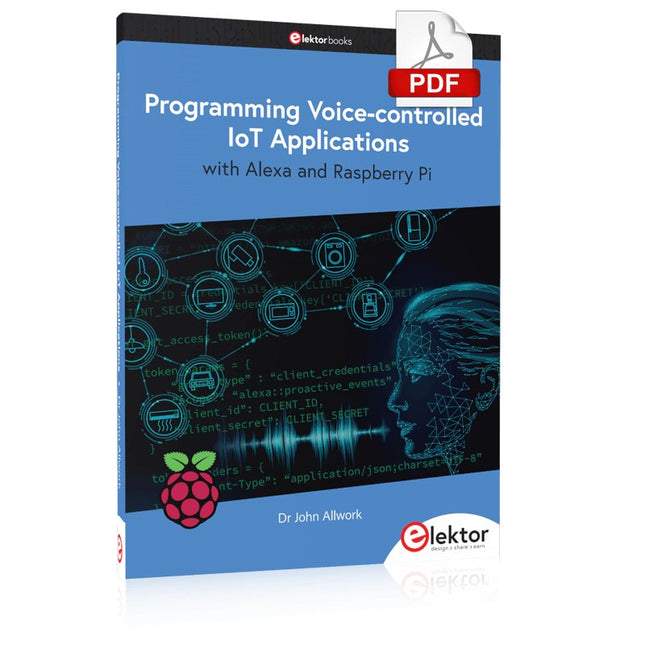
Learn programming for Alexa devices, extend it to smart home devices and control the Raspberry Pi
The book is split into two parts: the first part covers creating Alexa skills and the second part, designing Internet of Things and Smart Home devices using a Raspberry Pi.
The first chapters describe the process of Alexa communication, opening an Amazon account and creating a skill for free. The operation of an Alexa skill and terminology such as utterances, intents, slots, and conversations are explained. Debugging your code, saving user data between sessions, S3 data storage and Dynamo DB database are discussed.
In-skill purchasing, enabling users to buy items for your skill as well as certification and publication is outlined. Creating skills using AWS Lambda and ASK CLI is covered, along with the Visual Studio code editor and local debugging. Also covered is the process of designing skills for visual displays and interactive touch designs using Alexa Presentation Language.
The second half of the book starts by creating a Raspberry Pi IoT 'thing' to control a robot from your Alexa device. This covers security issues and methods of sending and receiving MQTT messages between an Alexa device and the Raspberry Pi.
Creating a smart home device is described including forming a security profile, linking with Amazon, and writing a Lambda function that gets triggered by an Alexa skill. Device discovery and on/off control is demonstrated.
Next, readers discover how to control a smart home Raspberry Pi display from an Alexa skill using Simple Queue Service (SQS) messaging to switch the display on and off or change the color.
A node-RED design is discussed from the basic user interface right up to configuring MQTT nodes. MQTT messages sent from a user are displayed on a Raspberry Pi.
A chapter discusses sending a proactive notification such as a weather alert from a Raspberry Pi to an Alexa device. The book concludes by explaining how to create Raspberry Pi as a stand-alone Alexa device.
Livre : Mastering the Arduino Uno R4
Basée sur le processeur ATmega328P 8 bits économique, la carte Arduino Uno R3 est sans doute la plus populaire de la famille Arduino, et ce modèle robuste nous accompagne depuis de nombreuses années. Onze ans plus tard, son successeur tant attendu, l'Arduino Uno R4, a vu le jour. Elle est conçue autour d'un microcontrôleur Arm Cortex-M4 32 bits cadencé à 48 MHz et offre une mémoire SRAM et Flash considérablement étendue. De plus, un convertisseur analogique-numérique (CAN) plus précis et un nouveau convertisseur numérique-analogique (CNA) ont été ajoutés. La carte Uno R4 prend également en charge le bus CAN grâce à une interface dédiée.
Deux versions de la carte sont disponibles : Uno R4 Minima et Uno R4 WiFi. Ce livre explique comment utiliser ces nouvelles cartes pour développer de nombreux projets variés et intéressants avec seulement quelques composants et modules externes. Tous les projets décrits dans ce livre ont été entièrement testés sur la carte Uno R4 Minima ou la carte Uno R4 WiFi, selon le cas.
Les sujets abordés incluent la lecture, le contrôle et le pilotage de nombreux composants et modules du kit ainsi que sur la carte Uno R4 correspondante, y compris
LED
Afficheurs à 7 segments (utilisant des interruptions programmées)
LCD
Capteurs
Lecteur RFID
Clavier 4×4
Horloge en temps réel (RTC)
Joystick
Matrice de LED 8×8
Moteurs
DAC (convertisseur numérique-analogique)
Matrice LED
Connectivité Wi-Fi
UART série
Bus CAN
Contrôleur et récepteur infrarouge
Simulateurs
… le tout de manière créative et pédagogique, le fonctionnement du projet et les logiciels associés étant expliqués en détail.
Arduino Uno R4 WiFi
La carte Arduino Uno R4 est équipée du processeur Renesas RA4M1 ARM Cortex-M4 32 bits, offrant une puissance de traitement, une mémoire et des fonctionnalités considérablement améliorées. La version WiFi intègre un module WiFi ESP32-S3 en plus du RA4M1, élargissant ainsi les possibilités créatives des makers et des ingénieurs.
L'Arduino Uno R4 fonctionne à 48 MHz, soit trois fois plus que la populaire Uno R3. De plus, la mémoire SRAM a été augmentée de 2 Ko à 32 Ko et la mémoire flash de 32 Ko à 256 Ko afin de prendre en charge des projets plus complexes. Suite aux retours de la communauté, le port USB est désormais de type USB-C et la tension d'alimentation maximale a été portée à 24 V, avec une conception thermique optimisée. La carte comprend un bus CAN et un port SPI, permettant aux utilisateurs de réduire le câblage et d'effectuer des tâches en parallèle en connectant plusieurs shields. Un convertisseur numérique-analogique (CNA) analogique 12 bits est également intégré.
Spécifications
Microcontrôleur
Renesas RA4M1 (ARM Cortex-M4)
USB
USB-C
Port de programmation
Broches
Broches d'E/S numériques
14
Broches
Broches d'entrée analogiques
6
CNA
1
TCR
1
Broches PWM
6
Communication
UART
1x
I²C
1x
SPI
1x
Connecteur I²C Qwiic
1x
CAN
1x Bus CAN
Alimentation
Tension de fonctionnement du circuit
5 V
Tension d'entrée (VIN)
6-24 V
Courant continu par broche d'E/S
8 mA
Fréquence d'horloge
Noyau principal
48 MHz
Mémoire
RA4M1
256 ko Flash, 32 ko RAM
Matrice LED
12 x 8 (96 LED rouges)
Dimensions
68,9 x 53,4 mm
Téléchargements
Datasheet
Schematics
Cette offre groupée contient :
Livre : Mastering the Arduino Uno R4 (d'une valeur de 40 €)
Arduino Uno R4 WiFi (d'une valeur de 30 €)
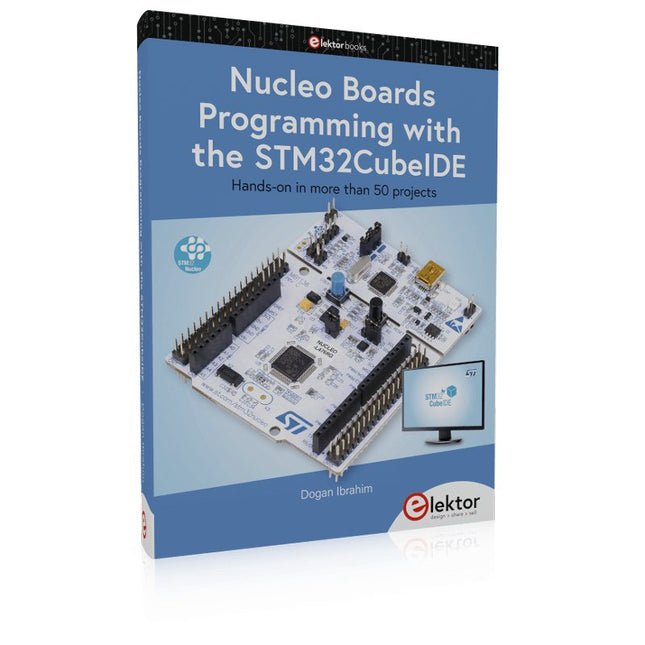
Hands-on in more than 50 projects
STM32 Nucleo family of processors are manufactured by STMicroelectronics. These are low-cost ARM microcontroller development boards. This book is about developing projects using the popular STM32CubeIDE software with the Nucleo-L476RG development board. In the early Chapters of the book the architecture of the Nucleo family is briefly described.
The book covers many projects using most features of the Nucleo-L476RG development board where the full software listings for the STM32CubeIDE are given for each project together with extensive descriptions. The projects range from simple flashing LEDs to more complex projects using modules, devices, and libraries such as GPIO, ADC, DAC, I²C, SPI, LCD, DMA, analogue inputs, power management, X-CUBE-MEMS1 library, DEBUGGING, and others. In addition, several projects are given using the popular Nucleo Expansion Boards. These Expansion Boards plug on top of the Nucleo development boards and provide sensors, relays, accelerometers, gyroscopes, Wi-Fi, and many others. Using an expansion board together with the X-CUBE-MEMS1 library simplifies the task of project development considerably.
All the projects in the book have been tested and are working. The following sub-headings are given for each project: Project Title, Description, Aim, Block Diagram, Circuit Diagram, and Program Listing for the STM32CubeIDE.
In this book you will learn about
STM32 microcontroller architecture;
the Nucleo-L476RG development board in projects using the STM32CubeIDE integrated software development tool;
external and internal interrupts and DMA;
DEBUG, a program developed using the STM32CubeIDE;
the MCU in Sleep, Stop, and in Standby modes;
Nucleo Expansion Boards with the Nucleo development boards.
What you need
a PC with Internet connection and a USB port;
STM32CubeIDE software (available at STMicroelectronics website free of charge)
the project source files, available from the book’s webpage hosted by Elektor;
Nucleo-L476RG development board;
simple electronic devices such as LEDs, temperature sensor, I²C and SPI chips, and a few more;
Nucleo Expansion Boards (optional).
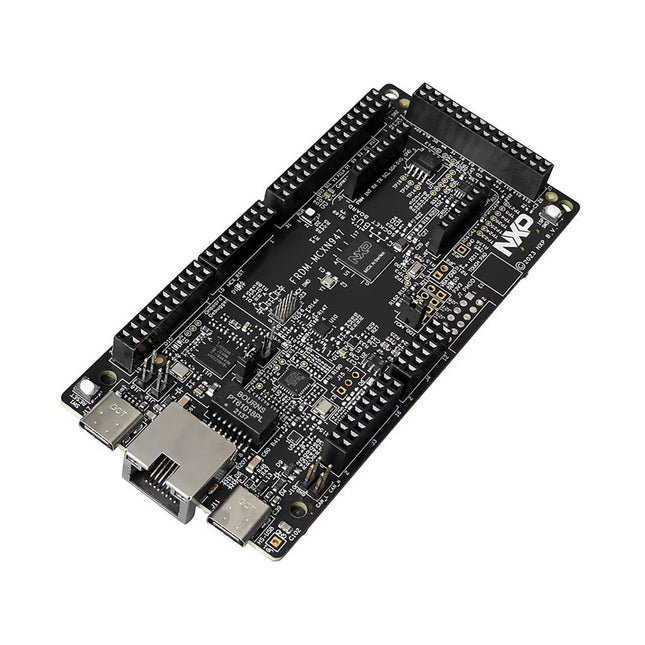
The FRDM-MCXN947 is a compact and versatile development board designed for rapid prototyping with MCX N94 and N54 microcontrollers. It features industry-standard headers for easy access to the MCU's I/Os, integrated open-standard serial interfaces, external flash memory, and an onboard MCU-Link debugger.
Spécifications
Microcontroller
MCX-N947 Dual Arm Cortex-M33 cores @ 150 MHz each with optimized performance efficiency, up to 2 MB dual-bank flash with optional full ECC RAM, External flash
Accelerators: Neural Processing Unit, PowerQuad, Smart DMA, etc.
Memory Expansion
*DNP Micro SD card socket
Connectivity
Ethernet Phy and connector
HS USB-C connectors
SPI/I²C/UART connector (PMOD/mikroBUS, DNP)
WiFi connector (PMOD/mikroBUS, DNP)
CAN-FD transceiver
Debug
On-board MCU-Link debugger with CMSIS-DAP
JTAG/SWD connector
Sensor
P3T1755 I³C/I²C Temp Sensor, Touch Pad
Expansion Options
Arduino Header (with FRDM expansion rows)
FRDM Header
FlexIO/LCD Header
SmartDMA/Camera Header
Pmod *DNP
mikroBUS
User Interface
RGB user LED, plus Reset, ISP, Wakeup buttons
Inclus
1x FRDM-MCXN947 Development Board
1x USB-C Cable
1x Quick Start Guide
Téléchargements
Datasheet
Block diagram
,
par Saad Imtiaz
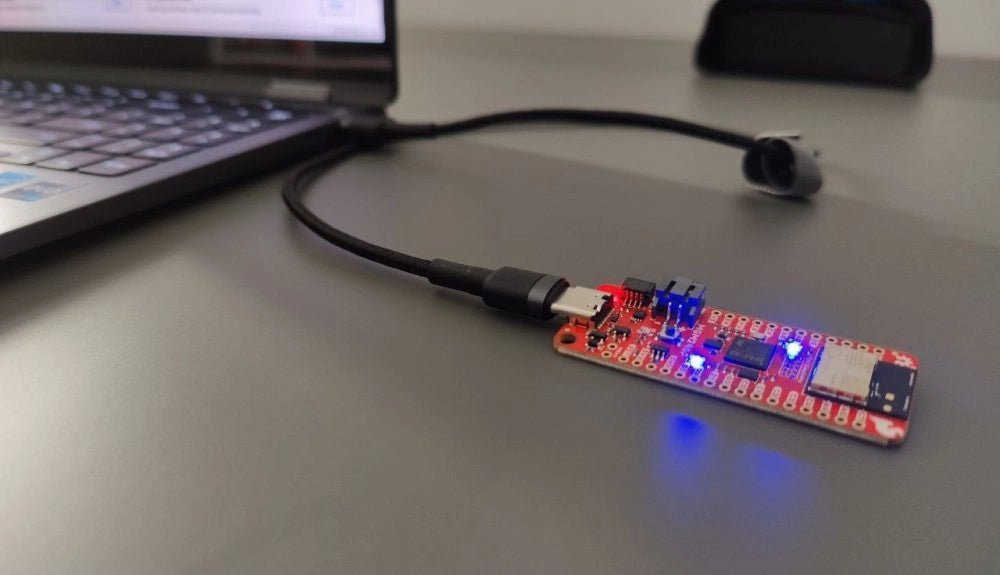
SparkFun Thing Plus Matter (MGM240P) : Une carte de développement IoT polyvalente basée sur "Matter" (Essai)
La "SparkFun Thing Plus Matter - MGM240P" est une carte de développement polyvalente et riche en fonctionnalités, conçue pour réaliser des appareils IoT basés sur...