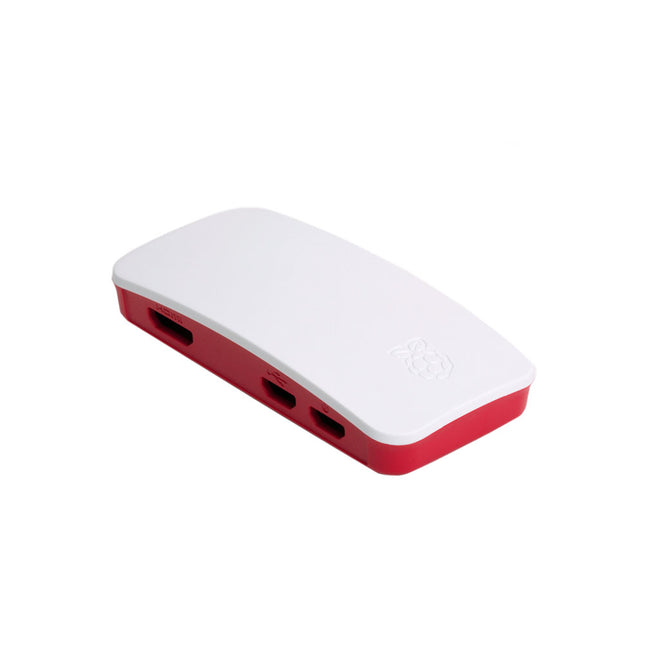
Le dossier se compose de deux parties. Il dispose d'une base standard comportant une découpe pour permettre l'accès au GPIO, et d'un choix de trois couvercles : un couvercle simple, un couvercle GPIO (permettant l'accès au GPIO par le haut) et un couvercle de caméra (qui, lorsqu'il est utilisé avec le câble de caméra court fourni, permet d'installer parfaitement la caméra Raspberry Pi ou la caméra Noir).
Inclus
1x socle
3x couvercles (unis, GPIO, appareil photo)
1x câble de caméra court
4x pieds en caoutchouc
Il s'agit d'un kit d'extension d'E/S conçu pour Raspberry Pi, qui fournit 5 jeux de 2 x 20 broches, ce qui signifie un moyen pratique « d'empiler » plusieurs HAT différents ensemble et de les utiliser comme une combinaison/un projet spécifique.
Caractéristiques
Connectivité Raspberry Pi standard, directement enfichable OU via un câble ruban
5 jeux d'en-têtes 2x20 broches, connectent plusieurs HAT ensemble
Port d'alimentation externe USB, fournit suffisamment d'alimentation pour plusieurs HAT
Étiquettes d'épingles claires et descriptives pour une utilisation facile
Patins de cavalier réservés sur la face inférieure, les connexions des broches sont modifiables par soudure, pour éviter les conflits de broches
Remarque : assurez-vous qu'il n'y a aucun conflit de broches entre les HAT que vous souhaitez utiliser ensemble avant de vous connecter.
Caractéristiques
Dimensions : 183 × 65 mm
Taille du trou de montage : 3 mm
Inclus
1x CHAPEAU Pile
1x câble ruban 40 broches
1x connecteur à broches mâle 2x20
1x pack de vis RPi (4 pièces) x1
Boîtier de qualité pour Raspberry B+, 2B, 3B utilisé avec un écran tactile 7 pouces de Joy-IT.
Transforme instantanément votre RPi en élégante tablette PC !
Dimensions
Largeur x Hauteur x Profondeur : 185 x 128 x 15 mm
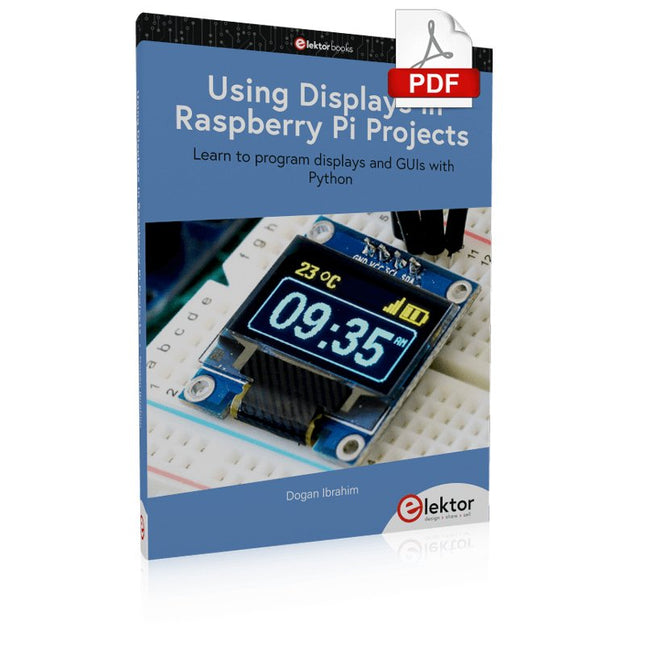
Learn to program displays and GUIs with Python
This book is about Raspberry Pi 4 display projects. The book starts by explaining how to install the latest Raspbian operating system on an SD card, and how to configure and use the GPIO ports.
The core of the book explains the following topics in simple terms with fully tested and working example projects:
Simple LED projects
Bar graph LED projects
Matrix LED projects
Bitmap LED projects
LED strips
LCDs
OLED displays
E-paper displays
TFT displays
7-inch touch screen
GUI Programming with Tkinder
One unique feature of this book is that it covers almost all types of display that readers will need to use in their Raspberry Pi based projects. The operation of each project is fully given, including block diagrams, circuit diagrams, and commented full program listings. It is therefore an easy task to convert the given projects to run on other popular platforms, such as Arduino or PIC microcontrollers.
Python program listings of all Raspberry Pi projects developed in this book are available for download at Elektor.com. Readers can use these programs in their projects. Alternatively, they can modify the programs to suit their applications.
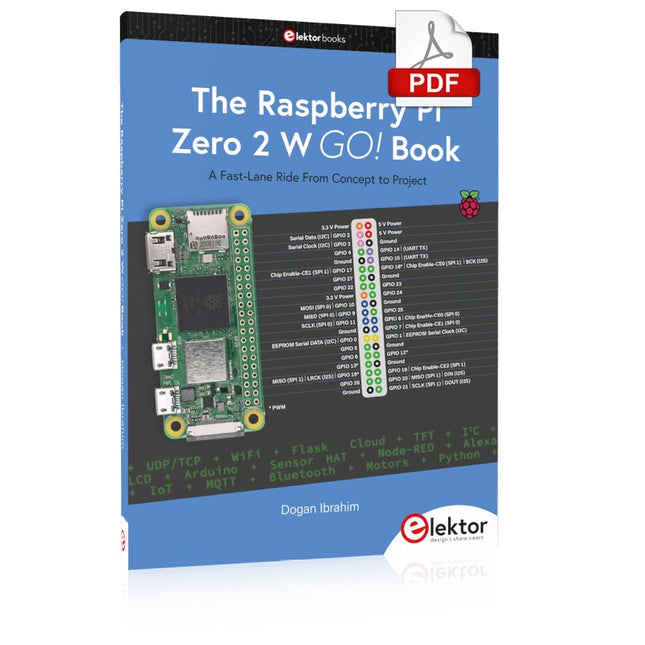
A Fast-Lane Ride From Concept to Project
The core of the book explains the use of the Raspberry Pi Zero 2 W running the Python programming language, always in simple terms and backed by many tested and working example projects. On part of the reader, familiarity with the Python programming language and some experience with one of the Raspberry Pi computers will prove helpful. Although previous electronics experience is not required, some knowledge of basic electronics is beneficial, especially when venturing out to modify the projects for your own applications.
Over 30 tested and working hardware-based projects are given in the book, covering the use of Wi-Fi, communication with smartphones and with a Raspberry Pi Pico W computer. Additionally, there are Bluetooth projects including elementary communication with smartphones and with the popular Arduino Uno. Both Wi-Fi and Bluetooth are key features of the Raspberry Pi Zero 2 W.
Some of the topics covered in the book are:
Raspberry Pi OS installation on an SD card
Python program creation and execution on the Raspberry Pi Zero 2 W
Software-only examples of Python running on the Raspberry Pi Zero 2 W
Hardware-based projects including LCD and Sense HAT interfacing
UDP and TCP Wi-Fi based projects for smartphone communication
UDP-based project for Raspberry Pi Pico W communication
Flask-based webserver project
Cloud storage of captured temperature, humidity, and pressure data
TFT projects
Node-RED projects
Interfacing to Alexa
MQTT projects
Bluetooth-based projects for smartphone and Arduino Uno communications
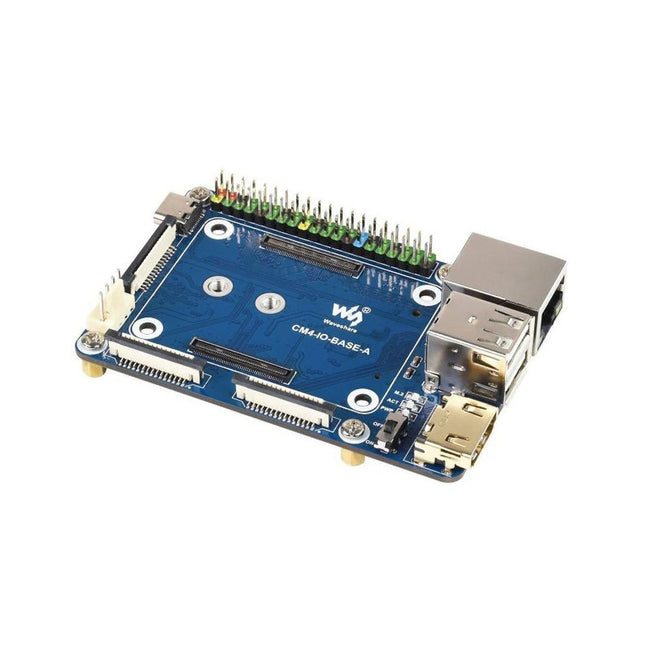
Caractéristiques
Prise CM4
Convient à toutes les variantes du Compute Module 4
La mise en réseau
Connecteur Gigabit Ethernet RJ45 M.2 M KEY, prend en charge les modules de communication ou SSD NVME
Connecteur
En-tête GPIO 40 broches Raspberry Pi
USB
2x USB 2.0 Type-A 2x USB 2.0 via connecteur FFC
Afficher
Port d'affichage MIPI DSI (connecteur FPC 1,0 mm à 15 broches)
Caméra
2x port caméra MIPI CSI-2 (connecteur FPC 1,0 mm 15 broches)
Vidéo
2x ports HDMI (dont un port via connecteur FFC), prend en charge la sortie 4K 30 ips
RTC
APRÈS
Stockage
Prise de carte MicroSD pour les variantes Compute Module 4 Lite (sans eMMC)
En-tête de ventilateur
Pas de contrôle du ventilateur, 5 V
Entrée de puissance
5 V
Dimensions
85x56mm
Inclus
1x CM4-IO-BASE-A
1x vis de montage SSD
Téléchargements
Wiki
Le câble officiel Raspberry Pi mini-HDMI vers HDMI (A/M) conçu pour tous les modèles Raspberry Pi Zero.
HDMI Type D(M) 19 broches vers HDMI Type A(M) 19 broches
Câble de 1 m (blanc)
Bouchons nickelés
Conforme 4Kp60
Conforme RoHS
Isolation 3 Mohm 300 V DC , résiste à 300 V DC pendant 0,1 s
The Raspberry Pi is a $35 credit-card sized computer with many applications, such as in desktop computing, audio and video playback, and as a controller in many industrial, commercial and domestic applications.
This book is about the Raspberry Pi computer and its use in control applications. The book explains in simple terms, with examples, how to configure the RPi, how to install and use the Linux operating system, how to write programs using the Python programming language and how to develop hardware based projects.
The book starts with an introduction to the Raspberry Pi computer and covers the topics of purchasing all the necessary equipment and installing/using the Linux operating system in command mode. Use of the user-friendly graphical desktop operating environment is explained using example applications. The RPi network interface is explained in simple steps and demonstrates how the computer can be accessed remotely from a desktop or a laptop computer.
The remaining parts of the book cover the Python programming language, hardware development tools, hardware interface details, and RPi based hardware projects. All the 23 projects given in the book have been tested and are working.
The following headings are given for each project:
Project title
Project description
Project block diagram
Project circuit diagram
Project program description using the Program Description Language (PDL)
Complete program listing
Description of the program
The book is ideal for self-study, and is intended for electronic/electrical engineering students, practising engineers, research students, and hobbyists.
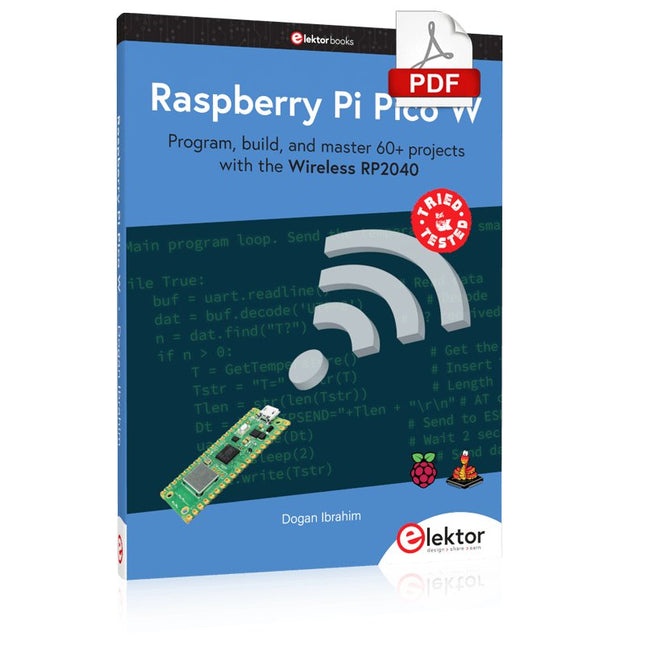
Program, build, and master 60+ projects with the Wireless RP2040
The Raspberry Pi Pico and Pico W are based on the fast, efficient, and low-cost dual-core ARM Cortex M0+ RP2040 microcontroller chip running at up to 133 MHz and sporting 264 KB of SRAM and 2 MB of Flash memory. Besides spacious memory, the Pico and Pico W offer many GPIO pins, and popular peripheral interface modules like ADC, SPI, I²C, UART, PWM, timing modules, a hardware debug interface, and an internal temperature sensor.
The Raspberry Pi Pico W additionally includes an on-board Infineon CYW43439 Bluetooth and Wi-Fi chipset. At the time of writing this book, the Bluetooth firmware was not yet available. Wi-Fi is however fully supported at 2.4 GHz using the 802.11b/g/n protocols.
This book is an introduction to using the Raspberry Pi Pico W in conjunction with the MicroPython programming language. The Thonny development environment (IDE) is used in all of the 60+ working and tested projects covering the following topics:
Installing the MicroPython on Raspberry Pi Pico using a Raspberry Pi or a PC
Timer interrupts and external interrupts
Analogue-to-digital converter (ADC) projects
Using the internal temperature sensor and external sensor chips
Using the internal temperature sensor and external temperature sensor chips
Datalogging projects
PWM, UART, I²C, and SPI projects
Using Bluetooth, WiFi, and apps to communicate with smartphones
Digital-to-analogue converter (DAC) projects
All projects are tried & tested. They can be implemented on both the Raspberry Pi Pico and Raspberry Pi Pico W, although the Wi-Fi-based subjects will run on the Pico W only. Basic programming and electronics experience are required to follow the projects. Brief descriptions, block diagrams, detailed circuit diagrams, and full MicroPython program listings are given for all projects.
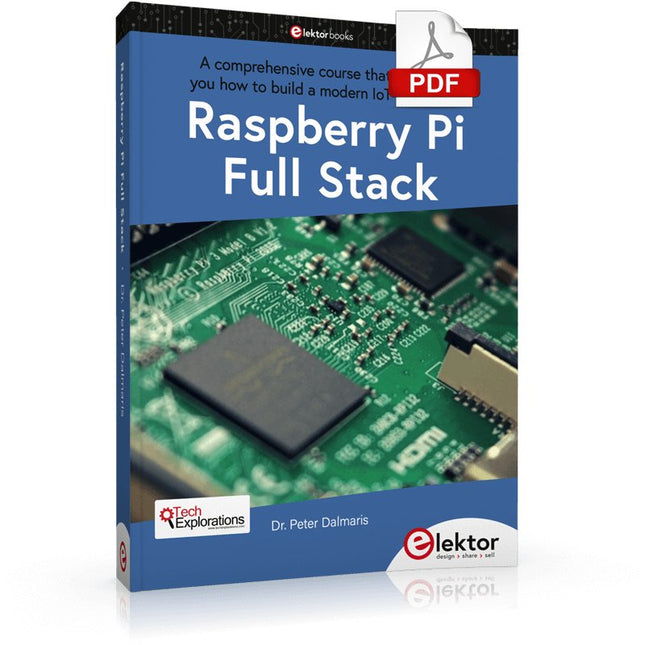
Ce livre vous emmène dans une visite éclair du développement d'applications Web full-stack à l'aide de Raspberry Pi. Vous apprendrez à créer une application à partir de zéro.
Vous acquerrez de l'expérience et des connaissances sur les technologies, notamment :
Le système d'exploitation Linux et la ligne de commande.
Le langage de programmation Python.
Les broches d'entrée-sortie à usage général (GPIO) du Raspberry Pi.
Le serveur Web Nginx.
Micro-framework Flask Python pour les applications Web.
JQuery et CSS pour créer des interfaces utilisateur.
Gérer les fuseaux horaires.
Création de graphiques avec Plotly et Google Charts.
Enregistrement des données avec Google Sheet.
Développement d'applets avec IFTTT.
Sécuriser votre application avec SSL.
Recevez des messages texte sur votre téléphone avec Twilio.
Ce livre vous apprend également comment configurer à distance un nœud de capteur Arduino sans fil et en collecter des données. Votre application Web Raspberry Pi sera capable de traiter les données du nœud Arduino de la même manière qu'elle traite les données de son capteur intégré.
Raspberry Pi Full Stack vous enseigne de nombreuses compétences essentielles à la création d'applications Web et Internet des objets.
L'application que vous construirez dans ce projet est une plate-forme sur laquelle vous pourrez vous développer. Ce n'est que le début de ce que vous pouvez faire avec un Raspberry Pi et les composants logiciels et matériels que vous apprendrez.
Ce livre est soutenu par l'auteur à travers un espace de discussion dédié.
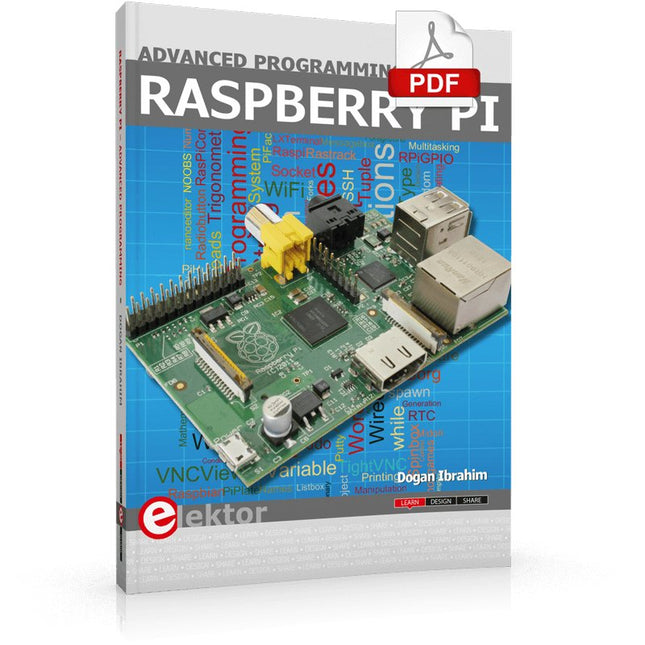
This book is about advanced programming of the Raspberry Pi computer using the Python programming language. The book explains in simple terms and with examples:
How to configure the Raspberry Pi computer;
How to install and use the Linux operating system and the desktop;
How to write advanced programs using the Python programming language;
How to use graphics in our programs;
How to develop hardware based projects using the Raspberry Pi.
The book starts with an introduction to the Raspberry Pi computer and covers the topics of purchasing all the necessary accessories and installing and operating the Linux operating system in command mode. The network interface of the RPi is explained in simple steps, demonstrating how the computer can be accessed remotely from a desktop or a laptop computer.
The remaining parts of the book cover the Python programming language in detail, including advanced topics such as operating system calls, multitasking, interprocess synchronization and interprocess communication techniques. The important topic of network programming using UDP and TCP protocols is described with working examples. The Tkinter graphical user interface module (GUI) is described in detail with example widgets and programs.
The last part of the book includes hardware projects based on using the advanced programming topics such as multitasking and interprocess communication techniques. All the projects given in the book have been fully tested and are working. Complete program listings of all projects are provided with detailed explanations.
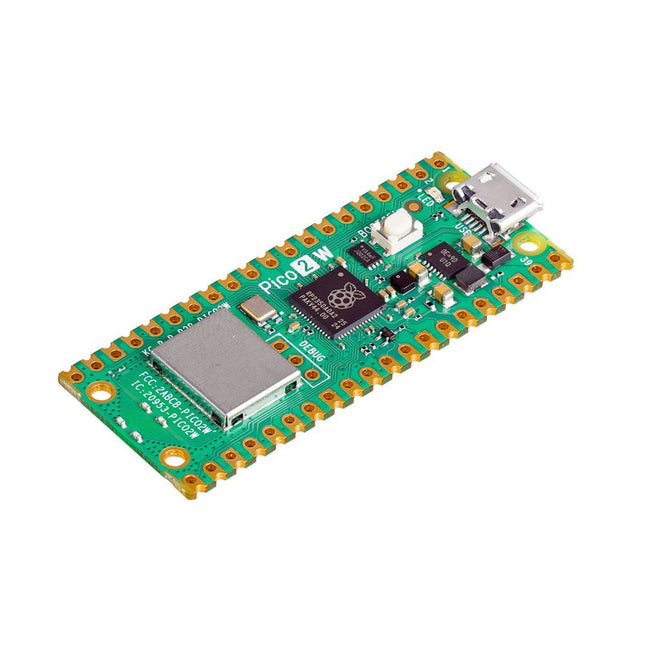
Le Raspberry Pi Pico 2 W est une carte microcontrôleur basée sur le RP2350 doté d'un réseau local sans fil 802.11n à 2,4 GHz et de Bluetooth 5.2. Il vous offre encore plus de flexibilité dans la conception de vos produits IoT ou intelligents et étend les possibilités de vos projets.
Le RP2350 fournit une architecture de sécurité complète construite autour d'Arm TrustZone pour Cortex-M. Il intègre un démarrage signé, 8 Ko d'OTP antifusible pour le stockage des clés, une accélération SHA-256, un TRNG matériel et des détecteurs de problèmes rapides.
La capacité unique à double cœur et à double architecture du RP2350 permet aux utilisateurs de choisir entre une paire de cœurs Arm Cortex-M33 standard et une paire de cœurs Hazard3 RISC-V à matériel ouvert. Programmable en C/C++ et Python, et pris en charge par une documentation détaillée, le Raspberry Pi Pico 2 W est la carte microcontrôleur idéale pour les passionnés et les développeurs professionnels.
Spécifications
Processeur
Processeurs Dual Arm Cortex-M33 ou double RISC-V Hazard3 à 150 MHz
Sand fil
Infineon CYW43439 monobande 2,4 GHz sans fil 802.11n et Bluetooth 5.2
Mémoire
520 Ko de SRAM sur puce ; Flash QSPI intégré de 4 Mo
Interfaces
26 broches GPIO polyvalentes, dont 4 pouvant être utilisées pour AD
Périphériques
2x UART
2x Contrôleurs SPI
2x Contrôleurs I²C
24x Canaux PWM
1x Contrôleur USB 1.1 et PHY, avec prise en charge des hôtes et des périphériques
12x Machines à états PIO
Puissance d'entrée
1,8-5,5 V CC
Dimensions
21 x 51 mm
Téléchargements
Datasheet
Pinout
Schematic