
Résultats de la recherche pour "rtl OR sdr OR software OR defined OR radio OR with OR dipole OR antenna OR kit"
-

Great Scott Gadgets Great Scott Gadgets HackRF Pro SDR (100 kHz – 6 GHz) + E-book GRATUIT
OFFRE SPÉCIALE : Commandez le HackRF Pro maintenant et recevez gratuitement le nouvel e-book « SDR with HackRF One & HackRF Pro » d’une valeur de 20 € ! Le HackRF Pro est la toute dernière radio logicielle (Software Defined Radio, SDR) de Great Scott Gadgets et le puissant successeur du légendaire HackRF One. Avec une plage de fréquences allant de 100 kHz à 6 GHz, il couvre un spectre immense pour l'émission et la réception de signaux radio. Conçu comme une plateforme matérielle open-source, le HackRF Pro est l'outil idéal pour l'analyse et le développement des technologies sans fil modernes. Il peut être utilisé de manière flexible comme périphérique USB ou programmé pour un fonctionnement autonome. Spécifications Fréquence : 100 kHz à 6 GHz Réglable de 0 Hz à 7,1 GHz Émetteur-récepteur semi-duplex Jusqu'à 20 millions d'échantillons par seconde Échantillonnage en quadrature 8 bits (8 bits I et 8 bits Q) Compatible avec GNU Radio, SDR# et autres Gain RX et TX et filtre de bande de base configurables par logiciel Alimentation du port RF contrôlée par logiciel (50 mA à 3,3 V) Connecteur RF SMA Entrée et sortie d'horloge SMA pour la synchronisation et le déclenchement Boutons pratiques pour la programmation Connecteurs internes pour Extension USB 2.0 haute vitesse avec connecteur USB-C Alimentation par USB Matériel open source Par rapport à son prédécesseur, HackRF Pro offre une variété de fonctionnalités nouvelles, notamment : Plage de fréquences de fonctionnement étendue Performances RF améliorées avec une réponse en fréquence plus linéaire Connecteur USB-C Oscillateur à cristal TCXO intégré pour une stabilité de synchronisation supérieure Mise à niveau logique d'un CPLD vers un FPGA écoénergétique Élimination du pic de tension continue Mode de précision étendue avec échantillons 16 bits pour les faibles fréquences d'échantillonnage (ENOB typique : 9-11) Mode de demi-précision avec échantillons 4 bits jusqu'à 40 Méch./s Davantage de RAM et de mémoire flash pour un firmware personnalisé Blindage installé autour de la section radio Entrées et sorties de déclenchement accessibles via des connecteurs d'horloge Découpe dans le circuit imprimé offrant de l'espace pour de futurs ajouts Consommation électrique améliorée Gestion Protection renforcée des ports RF Possibilité de désactiver matériellement le mode d'émission Compatibilité totale : Grâce à son architecture éprouvée, les logiciels existants pour le HackRF One peuvent également être utilisés directement avec le HackRF Pro. Le HackRF Pro offre une compatibilité descendante transparente tout en offrant des performances nettement améliorées. Remarque : L'antenne n'est sont pas inclus. Nous recommandons l'antenne ANT500 pour une mise en service optimale. Inclus HackRF Pro SDR avec boîtier en plastique Nouvel e-book : SDR with HackRF One & HackRF Pro (prix normal : 20 €) Téléchargements Documentation GitHub
€ 489,00€ 429,00Meilleur prix
-

Elektor Digital Build Your Own Software-Defined Radio (E-book)
Practical Guide to Modular RF Design Build Your Own Software-Defined Radio combines RF circuitry with hardware programming and PC-based signal processing. The e-book presents a modular approach to building a complete SDR system using RF Bricks – from the mechanical framework and RF modules to measurement tools, PC software, and FPGA implementations. Practical explanations guide readers through real signal paths, construction steps, and measurement routines, linking hardware and software into a flexible SDR platform. Key topics include: Mechanical setup: RF Brick template, chassis, and 19-inch module carrier Bridges: USB isolator, I²C level shifter, I²C power switch, and practical examples Signal-chain design with RF Bricks: antennas, band filters, NanoVNA work, preamplifiers, PLLs, demodulators, direct-conversion chains, multiband options, and narrowband bricks RF measurement Bricks: single- and dual-tone sources, NPR methods, noise generators, notch filters, broadband amplifiers, and impedance bridges Useful accessories: ATU-100 tuner, X-Phase QRM eliminator, and firmware notes PC host software: SoapyAudio adjustments, GQRX, SDR++, and added functionality GnuRadio elements: control blocks, SSB demodulation, GUI components, messaging, and filter handling FPGA-based SDR: VHDL, toolchains, ADC/DAC blocks, oversampling, and a complete SSB/CW signal chain With its modular structure and detailed working examples, this e-book offers a practical path to building and extending modern SDR systems. Downloads Software
€ 32,95
Membres : € 29,66
-

SDRplay SDRplay nRSP-ST Récepteur radio en réseau (1 kHz à 2 GHz)
Le nRSP-ST est un récepteur radio en réseau à couverture générale pour des fréquences de 1 kHz à 2 GHz avec une visibilité spectrale allant jusqu'à 10 MHz. Le nRSP-ST est votre propre SDR personnel accessible à distance qui peut également être partagé avec un petit nombre d'amis ou de collègues de confiance. Le nRSP-ST répond aux besoins des passionnés de radio qui souhaitent une solution « plug-and-play » pour la réception à distance. En plus d'y parvenir, nous avons résolu les limitations typiques de la bande passante Internet avec la création d'un nouveau mode IQ Lite, qui fournit efficacement des canaux de données IQ. Nous introduisons également la possibilité de contrôler et de stocker les enregistrements IQ sur un site distant. Le nRSP-ST est idéal pour tous ceux qui souhaitent un récepteur distant à large bande sans avoir besoin de compétences informatiques ni d'heures de configuration et de maintenance continue sur le site distant. Caractéristiques Récepteur de couverture générale en réseau intégré « Plug and Play » : Combine un récepteur, un ordinateur hôte et bien plus encore, le tout dans un seul boîtier ! Mettez sous tension et connectez-vous à Internet (Ethernet ou Wi-Fi) : le nRSP-ST est automatiquement accessible de n'importe où Le logiciel SDRconnect multiplateforme prend en charge le fonctionnement local ou l'accès à distance sur les plates-formes Windows, MacOS ou Linux Le nRSP-ST & SDRconnect est configurable pour la bande passante réseau disponible : En mode Full IQ, le nRSP-ST assure le transfert de données IQ de la bande passante du spectre visible (par exemple, pour un réseau local haut débit ou une connectivité Internet ultrarapide) En mode IQ Lite, le nRSP-ST fournit des données IQ sur des canaux jusqu'à 192 kHz de large (par exemple, pour le décodage numérique par le client) En mode Compact, le nRSP-ST fournit un son compressé (idéal pour les connexions Internet plus lentes) Prend en charge plusieurs connexions client avec une combinaison simultanée de modes de connexion : un outil d'administration vous permet d'attribuer des noms d'utilisateur et des délais d'expiration à des amis ou collègues de confiance. Tous les modes prennent en charge la visualisation d'une bande passante spectrale allant jusqu'à 10 MHz Deux options de connexion à distance : Utilisez un client SDRconnect distant ou Utilisez le serveur Web intégré pour accéder à distance à partir de n'importe quel appareil compatible avec la navigation Web, y compris les tablettes et téléphones Android/iOS Le nRSP-ST offre la possibilité d'enregistrer des fichiers IQ et audio sur un périphérique NAS (stockage en réseau) s'il est disponible sur le réseau local. Le récepteur SDR large bande ADC 14 bits couvre toutes les fréquences de 1 kHz à 2 GHz en passant par VLF, LF, MW, HF, VHF, UHF et L-band, sans interruption. Surveillez à distance jusqu'à 10 MHz de spectre à la fois à partir d'un choix de 3 antennes Flash évolutif pour de futures améliorations de fonctionnalités Inclus 1x nRSP-ST récepteur 1x Antenne WLAN 1x Bloc d'alimentation 1x Manuel Téléchargements Release notes Software
€ 549,60
-

Elektor Publishing Software Defined Radio zum Selbstbau
Praktischer Einstieg mit Arduino, GnuRadio und FPGA Das Thema „Software Defined Radio“ ist facettenreich: Neben der Schaltungstechnik ist auch eine Einarbeitung in die Programmierung von Hardware und PC wichtig. Ein schrittweises Vorgehen erleichtert Ihnen den Einstieg. Mit dem im Buch vorgestellten modularen „RF Bricks“-Konzept werden Sie zum Architekten Ihrer Signalkette. Auf einem Chassis angeordnet gewährleisten die Module einen soliden und gut abgeschirmten Aufbau, den Sie einfach verändern und mit eigenen Ideen anreichern können. Der skalierbare Aufbau bildet Ihr Blockschaltbild auch mechanisch ab – die so gewonnene Übersicht kann in der Aus- und Weiterbildung nützlich sein. Ein Arduino in Ihrem Chassis kommuniziert nach einigen Anpassungen mit üblichen SDR-Programmen, z. B. SDRCPP, GQRX und CubicSDR auf einer Linux-Plattform. Damit können Sie Ihren Empfänger direkt per Mausklick abstimmen. Wenn Sie Blockschaltbilder mögen, ist GnuRadio ein natürlicher Partner der „RF Bricks“. Mit einem selbst programmierten Python-Block gelingt Ihnen in GnuRadio die Fernsteuerung Ihres Empfängers. Im GnuRadio-Universum können Sie Ihre GUI stufenweise ausbauen, behalten dabei aber immer volle Kontrolle über die inneren Abläufe des Programms. Mit einem FPGA können zeitaufwändige Operationen auch direkt in die Hardware verlagert werden. Sie bauen stufenweise einen Doppelsuperhet auf und entwickeln die Filterkoeffizienten für FIR-Filter mit Scilab. Das in VHDL realisierte Weaver-Schema rundet diesen Empfänger ab, der mit hoher Empfindlichkeit und Dynamik aufwarten kann. Mit dem gewonnen Überblick und Ihrer neuen Hardware können Sie die einzelnen Aspekte des Themenkomplexes SDR beliebig weiter vertiefen. Downloads Software
€ 44,80
Meilleur prix
-
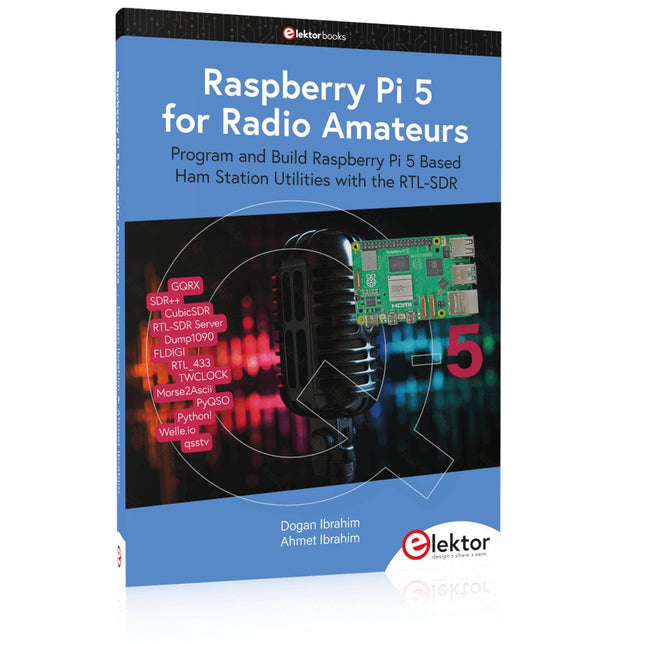
Elektor Publishing Raspberry Pi 5 for Radio Amateurs
Program and Build Raspberry Pi 5 Based Ham Station Utilities with the RTL-SDR The RTL-SDR devices (V3 and V4) have gained popularity among radio amateurs because of their very low cost and rich features. A basic system may consist of a USB based RTL-SDR device (dongle) with a suitable antenna, a Raspberry Pi 5 computer, a USB based external audio input-output adapter, and software installed on the Raspberry Pi 5 computer. With such a modest setup, it is possible to receive signals from around 24 MHz to over 1.7 GHz. This book is aimed at amateur radio enthusiasts and electronic engineering students, as well as at anyone interested in learning to use the Raspberry Pi 5 to build electronic projects. The book is suitable for both beginners through experienced readers. Some knowledge of the Python programming language is required to understand and eventually modify the projects given in the book. A block diagram, a circuit diagram, and a complete Python program listing is given for each project, alongside a comprehensive description. The following popular RTL-SDR programs are discussed in detail, aided by step-by-step installation guides for practical use on a Raspberry Pi 5: SimpleFM GQRX SDR++ CubicSDR RTL-SDR Server Dump1090 FLDIGI Quick RTL_433 aldo xcwcp GPredict TWCLOCK CQRLOG klog Morse2Ascii PyQSO Welle.io Ham Clock CHIRP xastir qsstv flrig XyGrib FreeDV Qtel (EchoLink) XDX (DX-Cluster) WSJT-X The application of the Python programming language on the latest Raspberry Pi 5 platform precludes the use of the programs in the book from working on older versions of Raspberry Pi computers.
€ 39,95
Membres : € 35,96
-

Elektor Publishing SDR with HackRF One & HackRF Pro
Programming with GNU Radio HackRF is an open-source hardware platform developed by Great Scott Gadgets and serves as a versatile front end for software-defined radio (SDR). With HackRF One and its successor, HackRF Pro, users can develop their own SDR applications, build powerful receivers and transmitters, and tackle demanding RF measurement tasks. This book provides a practical introduction to the world of SDR. Step by step, the author shows how powerful SDR projects can be implemented with HackRF – from the fundamentals of RF technology to advanced applications using GNU Radio. In addition to working with SDR Sharp (SDR#), RadioConda, and GNU Radio, the book also covers the fundamentals of modern digital signal processing. Numerous experiments and easy-to-follow practical examples guide readers through topics such as AM, FM, and SSB reception, digital filters, shortwave radio, amateur radio, signal generators, and custom RF projects up to 6 GHz. Whether you are a maker, radio amateur, electronics enthusiast, or SDR beginner, this book provides solid knowledge, practical applications, and the motivation to creatively explore the possibilities of modern SDR technology.
€ 24,95
Membres : € 22,46
-
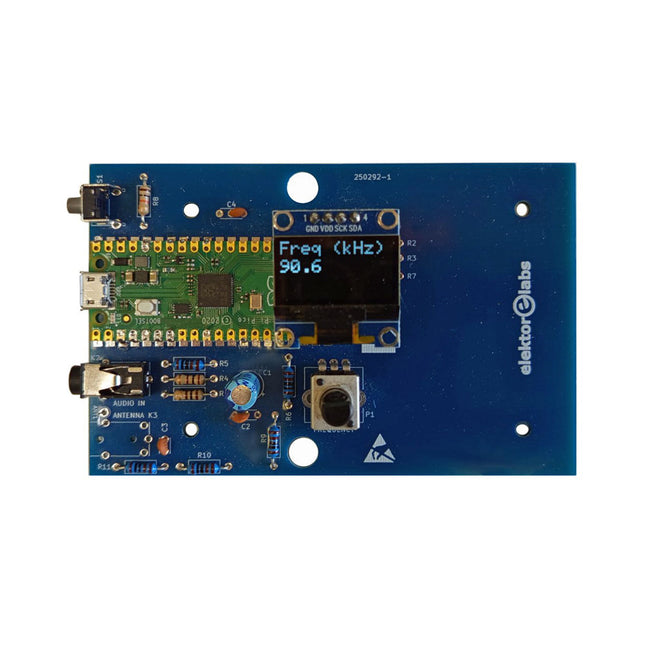
Elektor Labs Kit émetteur AM Elektor
Construisez votre propre émetteur radio vintage Le kit émetteur AM Elektor permet de diffuser de l’audio vers des récepteurs radio AM vintage. Basé sur un module microcontrôleur Raspberry Pi Pico, l’émetteur AM peut transmettre sur 32 fréquences dans la bande AM, de 500 kHz jusqu’à 1,6 MHz en 32 pas d’environ 35 kHz. La fréquence est sélectionnée à l’aide d’un potentiomètre et affichée sur un écran OLED de 0,96". Un bouton-poussoir permet de basculer le mode d’émission entre Marche et Arrêt. La portée de l’émetteur dépend de l’antenne. L’antenne intégrée offre une portée de quelques centimètres, nécessitant de placer l’émetteur AM à proximité ou à l’intérieur de la radio. Une antenne boucle externe (non incluse) peut être connectée pour augmenter la portée. Le kit émetteur AM Elektor est livré en kit de pièces que vous devez souder vous-même sur la carte. Caractéristiques La carte est compatible avec un boîtier Hammond 1593N (non inclus).Une alimentation 5 VDC avec connecteur micro-USB (par exemple, un ancien chargeur de téléphone) est nécessaire pour alimenter le kit (non incluse). Consommation de courant : 100 mA. Le logiciel Arduino (nécessitant le package RP2040 Boards d’Earle Philhower) pour le kit émetteur AM Elektor ainsi que plus d’informations sont disponibles sur la page Elektor Labs de ce projet. Liste des composants Résistances R1, R4 = 100 Ω R2, R3, R8 = 10 kΩ R5, R6, R9, R10, R11 = 1 kΩ R7 = optionnelle (non incluse) P1 = potentiomètre 100 kΩ, linéaire Condensateurs C1 = 22 µF 16V C2, C4 = 10 nF C3 = 150 pF Divers K1 = barrette 4×1 broches K2, K3 = prise 3,5 mm Raspberry Pi Pico Bouton-poussoir, montage en angle Afficheur OLED I²C monochrome 0,96" PCB 150292-1
€ 34,95€ 29,95Meilleur prix
-
Elektor Digital SDR with HackRF One & HackRF Pro (E-book)
Programming with GNU Radio HackRF is an open-source hardware platform developed by Great Scott Gadgets and serves as a versatile front end for software-defined radio (SDR). With HackRF One and its successor, HackRF Pro, users can develop their own SDR applications, build powerful receivers and transmitters, and tackle demanding RF measurement tasks. This book provides a practical introduction to the world of SDR. Step by step, the author shows how powerful SDR projects can be implemented with HackRF – from the fundamentals of RF technology to advanced applications using GNU Radio. In addition to working with SDR Sharp (SDR#), RadioConda, and GNU Radio, the book also covers the fundamentals of modern digital signal processing. Numerous experiments and easy-to-follow practical examples guide readers through topics such as AM, FM, and SSB reception, digital filters, shortwave radio, amateur radio, signal generators, and custom RF projects up to 6 GHz. Whether you are a maker, radio amateur, electronics enthusiast, or SDR beginner, this book provides solid knowledge, practical applications, and the motivation to creatively explore the possibilities of modern SDR technology.
€ 19,95
Membres : € 17,96
-

Elektor Digital Software Defined Radio zum Selbstbau (PDF)
Praktischer Einstieg mit Arduino, GnuRadio und FPGA Das Thema „Software Defined Radio“ ist facettenreich: Neben der Schaltungstechnik ist auch eine Einarbeitung in die Programmierung von Hardware und PC wichtig. Ein schrittweises Vorgehen erleichtert Ihnen den Einstieg. Mit dem im Buch vorgestellten modularen „RF Bricks“-Konzept werden Sie zum Architekten Ihrer Signalkette. Auf einem Chassis angeordnet gewährleisten die Module einen soliden und gut abgeschirmten Aufbau, den Sie einfach verändern und mit eigenen Ideen anreichern können. Der skalierbare Aufbau bildet Ihr Blockschaltbild auch mechanisch ab – die so gewonnene Übersicht kann in der Aus- und Weiterbildung nützlich sein. Ein Arduino in Ihrem Chassis kommuniziert nach einigen Anpassungen mit üblichen SDR-Programmen, z. B. SDRCPP, GQRX und CubicSDR auf einer Linux-Plattform. Damit können Sie Ihren Empfänger direkt per Mausklick abstimmen. Wenn Sie Blockschaltbilder mögen, ist GnuRadio ein natürlicher Partner der „RF Bricks“. Mit einem selbst programmierten Python-Block gelingt Ihnen in GnuRadio die Fernsteuerung Ihres Empfängers. Im GnuRadio-Universum können Sie Ihre GUI stufenweise ausbauen, behalten dabei aber immer volle Kontrolle über die inneren Abläufe des Programms. Mit einem FPGA können zeitaufwändige Operationen auch direkt in die Hardware verlagert werden. Sie bauen stufenweise einen Doppelsuperhet auf und entwickeln die Filterkoeffizienten für FIR-Filter mit Scilab. Das in VHDL realisierte Weaver-Schema rundet diesen Empfänger ab, der mit hoher Empfindlichkeit und Dynamik aufwarten kann. Mit dem gewonnen Überblick und Ihrer neuen Hardware können Sie die einzelnen Aspekte des Themenkomplexes SDR beliebig weiter vertiefen. Downloads Software
€ 34,80
Membres : € 31,32
-

Elektor Publishing SDR mit HackRF One & HackRF Pro
Programmieren mit GNU Radio HackRF ist eine Open-Source-Entwicklung von Great Scott Gadgets und dient als vielseitiges Frontend für Software Defined Radio (SDR). Mit HackRF One und dem Nachfolger HackRF Pro lassen sich eigene SDR-Anwendungen entwickeln, leistungsfähige Empfänger und Sender aufbauen sowie anspruchsvolle Aufgaben der HF-Messtechnik realisieren. Dieses Buch eröffnet einen praxisnahen Einstieg in die Welt des Software Defined Radio. Schritt für Schritt zeigt der Autor, wie sich mit HackRF leistungsfähige SDR-Projekte umsetzen lassen – von den Grundlagen der HF-Technik bis hin zu anspruchsvollen Anwendungen mit GNU Radio. Neben dem Umgang mit SDR Sharp (SDR#), RadioConda und GNU Radio vermittelt das Buch auch die Grundlagen moderner digitaler Signalverarbeitung. Zahlreiche Experimente und leicht nachvollziehbare Praxisbeispiele führen durch Themen wie AM-, FM- und SSB-Empfang, digitale Filter, Kurzwelle, Amateurfunk, Messsender und eigene HF-Projekte bis 6 GHz. Ob Maker, Funkamateur, Elektronik-Enthusiast oder SDR-Einsteiger – dieses Buch vermittelt fundiertes Wissen, praxisnahe Anwendungen und die Motivation, die Möglichkeiten moderner SDR-Technik kreativ auszuschöpfen.
€ 24,90
Meilleur prix


-

, par Burkhard Kainka RTL-SDR Blog V4, mieux que le V3 ? (Essai)
Les clés RTL-SDR Blog existent depuis un certain temps déjà. Elles peuvent recevoir des signaux HF jusqu'à 1'000 MHz et même davantage. La RTL-SDR Blog...
-
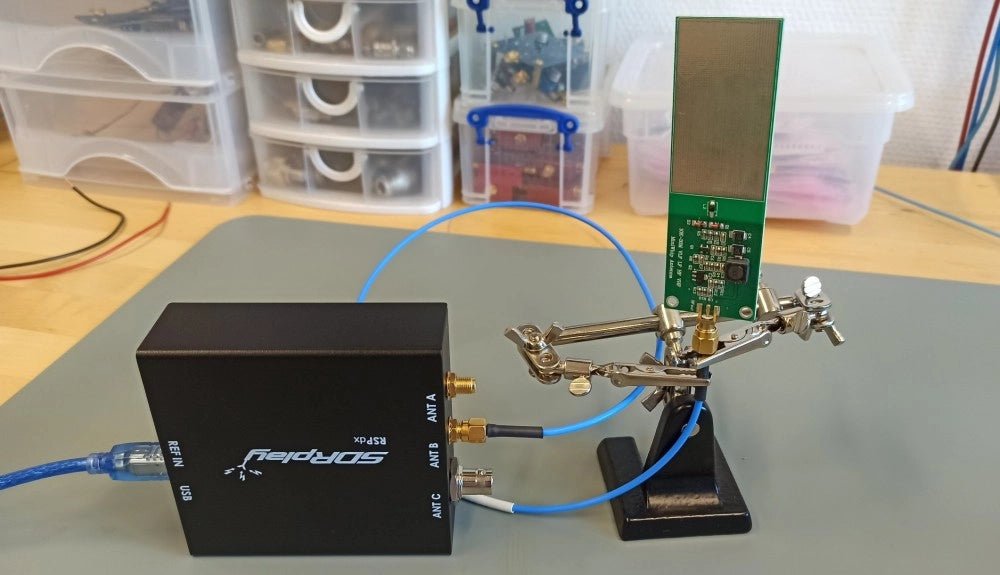
, par Sebastian Westerhold Le récepteur SDR SDRplay RSPdx couvre une plage de fréquences de 1 kHz à 2 GHz (Essais)
Le SDRplay RSPdx est un récepteur SDR 14-bit à tuner unique avec une couverture continue de 1 kHz à 2 GHz. Trois connecteurs d'entrée, un...

