
Résultats de la recherche pour "e OR book OR eagle OR getting OR started OR guide"
-
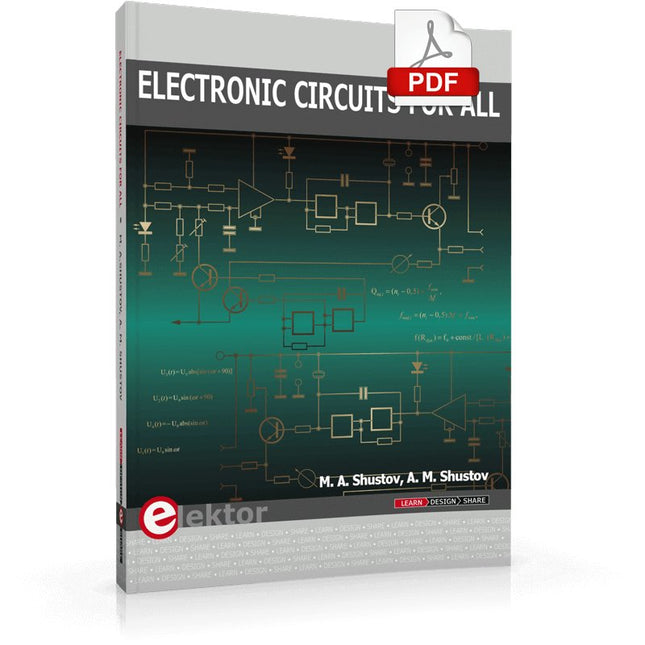
Elektor Digital Electronic Circuits For All (E-book)
This book contains more than 400 simple electronic circuits which are developed and tested in practice by the authors. The technical solutions presented in the book are intended to stimulate the creative imagination of readers and broaden their area of thought. This should allow readers to look beyond the horizons of possibilities and use ordinary electronic items in a new way. This book includes new and original radio electronic multipurpose circuits. The chapters of the book are devoted to power electronics and measuring equipment and contain numerous original circuits of generators, amplifiers, filters, electronic switches based on thyristors and CMOS switch elements. Wired and wireless systems as well as security and safety systems are presented. Due to the high relevance and increased interest of readers in little-known or not readily available information, the different chapters of this book describe the use of electronic devices in industrial electronics and for research, as well as new instruments and equipment for medical use, gas-discharge and Kirlian photography. A number of technical devices presented in this book are related to research of the mysteries of the earth, nature and human beings by using radio electronic devices. This book will be useful for both radio amateurs and professionals.
€ 32,95
Membres : € 29,66
-
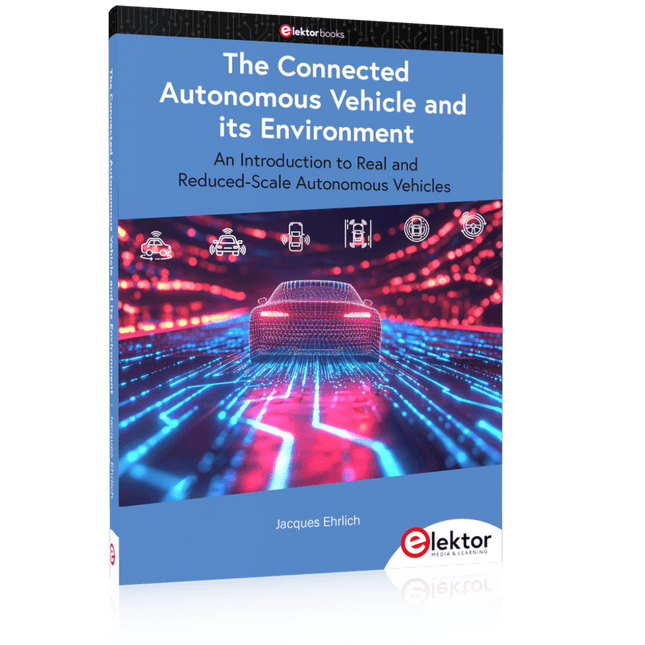
Elektor Publishing The Connected Autonomous Vehicle and its Environment
An Introduction to Real and Reduced-Scale Autonomous Vehicles Want to cut through the hype and get to the core of autonomous and connected vehicles? Then this book is your clear, accessible guide to a complex and fast-moving field. Starting with Intelligent Transport Systems (ITS), it walks you through the essential foundations, including Advanced Driver Assistance Systems (ADAS) – the stepping stones to full autonomy. Explore how self-driving cars mimic human behavior through a loop of perception, analysis, decision, and action. Discover the key functions that make it possible: localization, obstacle detection, driver monitoring, cooperative awareness – and the most challenging of all, trajectory planning, across strategic, tactical, and operational levels. Will vehicles be connected? The debate is on – but the standards are already here. Learn how connectivity, infrastructure, and vehicles can work in synergy through the innovative concept of floating car data (FCD). Dive into real-world implementation: with embedded electronics account-ing for over 30% of a modern vehicle‘s cost, we unpack the architecture, coordination, and tools required to manage the complexity – brought to life with a hands-on case study. To finish, we open the door to the future: building your own 1:10 scale autonomous vehicle. No plug-and-play solutions – just the foundations for a collaborative, creative, and geek-friendly challenge. Let’s drive the future together.
€ 34,95
Membres : € 31,46
-

Elektor Digital Entwurf und Bau von linearen Stromversorgungssystemen (für kleine und große Leistungen) (PDF)
Aus der Reihe "Stromversorgung ohne Stress" (Band 4) Renaissance der linearen Stromversorgungen Mittlerweile gibt es fast nur noch Schaltnetzteile. Da diese rauschen und stören, sind sie nicht für alle Einsatzzwecke die beste Wahl. Ursache sind durch den Schaltbetrieb erzeugte Hochfrequenzschwingungen, die in die Netzleitung und die Umgebung strahlen. Lineare Netzteile liefern Gleichspannungen von höchster Qualität. Über Brummen und Rauschen braucht man sich wenig Sorgen zu machen. Auch der Aufbau ist im Vergleich zu Schaltnetzteilen unkritisch. Wenn man überhaupt von Nachteilen bei linearen Netzteilen sprechen kann, wäre nur das höhere Gewicht zu nennen. Lineare Stromversorgungen sind auch einfach zu verstehen, können aus Standard-Bauteilen aufgebaut werden, sind leicht zu modifizieren und reparaturfähig und damit nachhaltig. In diesem Buch geht es um den Entwurf und den Bau von linearen Stromversorgungssystemen für kleine und große Leistungen. Aber auch Randthemen wie die lineare Steuerung von Verbrauchern und Kompromissen aus Kombinationen von Schaltnetzteil und linearem Netzteil oder Hilfsschaltungen wie lineare Lasten sind Bestandteil des Buches. Bei dieser Gelegenheit gibt es ausreichend Raum für die Besprechung der Grundlagen, der technischen Details, der Fallstricke und von Tipps und Tricks.
€ 32,80
Membres : € 29,52
-

Elektor Bundles Learn Edge AI with Raspberry Pi
Cette offre groupée pratique vous permet de créer de véritables applications d’IA en périphérie avec le Raspberry Pi Raspberry Pi AI HAT+ (13 TOPS) Le Raspberry Pi AI HAT+ est une carte d'extension conçue pour le Raspberry Pi 5, dotée d'un accélérateur Hailo AI intégré. Ce module complémentaire offre une approche rentable, efficace et accessible pour intégrer des capacités d'IA hautes performances, avec des applications couvrant le contrôle des processus, la sécurité, la domotique et la robotique. L'AI HAT+ se connecte via l'interface PCIe Gen3 du Raspberry Pi 5. Lorsque le Raspberry Pi 5 exécute une version actuelle du système d'exploitation Raspberry Pi, il détecte automatiquement l'accélérateur Hailo intégré, rendant l'unité de traitement neuronal (NPU) disponible pour les tâches d'IA. De plus, les applications de caméra rpicam-apps incluses dans Raspberry Pi OS prennent en charge de manière transparente le module AI, en utilisant automatiquement le NPU pour les fonctions de post-traitement compatibles. Raspberry Pi Camera Module 3 Le module Caméra Raspberry Pi 3 est un appareil photo compact de Raspberry Pi. Il est doté d'un capteur IMX708 de 12 mégapixels avec HDR et d'un autofocus à détection de phase. Le Camera Module 3 est disponible en version standard et en version grand angle, toutes deux avec ou sans filtre infrarouge. Le Camera Module 3 peut être utilisé pour prendre des vidéos full HD ainsi que des photos, et dispose d'un mode HDR jusqu'à 3 mégapixels. Son fonctionnement est entièrement pris en charge par la bibliothèque libcamera, y compris la fonction d'autofocus rapide de Camera Module 3 : cela le rend facile à utiliser pour les débutants, tout en offrant beaucoup pour les utilisateurs avancés. Camera Module 3 est compatible avec tous les ordinateurs Raspberry Pi. Livre : Edge AI Made Practical – AI Projects for the Raspberry Pi with the AI HAT+ L'intelligence artificielle embarquée (Edge AI) transforme les appareils du quotidien en intégrant l'intelligence là où elle est la plus utile : directement au cœur du matériel. Grâce à l'inférence embarquée, une caméra peut reconnaître instantanément un visiteur, un téléphone peut traduire la parole sans envoyer l'audio vers le cloud et un objet connecté peut détecter les anomalies en temps réel – rapidement, en toute confidentialité et de manière fiable, même en cas de perte de réseau. Ce livre est votre guide pratique pour construire précisément ce type de systèmes avec le Raspberry Pi AI HAT+ et l'accélérateur Hailo-8L. Vous commencerez par des bases solides : les concepts fondamentaux de l'IA et de l'apprentissage automatique, le fonctionnement des réseaux neuronaux et ce qui distingue véritablement l'Edge AI de l'IA cloud – ainsi qu'une analyse franche des considérations éthiques et des impacts futurs. Cette offre groupée contient : Livre : Edge AI Made Practical Raspberry Pi AI HAT+ (13 TOPS) Raspberry Pi Camera Module 3 Refroidisseur actif pour Raspberry Pi 5 Câble d'écran FPC pour Raspberry Pi 5 (300 mm) Kit de composants Elektor Connecteur GPIO 40 broches Module de feux de signalisation LED rouge 5 V avec résistance intégrée LED jaune 5 V avec résistance intégrée LED verte 5 V avec résistance intégrée LED bleue 5 V avec résistance intégrée Plaque d'essai (400 points de connexion) 10 connecteurs Dupont Câbles (mâle-femelle) Module de capteur DHT22 Servomoteur Requis Raspberry Pi 5
€ 169,95
Meilleur prix
-

Elecrow Elecrow Kit de démarrage AI pour Jetson Orin Nano
Plateforme tout-en-un d'apprentissage et de développement en IA pour l'Edge Intelligence Ce kit de démarrage IA basé sur NVIDIA Jetson est une plateforme polyvalente pour l'apprentissage, le développement et l'expérimentation pratique de l'IA en périphérie (Edge AI). Conçu pour être utilisé avec le NVIDIA Jetson Orin Nano, le kit associe un écran IPS de 11,6 pouces, une caméra motorisée (pan-tilt) de 8 mégapixels et un système d'interaction vocale basé sur l'IA. Il comprend 30 modules fonctionnels et 38 cours Python soigneusement élaborés, allant du niveau débutant au niveau avancé. Le contenu pédagogique couvre les fondamentaux de Python, la technologie des capteurs, la vision par IA et la reconnaissance d'images. Grâce à des exercices pratiques étape par étape — allant de la programmation de base aux applications concrètes de vision par ordinateur — ce kit constitue une plateforme idéale pour les étudiants, les makers, les développeurs et toute personne souhaitant explorer l'intelligence artificielle et l'Edge Computing. Remarque : Le NVIDIA Jetson Orin Nano n'est pas inclus. Caractéristiques Conçu pour le NVIDIA Jetson Orin Nano Module d'interaction vocale par IA Caméra 8 MP avec contrôle panoramique et inclinaison Prend en charge le suivi d'objets et de visages Aucune soudure ni câblage complexe requis Écran IPS intégré de 11,6 pouces 30 modules fonctionnels 38 leçons Python étape par étape Interfaces d'extension I²C, UART et GPIO Mallette de transport incluse Spécifications Processeur principal Jetson Orin Nano Nombre de capteurs 30 Conception de la carte de capteurs Carte de capteurs intégrée ; aucune soudure ni câblage complexe requis Écran Écran IPS de 11,6 pouces Résolution de l'écran 1366 x 768 Caméra IMX219 8 MP Interfaces d'extension 2x I²C, 1x UART, 1x IO D13, 1x IO D12 Environnement de programmation Basé sur Python Nombre de tutoriels 38 tutoriels créatifs Public cible Étudiants, enseignants, passionnés de matériel informatique Scénarios d'application Idéal pour apprendre la programmation d'IA et les bases de la Jetson Orin Nano Dimensions 300 x 200 x 100 mm Liste des modules Module Quantité Capteur de température et d'humidité 1 pièce Bouton-poussoir 4 pièces Capteur de distance à ultrasons 1 pièce Capteur de luminosité 1 pièce Potentiomètre linéaire 1 pièce Buzzer 1 pièce Écran LCD 1 pièce Télécommande infrarouge 1 pièce Relais 1 pièce Module NFC 1 pièce Capteur de mouvement PIR 1 pièce Joystick 1 pièce Afficheur 4 chiffres 1 pièce LED 1 pièce Microphone 1 pièce Haut-parleur 1 paire Moteur vibrant 1 pièce Capteur tactile 1 pièce Matrice RVB 8x8 1 pièce Capteur de pression atmosphérique 1 pièce Capteur d'inclinaison 1 pièce Moteur pas à pas 1 pièce Accéléromètre et gyroscope 1 pièce Capteur de gaz (MQ2) 1 pièce Capteur à effet Hall 1 pièce Encodeur rotatif 1 pièce Commutateur photoélectrique en U 1 pièce Thermistance NTC 1 pièce Servomoteur 2 pièces Caméra monoculaire 1 pièce Inclus 1x Elecrow Kit de démarrage AI pour Jetson Orin Nano 1x Télécommande infrarouge 1x Carte NFC 1x Carte SD 128 Go 1x Câble GPIO 40 broches 2x Câble FPC 22 broches 2x Câble FPC 24 broches 1x Carte adaptateur Jetson DP et USB Non inclus NVIDIA Jetson Orin Nano Téléchargements Manual Wiki OpenClaw Install and Config Guide
€ 249,00
Membres : € 224,10
-

€ 39,80
Membres : € 35,82
-
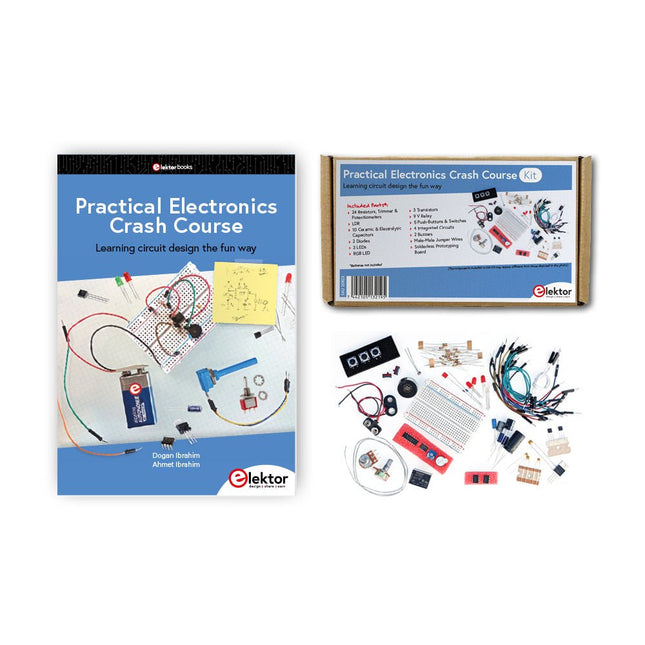
Elektor Bundles Practical Electronics Crash Course (offre groupée)
Se lancer dans l'électronique n'est pas aussi difficile qu'on pourrait le penser. Avec cette offre groupée (livre + kit), vous pouvez explorer et apprendre les concepts les plus importants de l'ingénierie électrique et électronique de manière ludique en réalisant diverses expériences. Vous apprendrez l'électronique pratiquement sans entrer dans un jargon technique complexe et de longs calculs. En conséquence, vous créerez bientôt vos propres projets. Ce kit contient les composants nécessaires pour construire la plupart des exemples détaillés du livre sur une planche à pain et les essayer pour de vrai. Ce kit peut, bien entendu, être utilisé sans livre pour construire d'autres circuits et réaliser vos propres expériences. Contenu du kit 1x 39 Ω, résistance de 1 W 1x résistance de 47 Ω 1x résistance de 180 Ω 1x résistance de 330 Ω 3x résistance de 1 kΩ 1x résistance de 2,2 kΩ 1x résistance de 3,9 kΩ 1x résistance de 6,8 kΩ 1x résistance de 10 kΩ 1x résistance de 15 kΩ 1x résistance de 22 kΩ 1x résistance de 33 kΩ 1x résistance de 47 kΩ 1x résistance de 56 kΩ 1x résistance de 82 kΩ 1x résistance de 120 kΩ 1x résistance de 680 kΩ 2x résistance de 100 kΩ 1x coupe-bordure de 10 kΩ 1x potentiomètre linéaire de 10 kΩ 1x potentiomètre linéaire de 100 kΩ 1x LDR 1x condensateur céramique de 1 nF 1x condensateur céramique de 10 nF 1x condensateur céramique de 100 nF 1x condensateur électrolytique en aluminium de 1 µF, 25 V 2x condensateur électrolytique en aluminium de 10 µF, 25 V 1x condensateur électrolytique en aluminium de 100 µF, 25 V 1x condensateur électrolytique en aluminium de 470 µF, 25 V 1x condensateur électrolytique en aluminium de 1000 µF, 25 V 1x LED RVB, cathode commune (CC) 1x diode de petit signal 1N4148 1x diode Zener 1N4733A 5,1 V, 1 W 3x LED, rouge 2x transistors NPN BC337 1x MOSFET canal N IRFZ44N 2x minuteries NE555 1x comparateur LM393 1x 74HCT08 quad ET portail 3x interrupteurs tactiles 2x commutateur SPDT 1x relais, SPDT, 9 V CC 1x buzzer actif 1x buzzer passif Câble solide de 50 cm, 16 AWG, sans gaine 2x pinces pour batterie PP3 9 V 1x planche à pain 20x fil de liaison Cette offre groupée contient : Kit : Practical Electronics Crash Course (d'une valuer de 45 €) Livre : Practical Electronics Crash Course (prix normal : 45 €)
€ 89,95€ 69,95Meilleur prix
-

Elektor Digital SPS-Programmierung mit dem Raspberry Pi und dem OpenPLC-Projekt (PDF)
Einführung in die SPS-Programmierung mit dem Open-Source-Projekt auf dem Raspberry Pi und Modbus-Beispiele mit dem Arduino Uno und ESP8266 Die SPS-Programmierung ist heute in der Industrie und in der Hausautomation sehr weit verbreitet. In diesem Buch beschreibt der Autor, wie der Raspberry Pi 4 als SPS eingesetzt werden kann. Angefangen mit der Softwareinstallation auf dem Raspberry Pi und dem SPS-Editor auf dem PC geht es nach einer Beschreibung der Hardware an das Programmieren. Es folgen interessante Beispiele nach IEC 61131-3 in den verschiedenen Programmiersprachen. Ausführlich wird auch erklärt, wie der SPS-Editor benutzt wird und wie die Programme auf den Raspberry Pi geladen und ausgeführt werden. Angefangen mit der Programmierung mit KOP (Kontaktplan) über ST (Structured Control Language) bis zu AS (Special Function Chart) werden alle IEC-Sprachen mit Beispielen behandelt. Diese können auf der Website des Autors heruntergeladen werden. Auch die Vernetzung kommt nicht zu kurz. Der Arduino Uno und der ESP8266 werden als ModbusRTU- bzw. ModbusTCP-Module programmiert, um Zugriff auf externe Peripherie zu erhalten. Damit ist es möglich, Sensoren einzulesen und Verbraucher zu schalten. Interessant dürften auch E/A-Schaltungen sein, die dem 24V-Industriestandard entsprechen. Befehlsübersichten für ST und KOP runden das Buch ab. Nach dem Durcharbeiten des Buches ist der Leser in der Lage, eigene SPS-Steuerungen mit dem Raspberry Pi zu verwirklichen.
€ 32,80
Membres : € 29,52
-

Elektor Publishing Experimenting with Red Pitaya STEMlab Gen 2
Practical Projects and Programs With Experimenting with Red Pitaya STEMlab Gen 2, Red Pitaya goes beyond a versatile board. It becomes a powerful laboratory instrument for precision measurement, analysis, and control. From the fundamentals of electronic project development, monitoring, control, and design to testing, this book walks you step-by-step through everything you need to know to harness the full potential of Red Pitaya hardware and software. The book presents real-time, FPGA-based projects that are developed on a PC using the Vivado environment, then transferred to the Red Pitaya for execution and testing. You will learn about enhanced performance, expanded I/O capabilities, improved FPGA features, and advanced connectivity options that open up new frontiers for precision measurement, monitoring, and control in your embedded applications. Inside the book you will discover: A deep dive into Red Pitaya architecture and hardware design Electronic experiments using Red Pitaya for measurement and monitoring Hands-on projects using the Python programming language Practical guidance for FPGA programming using Red Pitaya Red Pitaya FPGA projects using the Verilog HDL under Vivado IDE Practical design of electronic projects including measurement and testing Step-by-step examples that bridge theory and real-world implementation Whether you are designing your own electronic circuits, developing signal analysis tools, or creating real-time control or monitoring systems, this book provides you the knowledge and confidence you need to fully learn and customize the Red Pitaya platform.
€ 39,95
Membres : € 35,96
-

Elektor Digital Energy Harvesting (PDF)
Aus der Reihe "Stromversorgung ohne Stress" (Band 3) Elektronik ohne Batterien oder Versorgungsnetz Für den Betrieb moderner elektronischer Bauteile ist vergleichsweise nur noch wenig Energie notwendig. Dies eröffnet neue Möglichkeiten, wie z. B. Schaltungen und Baugruppen, die ohne Batterien oder Akkumulatoren auskommen und auch keinen Anschluss an das Versorgungsnetz benötigen. Damit entfällt auch ein großer Teil des Wartungsaufwandes. Die Baugruppen arbeiten weitestgehend „für sich alleine“. Die Energie wird auf unterschiedlichste Weise aus der Umgebung gewonnen. Dazu sind allerdings spezielle Techniken erforderlich. Nicht nur zur Gewinnung der Energie – auch zur Umformung, so dass sie für elektronische Schaltungen nutzbar ist. In diesem Buch geht es um die Bereitstellung kleiner Energiemengen, mit denen kleine Geräte (Sensoren, Sender und Empfänger für QRP oder Datenübertragung, etc.) völlig autark betrieben werden können – wenn möglich, mit Bauteilen aus der Bastelkiste und ohne komplexe, spezialisierte Integrierte Schaltungen. Die am Thema interessierten Elektroniker und „Macher“ lernen hier, wie sie eigene reale Energy-Harvesting-Projekte mit Teilen aus der Bastelkiste umsetzen können, ohne vorher viel Zeit für lange theoretische Abhandlungen aufzubringen. Gerade beim Energy Harvesting ist es jedoch nicht immer möglich auf Spezial–ICs zu verzichten. Es geht eben um jedes µW und es ist leicht nachvollziehbar, dass es einfacher ist, auf einer kleinen Chipfläche mit wenig Energie zu arbeiten, als bei einer ausladenden Schaltung mit umfangreicher Verdrahtung. Die mehr „theoretischen“ oder grundsätzlichen Themen wurden in die einzelnen Kapitel und Projekte eingestreut. Den vollständigen Überblick erhält man deshalb erst, wenn man das Buch in Gänze gelesen hat. Dafür kann der Leser bereits im 2. Kapitel ein erstes Projekt umsetzen.
€ 32,80
Membres : € 29,52
-

Elektor Digital ESP32 steuert Roboterauto (PDF)
Open-Source-Code mit Arduino IDE und PlatformIO Autonomes Fahren: GPS, Accelerometer, Gyroskop PS3-Controller Mikrocontroller wie der Arduino und Einplatinenrechner wie der Raspberry Pi haben sich zu beliebten Komponenten entwickelt. Dritter im Bunde ist der ESP32 der Firma Espressif. Mikrocontroller dieser Baureihe zeichnen sich durch eine Vielzahl implementierter Funktionen aus, die bei einem Arduino konventioneller Prägung mit einem Atmel-AVR-Mikrocontroller erst mit weiterer Hardware möglich sind. Prominentes Beispiel sind hier die WiFi- und Bluetooth-Funktionalitäten. Gegenüber einem Raspberry Pi zeichnen sie sich durch einen deutlich geringeren Preis aus. Allgemeine Informationen für die Realisierung eines Roboterauto-Projekts mit dem ESP32 sind leicht zu finden. Dabei handelt es sich aber oft nur um Ausführungen zu einem Teilaspekt, ohne inhaltliche oder funktionale Abstimmung. So ist nicht nur die Beschaffung der benötigten Informationen mühselig und zeitaufwändig, sie kann auch außerordentlich fehlerträchtig sein. Ansatzpunkt dieses Buches ist, diese Lücke zu schließen. Es geht auf verschiedene Möglichkeiten eines Chassis ein, vermittelt nötige Kenntnisse und führt schrittweise von einer einfachen Motorsteuerung zu einem komplexen sensor- und sprachgesteuerten Roboterauto. Hacks rund um GPS und eine PlayStation 3 runden die Sache ab. Inhalt Bei der Reihenfolge der Kapitel wurde versucht – beginnend bei der Darstellung von grundlegenden Informationen – über die Lösung einfacher Aufgaben zu etwas anspruchsvolleren Techniken zu führen. Der Mikrocontroller ESP32 Die Software erstellen Die Stromversorgung Rund um die Hardware Das Chassis Der Gleichstrommotor Kabellose Steuerung über WiFi Mit Sensoren Hindernisse erkennen Eine eigene Roboterauto-App Servo und Lichtsensor GPS Accelerometer / Gyroskop PS3-Controller Roboterauto-App Hinweis zur Software Die Dateien haben das Suffix (.cpp). Grund ist die Entwicklung mit PlatformIO. Mit Copy & Paste sollten sie auch in der Arduino-IDE verwendet werden können.
€ 32,80
Membres : € 29,52
-

Elektor Publishing Raspberry Pi Pico Essentials
Program, build, and master over 50 projects with MicroPython and the RP2040 microprocessor The Raspberry Pi Pico is a high-performance microcontroller module designed especially for physical computing. Microcontrollers differ from single-board computers, like the Raspberry Pi 4, in not having an operating system. The Raspberry Pi Pico can be programmed to run a single task very efficiently within real-time control and monitoring applications requiring speed. The ‘Pico’ as we call it, is based on the fast, efficient, and low-cost dual-core ARM Cortex-M0+ RP2040 microcontroller chip running at up to 133 MHz and sporting 264 KB of SRAM, and 2 MB of Flash memory. Besides its large memory, the Pico has even more attractive features including a vast number of GPIO pins, and popular interface modules like ADC, SPI, I²C, UART, and PWM. To cap it all, the chip offers fast and accurate timing modules, a hardware debug interface, and an internal temperature sensor. The Raspberry Pi Pico is easily programmed using popular high-level languages such as MicroPython and or C/C++. This book is an introduction to using the Raspberry Pi Pico microcontroller in conjunction with the MicroPython programming language. The Thonny development environment (IDE) is used in all the projects described. There are over 50 working and tested projects in the book, covering the following topics: Installing the MicroPython on Raspberry Pi Pico using a Raspberry Pi or a PC Timer interrupts and external interrupts Analogue-to-digital converter (ADC) projects Using the internal temperature sensor and external temperature sensor chips Datalogging projects PWM, UART, I²C, and SPI projects Using Wi-Fi and apps to communicate with smartphones Using Bluetooth and apps to communicate with smartphones Digital-to-analogue converter (DAC) projects All projects given in the book have been fully tested and are working. Only basic programming and electronics experience is required to follow the projects. Brief descriptions, block diagrams, detailed circuit diagrams, and full MicroPython program listings are given for all projects described. Readers can find the program listings on the Elektor web page created to support the book.
€ 39,95
Membres : € 35,96


