
Résultats de la recherche pour "official OR micro OR usb OR power OR supply OR for OR raspberry OR pi OR black"
-
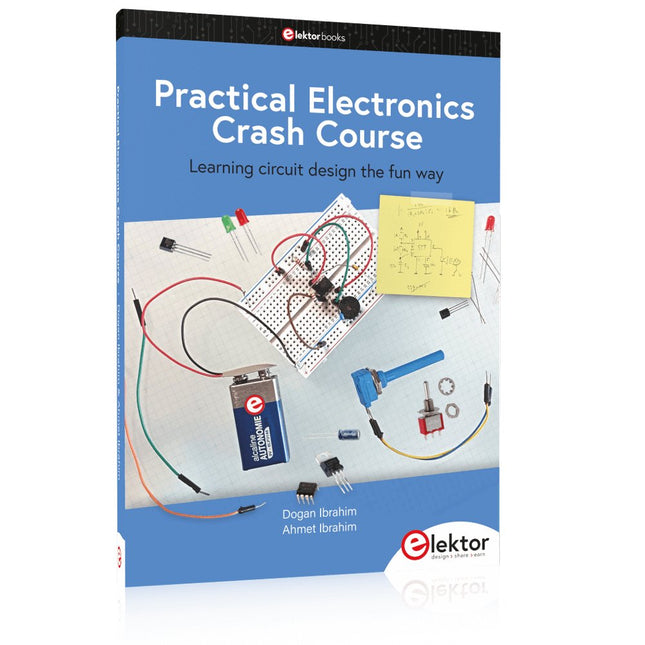
Elektor Publishing Practical Electronics Crash Course
Learning circuit design the fun way Welcome to the world of electronics! Getting started in electronics is not as difficult as you may think. Using this book, you will explore and learn the most important electrical and electronics engineering concepts in a fun way by doing various experiments and by simulating circuits. It will teach you electronics practically without getting into complex technical jargon and long calculations. As a result, you will be creating your own projects soon. No prior knowledge of electronics is required, only some basic algebra is used in a few simple calculations. Many tested and working projects and simulations are presented to familiarise yourself with the construction of electronic circuits. Circuit simulation is introduced at an early stage to enable you to experiment with circuits easily without breaking anything. You will learn: The concepts of voltage, current, and power AC and DC Basic lamp circuits with switches Passive components: resistors, capacitors & inductors RC & RCL circuits Electromagnetism Loudspeakers, relays, buzzers, and transformers Active components: diodes & LEDs, bipolar transistors & MOSFETs Transistor-based switching circuits Optocoupler circuits Astable & monostable multivibrators Using the 555 timer IC The operational amplifier Digital logic Advanced examples: amplifiers, oscillators, filters, and sensors Test and measurement tools Microcontrollers: Arduino UNO, ESP32, Raspberry Pi Pico, and Raspberry Pi Reading datasheets and best practices for selecting components EMC & EMI and norms & regulations
€ 39,95
Membres : € 35,96
-

Elektor Publishing AVR-Mikrocontroller
Programmierung in Assembler und C am Beispiel der ATtiny-Familie Dieses Buch bietet einen eingehenden Blick auf die 8-Bit-AVR-Architektur in ATtiny- und ATmega-Mikrocontrollern, hauptsächlich aus der Sicht der Software und der Programmierung. Erforschen Sie die AVR-Architektur unter Verwendung von C und Assembler in Microchip Studio (früher Atmel Studio) mit ATtiny-Mikrocontrollern. Lernen Sie die Details der internen Funktionsweise von AVR-Mikrocontrollern kennen, einschließlich der internen Register und des Speicherplans von ATtiny-Bausteinen. Programmieren Sie ATtiny-Mikrocontroller mit einem Atmel-ICE-Programmiergerät/Debugger oder verwenden Sie ein preiswertes Hobby-Programmiergerät oder sogar einen Arduino Uno als Programmiergerät. Die meisten Code-Beispiele können mit dem Microchip Studio AVR-Simulator ausgeführt werden. Lernen Sie, Programme für ATtiny-Mikrocontroller in Assembler zu schreiben. Erfahren Sie, wie Assemblersprache in Maschinencodebefehle umgewandelt wird. Finden Sie heraus, wie Programme, die in der Programmiersprache C geschrieben wurden, in Assemblersprache und schließlich in Maschinencode umgewandelt werden. Verwenden Sie den Microchip Studio Debugger in Kombination mit einem Hardware-USB-Programmierer/Debugger, um Assembler- und C-Programme zu testen oder verwenden Sie den Microchip Studio AVR-Simulator. ATtiny-Mikrocontroller im DIP-Gehäuse werden verwendet, um eine einfache Nutzung auf Breadboards zu ermöglichen. Erfahren Sie mehr über Timing und Taktimpuls in AVR-Mikrocontrollern mit ATtiny-Bausteinen. Werden Sie zu einem AVR-Experten mit fortgeschrittenen Debugging- und Programmierfähigkeiten.
€ 39,80
Meilleur prix
-

Elektor September/October 2026 (EN)
Elektor GREEN and GOLD members can download their digital edition here. Not a member yet? Click here. The ESP-BLASTA Mini ESP32 Rocket Drone That Flies 100 km/h+ Wireless Workshop (1)Radio Modules Unlocked: 433 MHz CC1101 Sub-GHz Transceiver AM TransmitterWith Square/Sine Wave Generator on Raspberry Pi Pico STM32Cube Innovation ChallengeCompete with Your Best STM32C5 Design CoffeeCallerHow a Long Hallway Led to a Custom Mesh-Networked PCB AudiotronicsTotal Harmonic Distortion Elektor at 65Projects from Septembers and Octobers Past Bluetooth Channel Sounding for Asset TrackingCentimeter-Level Precision Ranging for Next-Generation IoT 2026: An AI OdysseyQuantum Computing Is Not the Next GPU Protecting the Cloud Demands Security at the Edge First Experiences with the HackRF ProPractical Tests with the New SDR Hardware Modem Upgrade from GPRS/2G to LTE/4GUsing a Wireless Alarm Control Panel as an Example Loop Antenna with RF BricksPart 1: A DIY Shortwave Antenna with Adjustable Directivity Internet Radio to AM ConverterUsing an ESP32-S3 as Transmitter Err-lectronics mioty — An OverviewFraunhofer’s Approach to LPWAN Workbench WisdomPractical Tips from Experts Walter, the Compact IoT ModulePart 2: Accessing Weather and Data Services
€ 14,90
-

Andonstar Andonstar AD407 Pro 7" Microscope numérique HDMI
Le microscope Andonstar AD407 Pro convient à diverses applications telles que la soudure de CMS ou les travaux de réparation. Le microscope dispose d'un grand écran LCD réglable de 7 pouces et est livré avec une télécommande. Par rapport à AD407, l'AD407 Pro offre un support extra-haut, ce qui facilite encore plus le brasage des composants. Spécifications Taille de l’écran 7 pouces (17,8 cm) Capteur d’image 4 MP Sortie vidéo UHD 2880x2160 (24fps)FHD 1920x1080 (60fps/30fps)HD 1280x720 (120fps) Format vidéo MP4 Agrandissement Jusqu'à 270 fois (moniteur HDMI de 27 pouces) Résolution de la photo Max. 12 MP (4032x3024) Format photo JPG Plage de la mise au point Min. 5 cm Taux de rafraîchissement Max. 120fps Interface vidéo HDMI Stockage carte microSD (jusqu'à 64 Go) Source d’alimentation 5 V DC Source de lumière 2 LED avec le support Taille du support 20 x 18 x 32 cm Inclus 1x Microscope numérique Andonstar AD407 Pro 1x Support métallique avec 2 LED 1x Filtre UV (déjà assemblé dans l'objectif) 1x Télécommande IR 1x Câble de commutation 1x Adaptateur d'alimentation 1x Clé à molette 2 clips métalliques 1x Câble HDMI 1x Manuel Téléchargements Manuel Comparaison des modèles AD407 AD407 Pro AD409 AD409 Pro-ES Taille de l’écran 7 pouces (17,8 cm) 7 pouces (17,8 cm) 10,1 pouces (25,7 cm) 10,1 pouces (25,7 cm) Capteur d’image 4 MP 4 MP 4 MP 4 MP Sortie vidéo 2160p 2160p 2160p 2160p Interfaces HDMI HDMI USB, HDMI, WiFi USB, HDMI, WiFi Format vidéo MP4 MP4 MP4 MP4 Agrandissement Jusqu'à 270x Jusqu'à 270x Jusqu'à 300x Jusqu'à 300x Résolution photo Max. 4032x3024 Max. 4032x3024 Max. 4032x3024 Max. 4032x3024 Format photo< JPG JPG JPG JPG istance focale Min. 5 cm Min. 5 cm Min. 5 cm Min. 5 cm Fréquence d'images Max. 120f/s Max. 120f/s Max. 120f/s Max. 120f/s Storage carte microSD carte microSD carte microSD carte microSD Support PC Non Non Windows Windows Raccordement mobile Non Non WiFi + Mesure WiFi + Mesure Source d'alimentation 5 V DC 5 V DC 5 V DC 5 V DC Source lumineuse 2 LED avec le support 2 LED avec le support 2 LED avec le support 2 LED avec le support Endoscope Non Non Non Oui Taille du support 20 x 12 x 19 cm 20 x 18 x 32 cm 18 x 20 x 30 cm 18 x 20 x 32 cm Poids 1,6 kg 2,1 kg 2,2 kg 2,5 kg
€ 224,40
-

Elektor September/Oktober 2026 (NL)
Elektor GREEN en GOLD leden kunnen deze uitgave hier downloaden. Nog geen lid? Klik hier om een lidmaatschap af te sluiten. De ESP-BLASTEen mini ESP32 raketdrone die ruim 100 km/u vliegt STM32Cube Innovation-ChallengeDoe mee met je beste STM32C5-ontwerp Wireless workshop (1)Radiomodules uitgelegd: 433 MHz CC1101 sub-GHz-transceiver AM-zenderMet sinus- en blokgolfgenerator op Raspberry Pi Pico AudiotronicaDe vervormingsfactor CoffeeCallerOmroepsysteem met mesh-netwerk en Zephyr gebaseerde software Elektor wordt 65Projecten uit voorgaande september- en oktobermaanden Bluetooth Channel Sounding voor het volgen van objectenAfstandsmeting met centimeterprecisie voor het IoT van de volgende generatie 2026: Een AI-odysseeKwantumcomputing is geen volgende GPU Om de cloud te beveiligen, is edge-beveiliging nodig Eerste ervaringen met de HackRF ProPraktische tests met de nieuwe SDR-hardware Modemupgrade van GPRS/2G naar LTE/4GEen draadloos alarmsysteem als voorbeeld Lusvormige antenne met RF-bouwstenenDeel 1: Een zelfbouw kortegolfantenne met instelbare richtingsgevoeligheid Internetradio naar AM-converterMet een ESP32-S3 als zender Err-lectronics Mioty, een overzichtFraunhofer's aanpak van LPWAN WerkbankwijsheidPraktische tips van experts Walter, de compacte IoT-moduleDeel 2: Toegang tot weer- en datadiensten
€ 15,95
-

Elektor Digital How Humanity Turned Electricity into Electronics (E-book)
From Rubbing Amber to Swiping Glass "The story of electricity, told one connection at a time."Why does rubbing amber attract dust? How did we go from that curious effect to a world where screens respond to a single touch? And how did we get from mysterious sparks to tiny chips packed with billions of transistors? For centuries, electricity puzzled and fascinated those who encountered its curious effects—long before it even had a name. From the earliest observations of static charge to the complex electronics that shape our lives today, this book traces the gradual, and often surprising, story of how humanity came to understand and harness this powerful force. This book offers an engaging and accessible account of the people, ideas, and inventions that transformed electricity from a scientific curiosity into the foundation of our digital age. Along the way, you’ll meet a host of inquisitive minds—some famous, others less so—whose persistence and creativity helped unravel the mysteries of the natural world and gave rise to the technologies we now take for granted. Covering everything from Leyden jars and batteries to transistors, microcontrollers and the internet, this book presents a clear and enjoyable overview of electronics and its relatively short, yet rich, history. Whether you have a technical background or simply a curiosity about how things work, From Rubbing Amber to Swiping Glass offers a thoughtful look at how far we’ve come—and a gentle nudge to wonder what might come next.
€ 32,95
Membres : € 29,66
-

Elektor Digital Das MQTT-Praxisbuch (PDF)
MQTT ist ein leichtgewichtiges, ereignis- und nachrichtenorientiertes Protokoll zur effizienten und asynchronen Kommunikation zwischen Geräten auch über limitierte Netzwerke. Das bereits 1999 von IBM entwickelte Protokoll eignet sich heute in besonderer Weise für Internet-of-Things-Anwendungen. Im Gegensatz zu HTTP mit Request/Response-Verfahren ist bei MQTT eine Publish/Subscribe-Architektur umgesetzt. Es stehen mittlerweile zahlreiche MQTT-Broker und -Clients zur Verfügung. Aufgrund der Unterstützung durch die Eclipse Foundation, IBM und vieler anderer stehen zahlreiche Komponenten kostenlos im Internet zur Verfügung. Client-Bibliotheken gibt es für die unterschiedlichsten Plattformen und Programmiersprachen. Unterstützt werden u. a. die PC-Plattform mit Java und .Net sowie Arduino und Raspberry Pi. Das MQTT-Praxisbuch führt Schritt für Schritt in die praktische Arbeit mit diesem ressourcensparenden Protokoll ein. Dabei widmet der Autor Walter Trojan dem Thema IoT-Sicherheit ein ausführliches Kapitel. Anhand von abgeschlossenen Projekten zum Nachbauen stellt der Autor in beeindruckender Weise die praktische Bedeutung des MQTT-Protokolls in modernen IoT-Anwendungen dar: MQTT auf ESP8266 MQTT mit Arduino-IDE MQTT-Benchmarks MQTT auf dem Raspberry Pi Flow-Programmierung mit Node-RED Boss aller Automaten: openHAB Projekt Gewächshaus mit automatisierter Beleuchtung, Bewässerung, Temperaturregelung sowie Luft- und Erdfeuchtigkeitsmessung
€ 32,80
Membres : € 29,52
-

Elektor March/April 2025 (EN)
Elektor GREEN and GOLD members can download their digital edition here. Not a member yet? Click here. The RISC-V Open-Source Processor Architecture16 Boards and MCUs You Should Know An FPGA-Based Audio Player with Equalizer (1)Mixing Digital Audio with an Arduino MKR Vidor 4000 Laser Head for Pico-Based Sand ClockDrawing with Light Enter the STM32 Edge AI Contest A Multi-Sensor Environmental Monitoring System for PlantsWireless Measurement of Water Supply and Light Conditions Maixduino AI-Powered Automatic DoormanFace Detection with a Camera Embedded Electronics 2024AI Is Set to Redefine the Industry Charge-Based In-Memory Compute at EnCharge AI AI Inferencing at 10 Times Lower Power and 20 Fold Lower Cost Click Board Helps Develop and Train ML Models for Vibration Analysis The Elektor Mini-WheelieA Self-Balancing Robot Kit MCU, I See YouMCUViewer Open-Source Multiplatform Debugging Tool USB 2.0 IsolatorElectrically Isolated Connections for USB Devices Intervention Before DamagePredictive Maintenance in Practice SPoE – Electromagnetic CompatibilitySingle-Pair with Power-Over-Ethernet Through the Eyes of EMC Color TV: A Wonder of Its TimeCreating a New World ECG Graph MonitoringAn Implementation with Hexabitz Modules and an STM32CubeMonitor The Battle for AI at the Edge HaLow Hits Record 16-km Wi-Fi Distance at 900 MHz First CHERI RISC-V Embedded Chip and Early Access Programme Third-Generation Wildfire Detection Uses Satellite Links From Life’s ExperienceChoice Overload Starting Out in Electronics……Continues Filtering and Controls Tone Quasi-Analog ClockworkA Remake of an Elektor Classic A Modular Approach to Sensor TestingThe ESP32-S3-Based Sensor Evaluation Board 2025: An AI OdysseyThe Rise of Foundation Models and Their Role in Democratizing AI Raspberry Pi Standalone MIDI Synthesizer (1)Preparing a Platform for Some Edge AI Experiments Err-lectronicsCorrections, Updates, and Readers’ Letters Universal AI RISC-V Processor Does It All — CPU, GPU, DSP, FPGA CEO Interview: Ventiva’s Thin and Cool Tech Dual-Core Programming with a Raspberry Pi PicoVenture Into the World of Parallel Programming
€ 10,95
-

Elektor Publishing Arduino UNO Q and AI
Learn to Build Intelligent Embedded Systems Build smarter embedded systems with Arduino UNO Q. This book gives you the tools, knowledge, and confidence to turn ideas into intelligent, working solutions using the Arduino UNO Q platform. Discover how to build intelligent embedded systems with the Arduino UNO Q and AI. Unlock the full potential of the Arduino UNO Q, a next-generation platform that combines the real-time power of the STM32U585 microcontroller with the flexibility of a Qualcomm Dragonwing QRB2210 microprocessor. Learn how to rapidly prototype real-world applications using the Arduino IDE for low-level embedded control and Python in Arduino App Lab for high-level development. Build confidence through hands-on projects that guide you step by step from basic board features to complete working systems. Explore ready-to-use, AI based Arduino App Lab examples and see how they can jump-start your development and reduce time to deployment. Step into the world of Edge AI with a clear, practical introduction to Edge Impulse Studio—no prior AI experience required. Follow a complete, real-world workflow to create a Keyword Spotting AI application, covering data collection, model training, optimization, and on-device inference using the Edge Impulse Studio. Bridge the gap between embedded systems and machine learning and learn how to bring intelligence directly onto your hardware. Perfect for embedded engineers, educators, students, and makers looking to stay ahead in AI-enabled product development.
€ 34,95
Membres : € 31,46
-
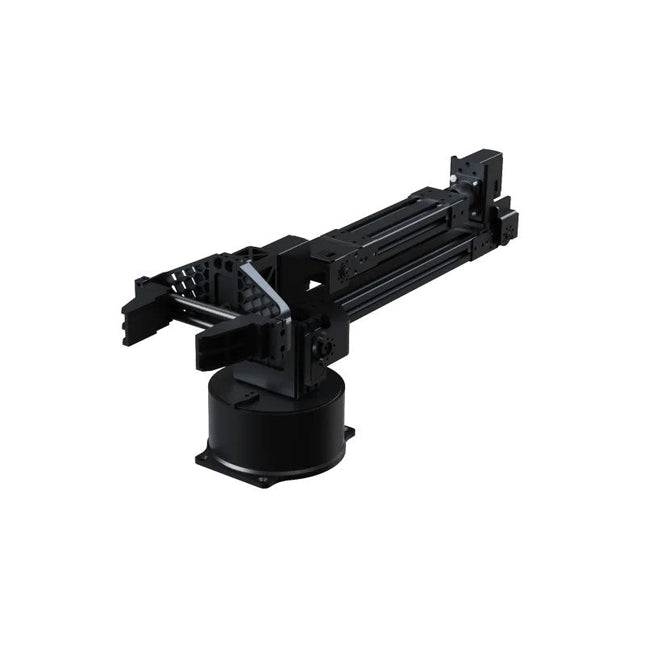
Unitree Unitree Go2 D1 Bras robotique servo
Le bras robotisé servo Unitree Go2 D1 est un bras robotisé hautes performances à 6 degrés de liberté, spécialement conçu pour une intégration parfaite avec le robot quadrupède Unitree Go2. Conçu pour allier flexibilité et précision, c'est l'outil idéal pour l'éducation, la recherche, l'automatisation et le développement robotique avancé. Doté de six articulations entièrement articulées et d'une pince intégrée, le D1 offre un véritable mouvement sur six axes et une liberté de mouvement exceptionnelle. Grâce à la prise en charge du contrôle de la position, de la vitesse et de la force, il permet un fonctionnement précis pour un large éventail de tâches, du déploiement en conditions réelles aux environnements d'apprentissage expérimentaux. Fabriqué en alliage d'aluminium léger, le bras ne pèse que 2,37 kg pour une portée de 670 mm. Cet équilibre entre robustesse et agilité le rend parfaitement adapté aux applications mobiles, sans compromettre la stabilité ni la portée. Grâce à son architecture d'interface à deux niveaux, le D1 prend en charge les commandes motrices de bas niveau et la programmation comportementale de haut niveau, offrant aux développeurs, enseignants et chercheurs un contrôle total, qu'il s'agisse d'affiner des séquences de mouvements ou de créer des workflows robotiques complexes. Compatible avec des composants externes tels que des caméras ou des châssis de robots mobiles, l'Unitree D1 ouvre la voie à une variété de cas d'utilisation étendus. Qu'il s'agisse de manipulation autonome d'objets, de formation à l'IA ou d'enseignement pratique de la robotique, le D1 transforme n'importe quel environnement en une plateforme d'innovation dynamique et interactive. Spécifications DoF 6 axes + 1 pince Charge utile 500 g Portée du bras 550 mm (pince non incluse)670 mm (pince incluse) Interfaces DC5.5-2.1 (alimentation)RJ45 (communication)USB-C (débogage du port série) Type de moteur Servo bus Puissance 60 W Poids 2,37 kg Amplitude de rotation articulaire J1: ±135°J2: ±90°J3: ±90°J4: ±135°J5: ±90°J6: ±135°
€ 4.599,00
Meilleur prix
-
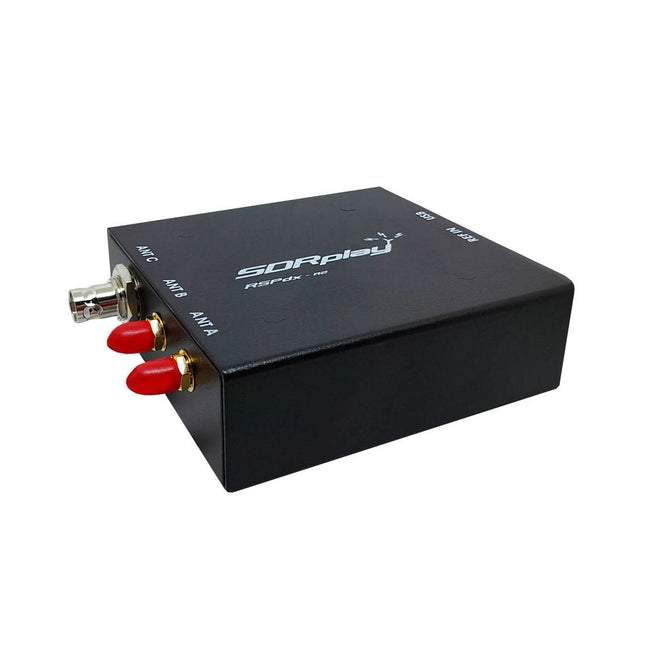
SDRplay SDRplay RSPdx-R2 Récepteur SDR 14 bits à syntoniseur simple (1 kHz à 2 GHz)
Le SDRplay RSPdx-R2 est un récepteur SDR 14 bits à large bande et à syntoniseur simple qui couvre l'ensemble du spectre RF de 1 kHz à 2 GHz, avec une visibilité du spectre allant jusqu'à 10 MHz. Il contient trois ports d'antenne, dont deux utilisent des connecteurs SMA et fonctionnent sur l'ensemble de la gamme de 1 kHz à 2 GHz et le troisième utilise un connecteur BNC qui fonctionne jusqu'à 200 MHz. Le RSPdx-R2 est une version améliorée du RSPdx, dotée de nouvelles améliorations de conception pour une utilisation à des fréquences inférieures à 2 MHz. Logé dans un boîtier en acier robuste, le RSPdx-R2 offre, en plus des fonctionnalités du RSP1B, trois entrées d'antenne sélectionnables par logiciel et une entrée d'horloge externe. Il offre d'excellentes performances sur les fréquences HF et VHF jusqu'à 2 GHz. Le RSPdx-R2 prend également en charge un mode HDR optimisé pour les conditions de réception radio exigeantes en dessous de 2 MHz. Utilisé avec le logiciel SDRplay, le RSPdx-R2 propose un mode HDR (High Dynamic Range) spécial pour la réception dans certaines bandes inférieures à 2 MHz. Ce mode HDR offre de meilleures performances d'intermodulation et réduit les réponses parasites sur ces bandes difficiles. Caractéristiques Couvre toutes les fréquences de 1 kHz à 2 GHz, en passant par les bandes VLF, LF, MW, HF, VHF, UHF et L, sans aucune lacune Réception, contrôle et enregistrement jusqu'à 10 MHz de spectre à la fois Performances nettement améliorées en dessous de 2 MHz – plage dynamique et sélectivité accrues Choix de 3 ports d'antenne sélectionnables par logiciel Capacité accrue à gérer des signaux extrêmement forts Entrée d'horloge externe à des fins de synchronisation, ou connexion à l'horloge de référence GPS pour une plus grande précision de la fréquence Excellente gamme dynamique pour les conditions de réception difficiles Utilisation gratuite du logiciel SDRuno basé sur Windows, qui offre un ensemble de fonctions de plus en plus complet. Réseau d'assistance logicielle solide et en pleine expansion Mesure étalonnée du S-mètre/de la puissance RF et du SNR avec SDRuno (y compris l'enregistrement des données dans un fichier .CSV) API documentée permettant le développement de démodulateurs ou d'applications sur de multiples plates-formes. Applications (amateur) Écoute des ondes courtes Radio diffusion DX (AM/FM/TV) Panadaptor Avions (ADS-B et ATC) TV à balayage lent Surveillance des bandes multi amateurs WSPR et modes numériques Fax météo (HF et satellite) Surveillance des satellites Satellites environnementaux géostationnaires Radio à ressources partagées Surveillance des services publics et des services d'urgence Comparaison rapide et efficace des antennes Applications (Industrie) Analyseur de spectre Surveillance Surveillance des microphones sans fil Surveillance RF Chaîne de réception IoT Enregistrement des signaux Détection RFI/EMC Surveillance de l'intégrité de la diffusion Surveillance du spectre Mesure de la puissance Applications (éducatives/scientifiques) Enseignement Conception de récepteurs Radioastronomie Radar passif Ionosonde Analyseur de spectre Récepteur pour les projets de capteurs IoT Recherche sur les antennes Specifications Gamme de fréquences 1 kHz – 2 GHz Connecteur d'antenne SMA Impédance de l'antenne 50 Ω Consommation de courant (typique) 190 mA @ >60 MHz (excl. Bias-T)120 mA @ <60 MHz (excl. Bias-T) Connecteur USB USB-B Puissance d'entrée maximale +0 dBm en continu+10 dBm Courte durée Taux d'échantillonnage de l'ADC 2-10,66 MSPS Nombre de bits du CAN 14 bits 2 - 6.048 MSPS12 bits 6,048 - 8,064 MSPS10 bits 8.064 - 9.216 MSPS8 bits >9,216 MSPS Bias-T 4.7 V100 mA garanti Référence 0,5ppm TCXO 24 MHz.Erreur de fréquence réglable à 0,01 ppm. Plage de température de fonctionnement −10°C à +60°C Dimensions 113 x 94 x 35 mm Poids 315 g Téléchargements Datasheet Software RSPdx-R2 vs RSPduo RSPdx-R2 RSPduo Couverture continue de 1 kHz à 2 GHz ✓ ✓ Largeur de bande visible jusqu'à 10 MHz ✓ ✓ Technologie silicium ADC 14 bits et multiples filtres d'entrée haute performance ✓ ✓ Filtres coupe-bande AM/FM et DAB sélectionnables par logiciel ✓ ✓ Bias-T de 4,7 V pour l'alimentation de l'amplificateur d'antenne distant externe ✓ ✓ Alimentation par le câble USB avec une simple prise de type B ✓ ✓ Entrée(s) d'antenne SMA 50Ω pour un fonctionnement de 1 kHz à 2 GHz (sélectionnable par logiciel) 2 2 Entrée Hi-Z supplémentaire sélectionnable par logiciel pour un fonctionnement jusqu'à 30 Mhz ✓ Entrée BNC 50Ω supplémentaire sélectionnable par logiciel pour un fonctionnement jusqu'à 200 MHz ✓ Filtre LF/VLF supplémentaire pour les fréquences inférieures à 500 kHz ✓ Entrée horloge de référence 24 MHz (+ sortie sur RSPduo) ✓ ✓ Deux syntoniseurs permettant la réception sur 2 plages de 2 MHz totalement indépendantes ✓ Deux syntoniseurs permettant la réception en diversité à l'aide de SDRuno ✓ Boîtier robuste en acier peint en noir ✓ ✓ Performances globales en dessous de 2 MHz pour les ondes hectométriques et kilométriques ++ + Applications multiples simultanées + ++ Performance dans des conditions d'évanouissement difficiles (*en utilisant la syntonisation en diversité) + *++
€ 260,83
-

Elektor Digital Elektor Januari/Februari 2021 (PDF)
ZELFBOUW LIPO- SUPERCHARGER-BUNDELLiPo-lader, -booster en -beveiliging van GreatScott en Elektor MTHECAM – DE MINI-THERMOCAMERAeenvoudige warmtebeeldcamera voor het lokaliseren van hot- en coldspots REVIEW: WELLER-SOLDEERSTATION WE 1010 ELECTRONICA FAST FORWARD 2020 – DE WINNAARS I2S TESTSIGNAALGENERATOR MET AVR-MICROCONTROLLER32-bit 1-kHz digitale sinus, fs 192 kHz, niveau instelbaar van 0 tot –110 dB DOMOTICA MET DE RASPBERRY PIRPi luistert op 433,92 MHz SCHAKELINGEN ONLINE SIMULEREN UIT HET LEVEN GEGREPENde dunne grens tussen orde en chaos ALLE BEGIN......hoeft niet zo moeilijk te zijn OOST WEST LAB BESTeen blik in het allerheiligste, waar interessante projecten worden geboren VERBIND UW THERMOSTAAT MET ESPHOMEeen poging om domotica op de juiste manier te doen DEVELOPER’S ZONEtips & trucs, vakkunstigheden en andere nuttige informatie WIE HET KLEINE NIET EERTuit de ideeënbus van Elektor RASPBERRY PI FULL STACKRPi en RF24 als hart van een sensornetwerk MULTITASKING MET DE ESP32 (6)event groups MEERKANAALS POWER ANALYZERtot 3 kanalen, met grafisch en alfanumeriek display ANALOGE ELEKTRONICA ONTWERPENcase-study #2 – deel 3: passieve filters REVIEW: DRAADLOZE MEETMODULE JOY-IT VAX-1030 NIEUWE LCR-METER 50 HZ – 2 MHZ (DEEL 2)bediening, kalibratie en programmeren van de firmware ERROR ANALYSIStips en trucs: spanningsregelaars, PCB-ontwerp en meer HET OPEN HARDWARE OBSERVATORYcommunitygebaseerde beoordeling van open source-hardware JAVA OP DE RASPBERRY PIeen vraaggesprek met Frank Delporte DATA-ANALYSE EN KUNSTMATIGE INTELLIGENTIE IN PYTHONechte gegevens interpreteren met NumPy, pandas en scikit-learn INTERACTIEFcorrecties & updates || brieven van lezers ONZE COMMUNITY IN CIJFERS KENNISMAKING MET DE PARALLAX PROPELLER 2 (DEEL 1)inleiding HEXADOKU
€ 9,95


