
Résultats de la recherche pour "embedded OR electronics OR 1 OR nl"
-
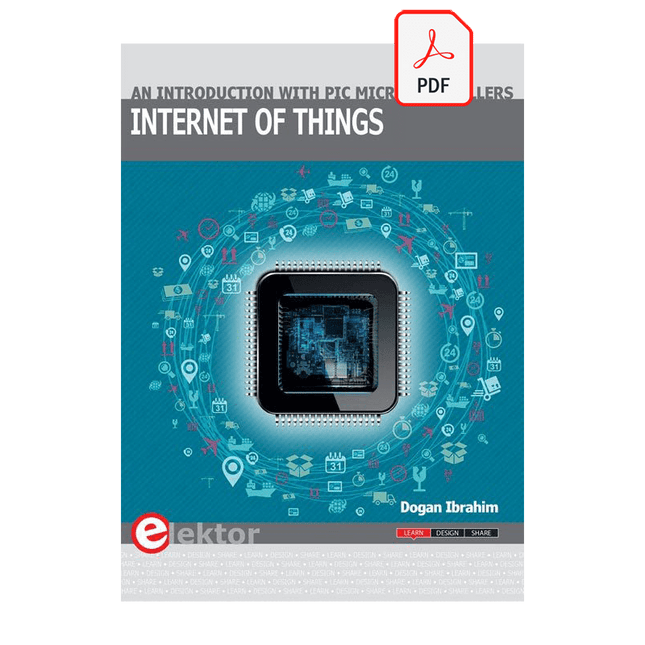
Elektor Digital Internet of Things (E-book)
The Internet of Things (IoT) is a new concept in intelligent automation and intelligent monitoring using the Internet as the communications medium. The “Things” in IoT usually refer to devices that have unique identifiers and are connected to the Internet to exchange information with each other. Such devices usually have sensors and/or actuators that can be used to collect data about their environments and to monitor and control their environments. The collected data can be processed locally or it can be sent to centralized servers or to the cloud for remote storage and processing. For example, a small device at the size of a matchbox can be used to collect data about the temperature, relative humidity and the atmospheric pressure. This data can be sent and stored in the cloud. Anyone with a mobile device can then access and monitor this data at any time and from anywhere on Earth provided there is Internet connectivity. In addition, users can for example, adjust the central heating remotely using their mobile devices and accessing the cloud. This book is written for students, for practising engineers and for hobbyists who want to learn more about the building blocks of an IoT system and also learn how to setup an IoT system using these blocks. Chapter 1 is an introduction to the IoT systems. In Chapter 2, the basic concepts and possible IoT architectures are discussed. The important parts of any IoT system are the sensors and actuators and they are described briefly in Chapter 3. The devices in an IoT system usually communicate with each other and the important aspect of IoT communication is covered in Chapter 4. Chapter 5 proceeds with the features of some of the commonly used development kits. One of these, the Clicker 2 for PIC18FJ manufactured by mikroElektronika, can be used as a processor in IoT systems and its features are described in detail in Chapter 6. A popular microcontroller C language, mikroC Pro for PIC gets introduced in Chapter 7. Chapter 8 covers the use of a click board with the Clicker 2 for PIC18FJ development kit. Similarly, the use of a sensor click board is described as a project in Chapter 9, and an actuator board in Chapter 10. Chapters 11 and 12 cover Bluetooth and Wi-Fi technologies in microcontroller based systems, and the remaining chapters of the book demo the creation of a simple Wi-Fi based IoT system with cloud-based data storage. This book has been written with the assumption that the reader has taken a course on digital logic design and has been exposed to writing programs using at least one high-level programming language. Knowledge of the C programming language will be very useful. Also, familiarity with at least one member of the PIC series of microcontrollers (e.g. PIC16 or PIC18) will be an advantage. The knowledge of assembly language programming is not required because all the projects in the book are based on using the C language. If you are a total beginner in programming you can still access the e-book, but first you are advised to study introductory books on microcontrollers.
€ 34,95
Membres : € 31,46
-

Elektor Digital Elektor Special: Sensors for Weather and the Environment (PDF)
Build your textbook weather station or conduct environmental research together with the whole world. With many practical projects for Arduino, Raspberry Pi, NodeMCU, ESP32, and other development boards. Weather stations have enjoyed great popularity for decades. Every current and even every long discontinued electronics magazine has regularly featured articles on building your own weather station. Over the years, they have become increasingly sophisticated and can now be fully integrated into an automated home — although this often requires loyalty to an (expensive) brand manufacturer across all components. With your own weather and environmental data, you can keep up and measure things that no commercial station can. It’s also fun: expand your knowledge of electronics, current microcontroller development boards and programming languages in a fun and meaningful way. For less than 10 euros you can get started and record your first environmental data — with time and growing interest, you will continue to expand your system. In this Edition Which Microcontroller Fits My Project? The Right Development Environment Tracking Wind and Weather Weather Display with OpenWeatherMap and Vacuum Fluorescent Display Volatile Organic Compounds in the Air We Breathe Working with MQ Sensors: Measuring Carbon Monoxide — Odorless but Toxic CO2 Traffic Light with ThingSpeak IoT Connection An Automatic Plant Watering System Good Indoor Climate: Temperature and Humidity are Important criteria Classy Thermometer with Vintage Tube Technology Nostalgic Weather House for the Whole Family Measuring Air Pressure and Temperature Accurately Sunburn Warning Device DIY Sensor for Sunshine Duration Simple Smartphone Says: Fog or Clear View? Identifying Earthquakes Liquid Level Measurement for Vessels and Reservoirs Water pH Value Measurement Detecting Radioactive Radiation GPS: Sensor Location Service Across the Globe Saving and Timestamping Log Files on SD Cards LoRaWAN, The Things Network, and ThingSpeak Operating a LoRaWAN Gateway for TTN Defying "Wind and Weather" Mega Display with Weather Forecasz
€ 14,95
Membres : € 13,46
-

Elektor Digital Speciale Elektor / E&M: 33 Progetti Top di Elettronica (PDF)
Una ricca selezione di articoli dal Mondo Elektor! Gli articoli di questo libro sono una selezione accurata, il "meglio del meglio" di circuiti e progetti recenti, realizzati da tecnici di grande talento provenienti da tutto il mondo. Nel tipico stile di Elektor, questa raccolta offre qualcosa di interessante per tutti, dai progettisti esperti a coloro che praticano l'elettronica nel tempo libero. Sommario Super Servo TesterProva Fino a Quattro Servocomandi, Stand-Alone o in Sistema The TubeUn Insolito Amplificatore a Valvole Cloc 2.0La Sveglia che Avete Sempre Desiderato Stazione Meteo LoRa Low-PowerCostruitevi una Stazione Meteorologica “Long Range” Uscita Video con Microcontrollori (Parte 1)Video Composito Uscita Video con Microcontrollori (Parte 2)Uscita VGA e DVI Un Raspberry Pi Pico come Analizzatore di SpettroFFT su Base Hardware a Basso Costo PIC O’Clock – In Contatto col TempoProgettare un Ricevitore di Segnali Orari SDR Frequenzimetro di Rete ACMisura Frequenza e Tensione della Rete Elettrica Generatore di Funzioni con Arduino NanoNano + Codice = Generatore di Funzioni Monitor CO2Un Approccio Fai-Da-Te per Il Controllo della Qualità dell‘Aria ChatMagLevLa Levitazione Magnetica con AI Alimentatore Lineare Variabile Combinato0…50 V / 0…2 A con Struttura Simmetrica Duale Ricevitore Digitale FM con Arduino e TEA5767Restate in Ascolto con un Arduino Nano Protezione Antigelo per Piante da FruttoCon Registrazione della Temperatura Carico Elettronico con Generatore di clock IntegratoPer Collaudare Alimentatori, Convertitori di Tensione e Batterie 128 Termostato Web con ESP32Mantieni il Vino alla Giusta Temperatura Iniezione di Segnali e di Potenza......per Rilevare le Interruzioni nei Cavi DIY LiPo Supercharger KitDal Prototipo al Mercato di Massa Livella Digitale con Stroboscopio AttivoCalibra il Tuo giradischi con Questo Strumento "Tutto-in-Uno" The Game of Life – 262.144 Modi di GiocareDal Progetto di un Lettore Rilevatore di PerditeCollegato ad Arduino Cloud Orologio di LissajousL’Incedere del Tempo con le Figure di Lissajous Mastermind – Controllato da ArduinoUna Versione Moderna del Classico Gioco di Decifrazione Generatore Audio Analogico 1 kHzOnda Sinusoidale a Bassa Distorsione Aggiorna il tuo Caricabatteria (Parte 1)Non Buttarlo, Modificalo! Aggiorna il tuo Caricabatteria (Parte 2)Non Buttarlo, Modificalo! Sistemi GNSS RTK a Basso CostoCon Accuratezza a Livello Centimetrico Esperimenti a 10 GHz con LNB Satellitari ModificatiSbloccare la Banda X a Basso Costo Telecamera per FerromodellismoInstalla un Modulo ESP32 CAM a Bordo! Monitor di Tensione con MicrocontrolloreProtezione dalla Scarica Profonda per Batterie e Altro Nodo Sensore AutonomoTrasmissione Dati LoRa con Alimentazione a Batterie Solari Layout e Sicurezza sul PCBConsigli per un Progetto Sicuro e Durevole
€ 24,95
Membres : € 22,46
-

OWON OWON SPS3081 Alimentation CC sans ventilateur (120 W)
L'alimentation CC programmable sans ventilateur OWON SPS3081 (120 W) offre des performances ultra silencieuses et de haute précision avec une précision de 10 mV/1 mA et une dissipation thermique avancée pour une fiabilité à long terme. Doté d'une protection complète, d'une interface USB avec prise en charge SCPI pour le contrôle à distance et d'un écran LCD TFT de 2,8 pouces, c'est le choix idéal pour les laboratoires, les tests électroniques et la recherche. Caractéristiques Conception sans ventilateur : fonctionnement ultra-silencieux, réduisant le bruit de vibration et minimisant les risques de défaillance potentiels associés aux ventilateurs de refroidissement traditionnels. Excellente conception de dissipation thermique : assure une augmentation contrôlée de la température, permettant un fonctionnement à long terme dans des conditions de pleine charge et prolongeant la longévité des composants internes. Conception légère et ultra-mince. Précision de sortie jusqu'à 10 mV/1 mA. Prend en charge l'édition et la sortie de formes d'onde de liste, avec quatre paramètres de raccourci mémoire pour un accès rapide et pratique. Les fonctions de protection intégrées incluent la protection contre les surtensions, les surintensités, les surchauffes et les sous-tensions d'entrée pour une sécurité renforcée. Le circuit de décharge intégré évite les risques de haute tension résiduelle lorsque l'alimentation est coupée. Interface de communication USB avec prise en charge du protocole SCPI, permettant la programmation PC et le contrôle à distance pour une utilisation simplifiée gestion. Écran LCD TFT de 2,8 pouces Spécifications Modèle SPS6051 SPS3081 Sortie nominale (0°C-40°C) Tension 0-61 V 0-31 V Courant 0-5,1 A 0-8,1 A Puissance 150 W 120 W Régulation de charge Tension ≤30 mV Courant ≤20 mA Régulation de puissance Tension ≤30 mV Courant ≤20 mA Définition de la résolution Tension 10 mV Courant 1 mA Résolution de relecture Tension 10 mV Courant 1 mA Précision de réglage (25°C ±5°C) Tension ≤0,05% ±20 mV ≤0,1% ±20 mV Courant ≤0,05% ±20 mA ≤0,2% ±20 mA Précision de relecture (25°C ±5°C) Courant ≤0,05% ±20 mV ≤0,1% ±20 mV Tension ≤0,05% ±20 mV ≤0,2% ±20 mA Ondulation/Bruit Tension ≤30 mVp-p ≤30 mVp-p Tension ≤4 mVrms ≤5 mVrms Courant ≤10 mAp-p ≤30 mAp-p Coefficient de température de sortie (0°C-40°C) Tension 100 ppm/°C Courant 200 ppm/°C Relecture du coefficient de température Tension 100 ppm/°C Courant 200 ppm/°C Temps de réponse (charge nominale de 50 à 100%) ≤1,0 ms Stockage 4 groupes de données Température de fonctionnement 0-40°C Écran Écran LCD couleur de 2,8 pouces Interface USB Dimensions (L x H x P) 82 x 142 x 226 mm Poids 1,8 kg Inclus 1x OWON SPS3081 Alimentation 2x Fils de test 1x Cordon d'alimentation 1x Manuel Téléchargements Datasheet User Manual Programming Manual PC Software
€ 136,80
-
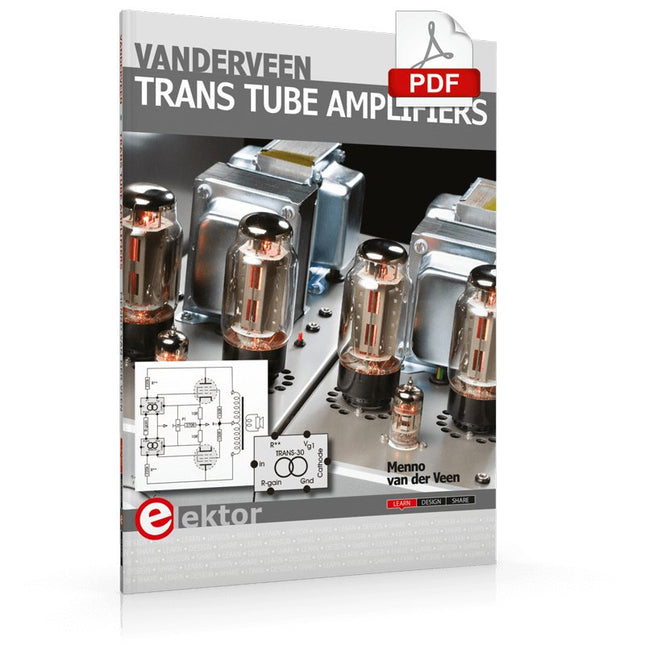
Elektor Digital Vanderveen Trans Tube Amplifiers (E-book)
Menno van der Veen is well known for his research publications on tube amplifiers used in audio systems. In this book he describes one of his research projects which focuses on the question of whether full compensation for distortion in tubes and output transformers is possible. In the past, a variety of techniques have been developed. One of them has largely been forgotten: trans-conductance, which means converting current into voltage or voltage into current. Menno van der Veen has breathed new life into this technique with his research project titled “Trans”. This book discusses all aspects of this method and discusses its pitfalls. These pitfalls are addressed one by one. The end result is a set of stringent requirements for Trans amplifiers. Armed with these requirements, Menno then develops new Trans amplifiers, starting with Transie 1 and Transie 2. These DC-coupled, single-ended tube amplifiers have unusually good characteristics and are suitable for hobbyist construction. Next the Trans principle is applied to amplifiers with higher output power. A trial-and-error process ultimately leads to the Vanderveen Trans 30 amplifier, which optimizes the features of Trans. The characteristics of this amplifier are so special and unique that Menno believes he has struck gold. To ensure that variations in tube characteristics cannot interfere with optimal Trans behavior, Menno makes use of simulations and comparison with other amplifier types. This book reads like an adventure story, but it is much more – it is an account of solid research into new ways to achieve optimal audio reproduction.
€ 29,95
Membres : € 26,96
-
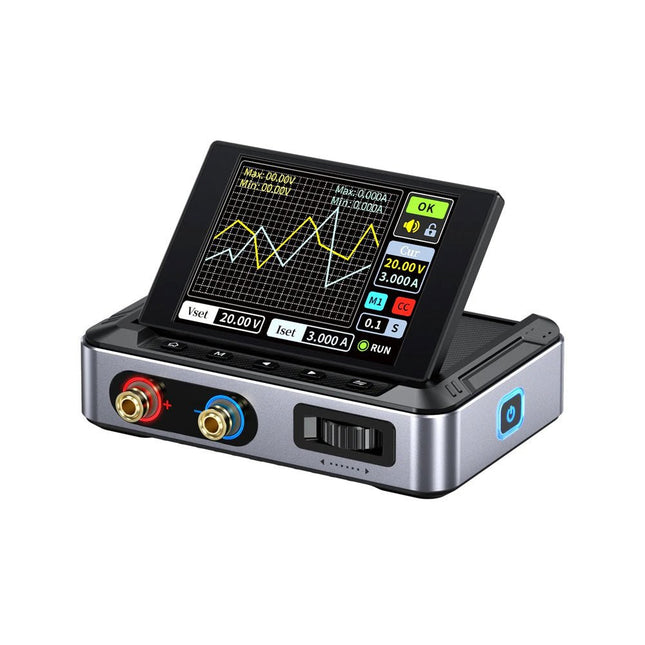
FNIRSI FNIRSI DPS150 Alimentation CC (150 W)
Le FNIRSI DPS150 est une alimentation CC réglable hautes performances dotée d'une interface d'entrée USB-C et de plusieurs modes d'alimentation, permettant un réglage précis de la tension de sortie (0-30 V) et du courant (0-5 A). Il fournit une sortie efficace, à faible consommation et stable, équipée de plusieurs fonctions de protection de sécurité, notamment les surtensions, les surintensités, les surcharges, la surchauffe et la connexion inversée. Il peut être appliqué de manière flexible à la connexion série de plusieurs appareils, avec un affichage et un fonctionnement riches et conviviaux, une conception compacte et portable, répondant à divers besoins d'application. Caractéristiques Alimentation CC variable de 30 V, 5 A, 150 W avec une précision de 0,01 V, 0,001 A, des modes CC/CV et une ondulation <20 mV pour protéger les composants électroniques sensibles. Prend en charge les entrées PC, QC et DC avec des sorties programmables et 6 paramètres de tension/courant prédéfinis. Compatible avec les fiches bananes de 4 mm, les bornes en forme de U et les fils de cuivre pour divers équipements. 8 mécanismes de sécurité, dont une protection contre les surtensions, les courants, les courts-circuits et la surchauffe. Écran HD IPS de 2,8 pouces avec affichage inversé à 90°, numérique et courbe pour une surveillance facile. Conception compacte et peu encombrante pour utilisation dans les laboratoires, les réparations et les projets de bricolage. Spécifications Tension d'entrée 5~32 V CC Courant d'entrée 100 mA-5 A Tension de sortie 0-30 V Courant de sortie 0~5 A Puissance de sortie 0-150 W Mode d'entrée Chargeur rapide PD Chargeur rapide QC Banque d'alimentation Adaptateurs d'alimentation CC Environnement d'exploitation 0-40°C Régulation de charge 0,49% Efficacité à pleine charge 96,30% Écran 2,8 pouces (320 x 240) Dimensions 106 x 76 x 28 mm Poids 178 g Inclus 1x DPS150 alimentation 2x Fils à pince crocodile (noir et rouge) 1x Câble micro-USB 1x Manuel Téléchargements Manual Firmware V0.0.1
€ 58,51
-

Velleman Whadda kit arbre de Noël 3D
Le kit Whadda 3D Xmas Tree est destiné aux amateurs et aux débutants intéressés par la soudure et l'électronique. Avec ce kit DIY, vous pouvez construire un sapin de Noël LED festif. Caractéristiques 16 LED rouges clignotantes LED vertes et jaunes supplémentaires fournies pour personnaliser votre arbre Peut être accroché et alimenté par des fils Fonctionne sur 12 V CC (par exemple dans les voitures) Spécifications Faible consommation d'énergie 8 mA Alimentation Pile 9 V (non incluse) Dimensions 102 x 88 x 80 mm Poids 65 g Téléchargements Manuel
€ 10,86
-
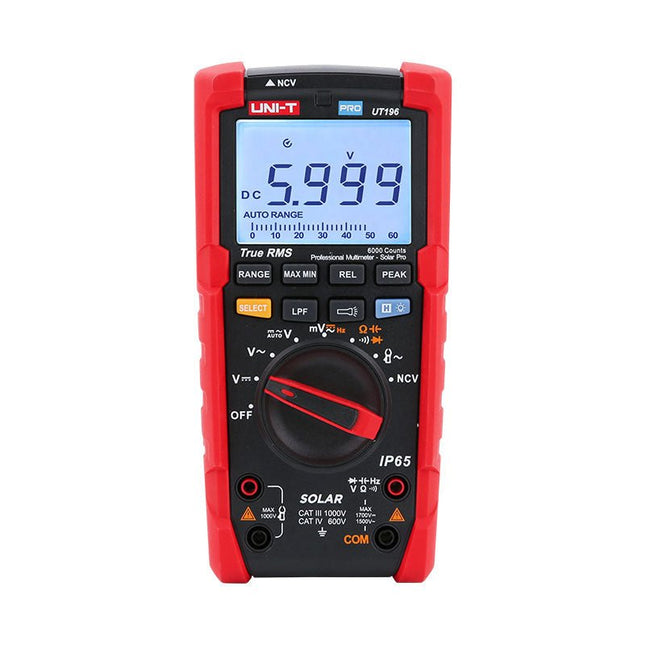
Uni-Trend UNI-T UT196 Multimètre solaire True RMS
Le multimètre numérique solaire UT196 True RMS est un outil idéal pour la maintenance des systèmes d'énergie solaire. Ce multimètre robuste est conçu pour les techniciens qui travaillent dans des environnements extérieurs difficiles. Le UT196 peut mesurer des tensions allant jusqu'à 1700 V en courant continu et 1500 V en courant alternatif, ainsi qu'un courant alternatif de 3000 A avec un capteur de pince ampèremétrique externe. Ce multimètre solaire offre une protection IP65 et est capable de résister à une chute de 2 mètres. Le multimètre solaire UT196 est conçu avec une protection contre les surcharges de 1700 V en courant continu, 1500 Veff en courant alternatif et testé pour une utilisation sécurisée dans des environnements de CAT III 1000 V, CAT IV 600 V. Fonctionnalités True RMS Mesure jusqu'à 1700 V en courant continu et 1500 V en courant alternatif pour les applications haute tension telles que les panneaux solaires, l'éolien Protection IP65 CAT III 1000 V, CAT IV 600 V Barre analogique Réponse en fréquence : 45 Hz~1 kHz Fonction de filtre passe-bas Mode impédance faible Lampe de poche intégrée, rétroéclairage lumineux et alarme visuelle Applications Mesure de tension continue élevée Mesure de tension et de fréquence de sortie Mesure de tension et de fréquence Mesure de courant et de fréquence Spécifications Plage UT196 Tension continue (V) 1700 V ±0.2% +5 Tension alternative (V) 1500 V ±0.8% +3 Fréquence (Hz) 1 MHz ±0.08% +4 Résistance (?) 60 M? ±0.8% +2 Capacité (F) 60 mF ±1.9% +5 Alimentation Pile 9 V Dimensions 195 x 95 x 58 mm Inclus Multimètre solaire UT196 Pile Cordons de mesure Téléchargements Fiche technique Manuel
€ 128,56
-

Elektor Novembre/Décembre 2026 (FR)
Le téléchargement intégral de ce numéro est disponible pour nos membres GOLD et GREEN sur le site Elektor Magazine ! Pas encore membre ? Cliquez ici. outils d'IA pour le prototypage matérielCe qui est utile, ce qui ne l’est pas, et ce qui reste du ressort de l’ingénieur ZSWatch : de l'idée au produitPartie 1 : une montre connectée entièrement open source correcteur de tonalité à trois voiesHaut de gamme – pour une touche supplémentaire electronica Fast Forward 202610 années d'innovation prototypage avec des microcontrôleursUn aperçu des cartes de développement les plus populaires plaques d'essai pour prototypageDrôles de composants, la série concevoir pour l'orbiteGuide du maker pour la sélection de composants, la résilience aux rayonnements et l'architecture de mission gestion thermique pour des systèmes électroniques fiablesQuand chaque degré compte du concept au produit finiConcevoir des systèmes embarqués prêts à la commercialisation Lusight : écrans électroniques souples commandés avec votre téléphoneDécouvrez ce que cache le badge sur la couverture de l’édition electronica d’Elektor apprendre à un bras robotique à voir et à se déplacerManipulation d'objets par IA avec un bras robotique imprimé en 3D Elektor à 65 ansProjets des numéros de novembre et décembre antenne en boucle avec blocs RFPartie 2 : traitement du signal du prototype à la productionLeçons pratiques de la communauté Elektor projet 2.0Retours, idées, corrections générateur audio portableUne source de signal de référence pour la configuration rapide des systèmes audio audiotroniquePlus sur la distorsion, et un ampli d'adaptation de niveau 2026 : une odyssée de l'IAQuand l'IA contribue a son propre développement atelier sans fil (2)Modules radio expliqués : émetteur-récepteur nRF24L01P à 2,4 GHz La voie du numérique construction d'une montre connectée open sourceDaniel Kampert avec la ZSWatch, le matériel libre et les compromis techniques comment se préparer pour l'assemblage SMD professionnel l’ingénierie au-delà de l’établiIntégration des systèmes, dépannage et essais en conditions réelles. simulateur d'instruments avioniquesESP32-S3, avec écran HMI ron
€ 16,50
-

Elektor Digital Experimenting with Red Pitaya STEMlab Gen 2 (E-book)
Practical Projects and Programs With Experimenting with Red Pitaya STEMlab Gen 2, Red Pitaya goes beyond a versatile board. It becomes a powerful laboratory instrument for precision measurement, analysis, and control. From the fundamentals of electronic project development, monitoring, control, and design to testing, this book walks you step-by-step through everything you need to know to harness the full potential of Red Pitaya hardware and software. The book presents real-time, FPGA-based projects that are developed on a PC using the Vivado environment, then transferred to the Red Pitaya for execution and testing. You will learn about enhanced performance, expanded I/O capabilities, improved FPGA features, and advanced connectivity options that open up new frontiers for precision measurement, monitoring, and control in your embedded applications. Inside the book you will discover: A deep dive into Red Pitaya architecture and hardware design Electronic experiments using Red Pitaya for measurement and monitoring Hands-on projects using the Python programming language Practical guidance for FPGA programming using Red Pitaya Red Pitaya FPGA projects using the Verilog HDL under Vivado IDE Practical design of electronic projects including measurement and testing Step-by-step examples that bridge theory and real-world implementation Whether you are designing your own electronic circuits, developing signal analysis tools, or creating real-time control or monitoring systems, this book provides you the knowledge and confidence you need to fully learn and customize the Red Pitaya platform.
€ 32,95
Membres : € 29,66
-
Elektor Digital Building a High-Tech Alarm System with Raspberry Pi (E-book)
This book discusses the basic components of any alarm system. All alarm systems have two basic functions. First, they monitor their environment looking for a change such as a door or window opening or someone moving about in the room. Second, they alert the legal owner or user to this change. The system described in this book uses a scanning type software to detect intruders. It behaves like a guard dog, pacing up and down the fence line on the lookout for either an intruder or a familiar person. If you have an alarm key, you can disarm the system and enter. With the scanning method, the software is easy to write and explain. It can scan eight alarm zones plus two special fire zones in about one second. You don’t have to be an electrical engineer to install an alarm system, just a decent carpenter, painter, and plasterer! Because this alarm system runs on 12 volts, you don’t have to be a licensed electrician either to install it. The alarm system presented here uses Python software on the Raspberry Pi combined with some elementary electronic circuits. The code described in the book, as well as CAD files and a bill of materials for the alarm panel, are available for free downloading. The book provides the reader with examples of typical configurations coming straight from the author‘s experience. After reviewing the hardware components typically used in common alarm systems, the author shows how to plan one yourself. To implement a modular alarm, no matter if it is for a single house or for a business or restaurant, the book shows how to skillfully combine a Raspberry Pi with small auxiliary electronic circuits. These are not installation instructions but food for thought that will enable readers to find a solution to their needs.
€ 24,95
Membres : € 22,46
-

Elektor Digital High-End Tube Amplifier Design (E-book)
A Toolbox for Audio Lovers and Engineers Without any ambition to reach scientific levels, this book aims to be a toolbox for both audio lovers and high-end equipment designers. The elementary theory presented is the bare minimum for readers to grasp the operation and practical use of electrical, electromagnetic, physics, and electronic operations available in the designers’ toolbox. Each tool is explained in a minimum of words and theory without needless coverage of underlying equations or figures. The book chapters guide you through the process of designing quality amplifiers with vacuum tubes, from the very beginning, considering both technical and subjective requirements – in theory and practice. The book is a compilation of the author’s notes used in his professional and educational career but was nevertheless primarily written as a result of true love for the audiophile hobby.
€ 54,95
Membres : € 49,46


